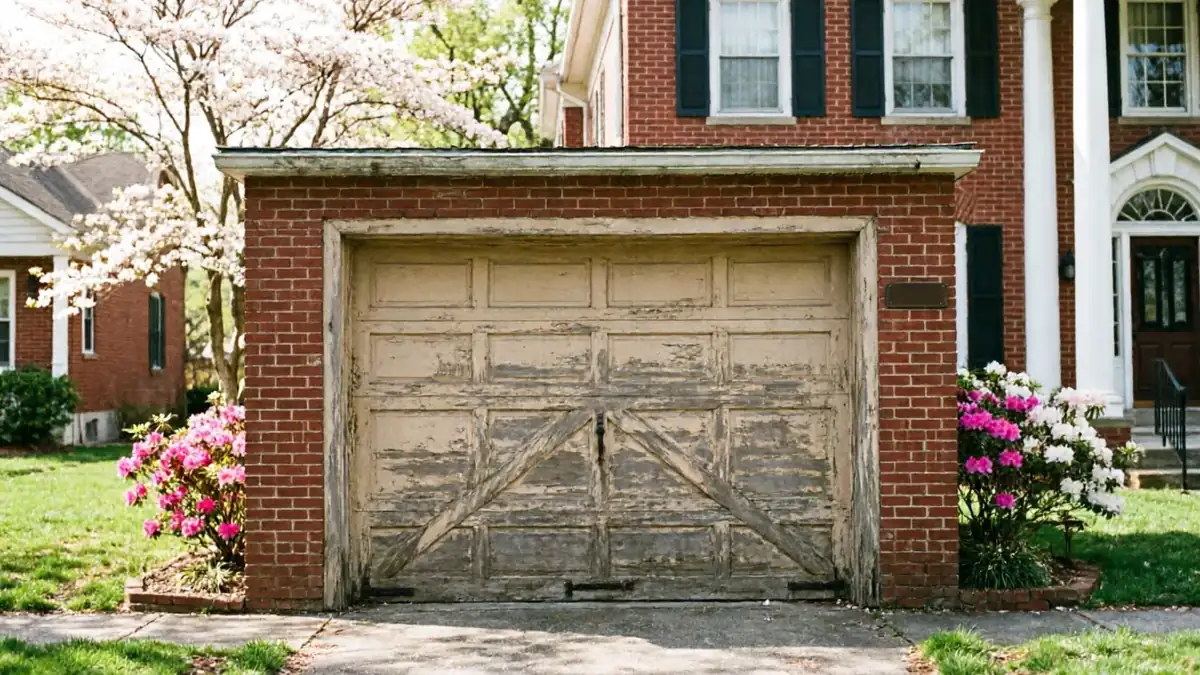
The Situation
Housing in this service area was built mostly between 1938 and 2007, with the median landing in 1974. That means a big share of the doors on garages around here are originals, or close to it - steel or wood panels hung on hardware nobody has made in decades. Across the 29 communities this shop covers, the stock runs heavy on 1960s and 70s construction, which is the era that gives us the most repair calls.
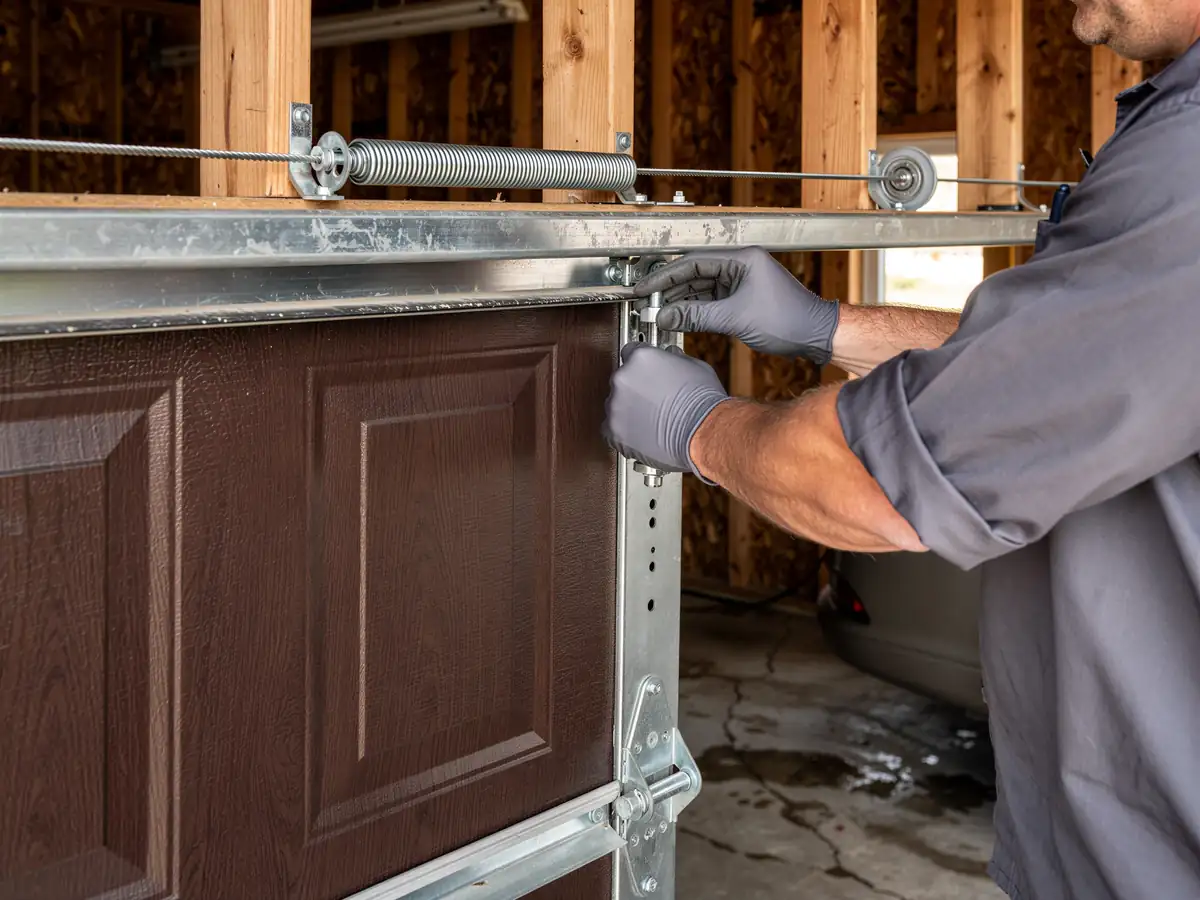
A door from that period wasn't built to current code and wasn't built with the materials we use now. The steel is thinner, the insulation (if there is any) is a single layer of foam board glued to the back of the panel, and the spring system is often a single torsion spring instead of the two-spring or cable-backed setups required today. None of that makes the door bad. It makes it a different kind of job than fixing something installed five years ago.
The question we get asked constantly is simple: is this worth fixing, or should it just come out. There's no single answer, but there is a way to think about it that doesn't waste your money either direction.
What Most People Get Wrong
The most common mistake is treating every old door the same way. A homeowner hears one creaky panel and assumes the whole unit is done, or hears a quote for spring replacement and assumes it's cheaper to just replace everything. Neither is automatically true.
The second mistake, more specific to houses built around the median 1974 date here, is assuming the track and spring hardware can be reused with a new door. A lot of that older hardware is sized for panel weights and widths that don't match what's sold today. If the opening itself hasn't been resized, sometimes the frame and track are fine and only the panel needs work. Other times the whole header is out of square from fifty years of settling, and a new door won't hang straight no matter what you do to it.
The third mistake is cosmetic thinking - a door that looks rough on the outside but runs smooth and quiet is usually structurally sound. A door that looks fine but grinds, sticks, or drops unevenly has a hardware problem that paint won't fix. Judge the mechanism, not the finish.
When to Call Someone
Call before the door fails completely, not after
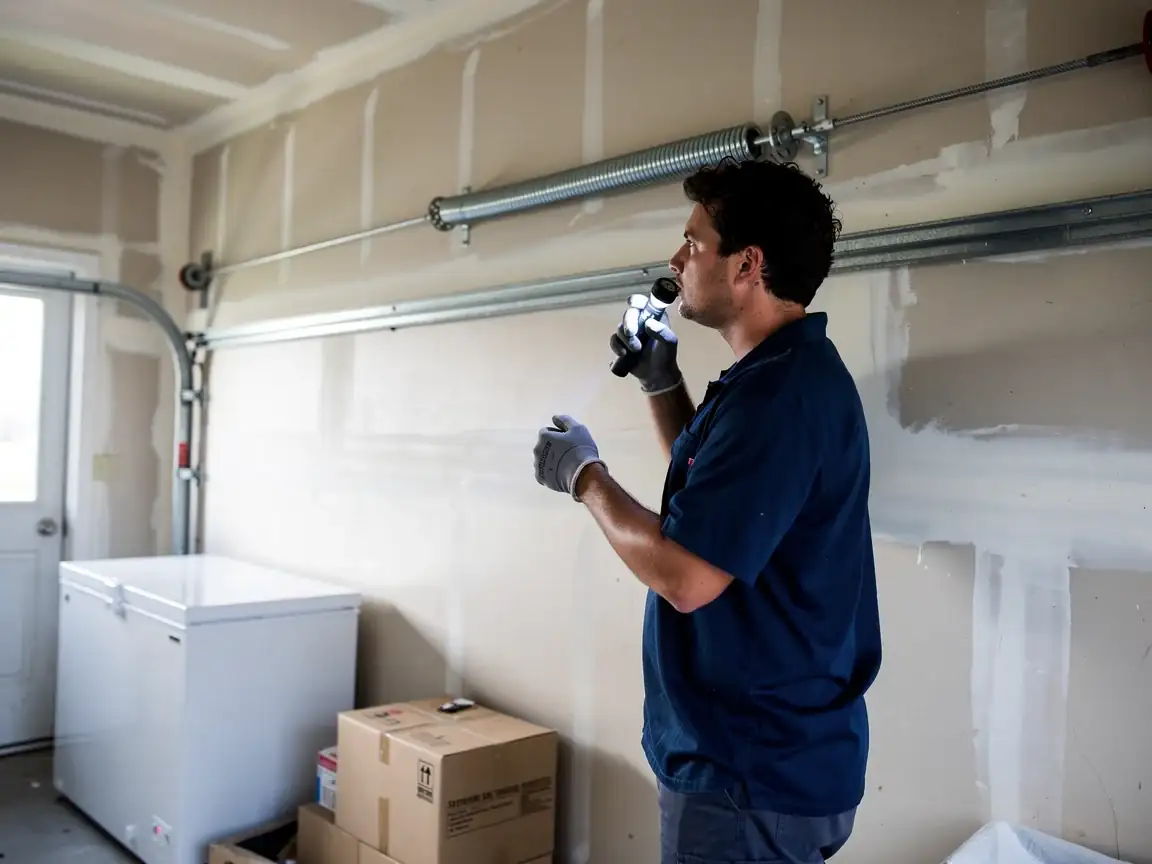
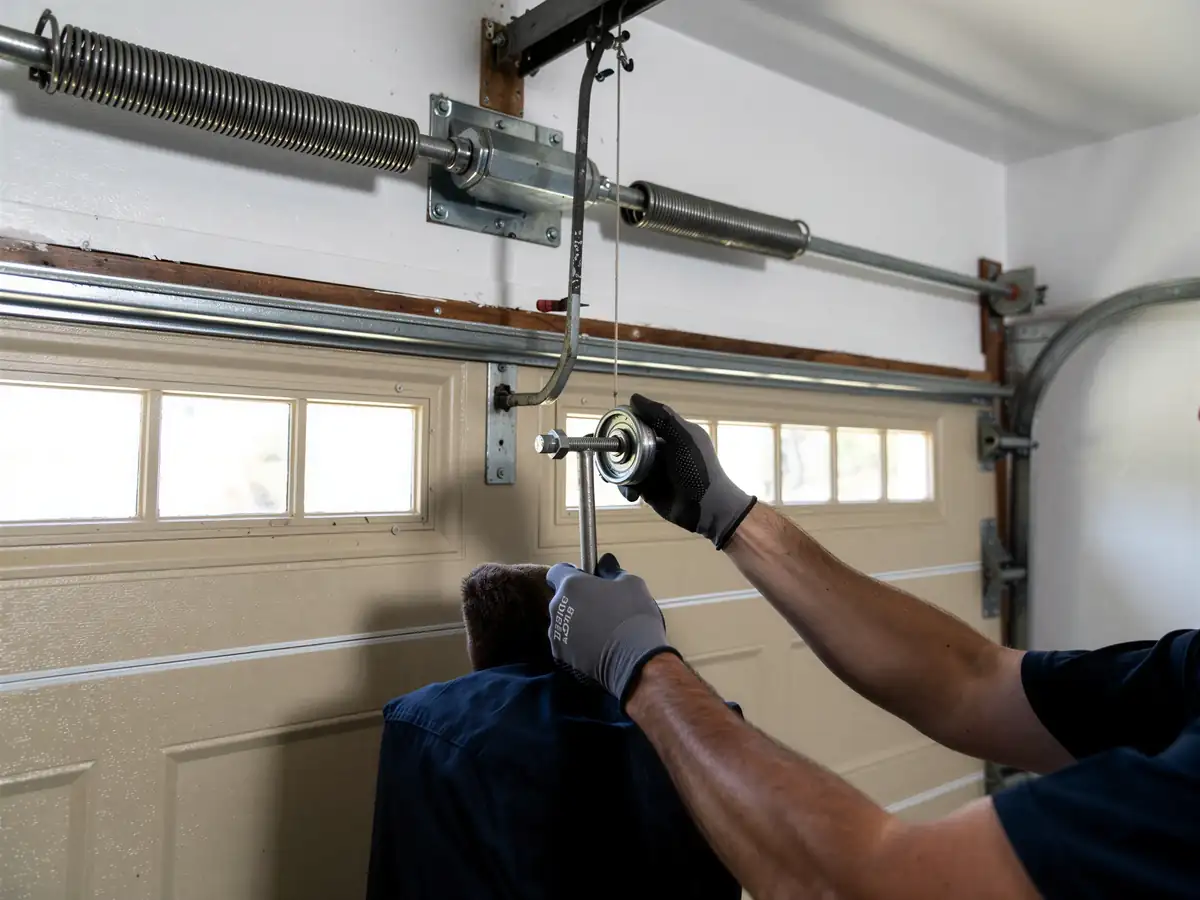
A torsion spring that's visibly stretched or has a gap where it's separated is close to breaking, and a broken spring on an old single-spring setup can let the door slam down with real force. If you hear a bang from the garage and the door won't lift, stop trying to force it and call.
Also worth a call: a door that's noticeably heavier to lift by hand than it used to be
Rollers that have worn grooves into the track, or panels that have started to separate at the hinges. On doors from the 1960s-70s stock common in this area, these symptoms usually show up together once the door passes a certain age, because the hardware was all installed at the same time and wears out together.
One honest note: if the bottom panel is rusted through or the wood has rotted at the base
Patching it is a short-term fix at best. We'll tell you when a repair is just delaying a replacement by a year instead of solving the problem, because that's a better use of your money than paying twice.
What the Weather Here Does to It
This area sits in a cold-moderate climate band, which means winters cold enough to matter but not brutal, with enough freeze-thaw cycling each season to work on anything that flexes or seals. On an older steel door, that cycling is what cracks the foam gasket at the bottom panel first, then works into any seam where the panel has started to separate.
On wood doors from the same era, the swing between winter dry cold and summer humidity is what causes warping at the panel edges - the door that used to seat flush against the frame starts catching on one corner. That's not a spring problem or a track problem, it's the wood itself moving, and no amount of lubricant fixes it.
Steel hardware exposed to that seasonal swing - the hinges, the roller stems, the spring itself - corrodes faster than people expect, especially on doors installed before galvanized coatings were standard. If your door dates close to the 1974 median build year for houses in this area, that hardware has been through fifty-plus winters of this cycle, and it shows in how stiff the door feels on the first cold morning of the year.