How It Shows Up
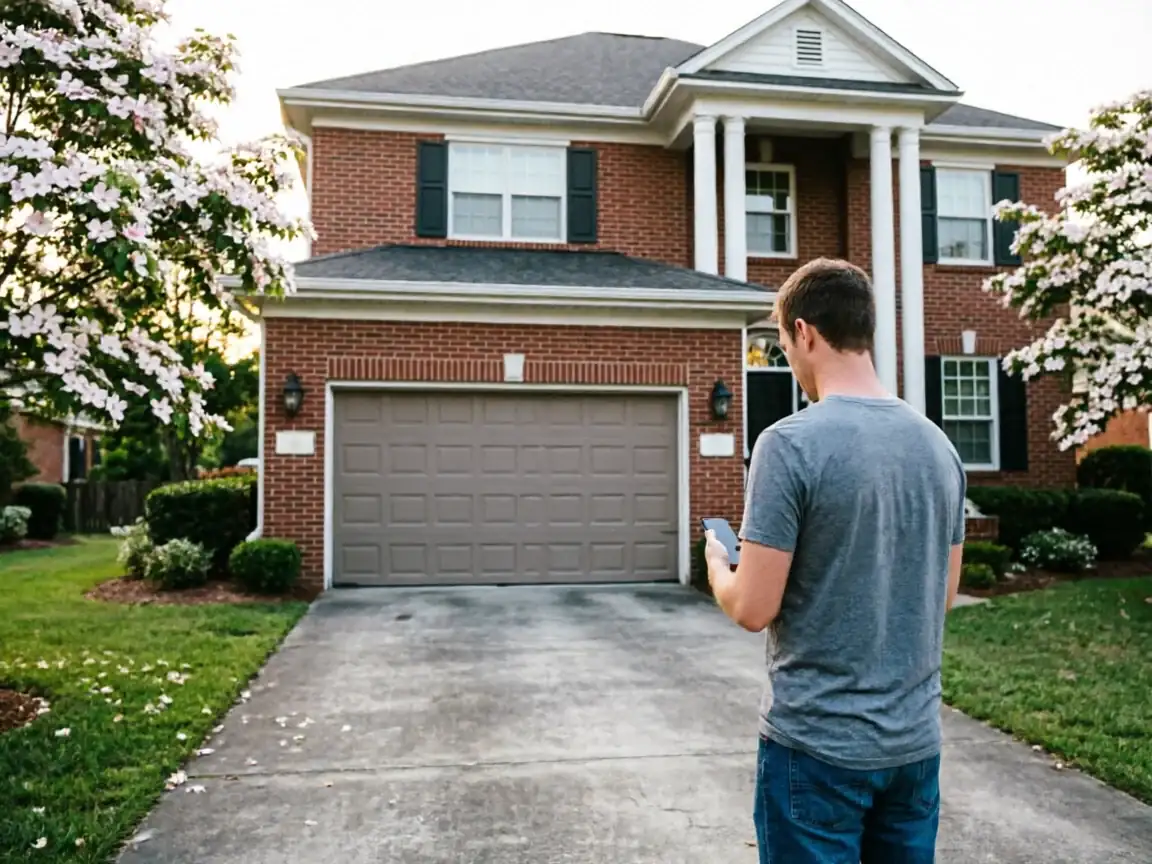
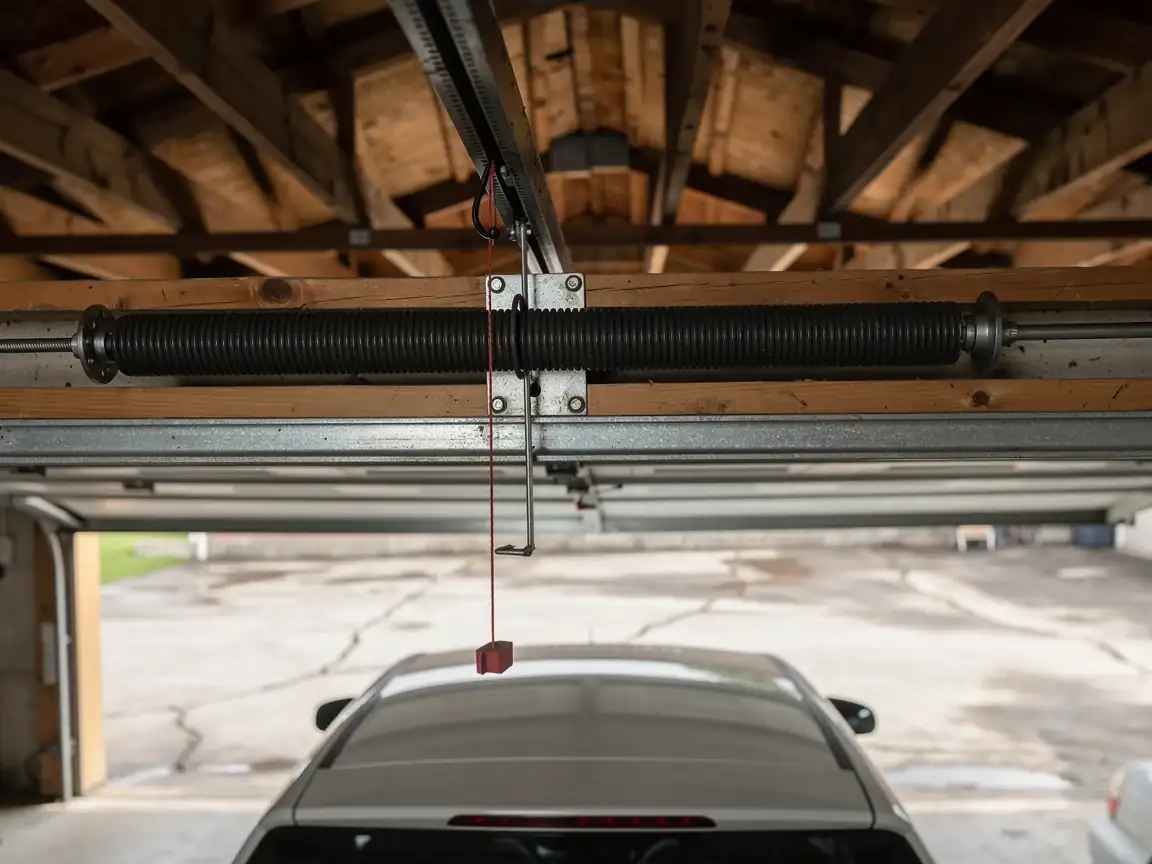
Most calls start the same way: the door gets heavy on the way up, the opener strains and clicks instead of lifting clean, or the door jumps the track partway through its run. Sometimes it's a bang from the garage at the end of a cold morning - that's a torsion spring letting go after years of winding and unwinding. On the houses we see most in this service area, built mostly in the 1960s and 70s with a spread running from 1938 up to 2007, the original hardware is often still on the door. Rollers that were fine for decades start binding once the steel track shifts a quarter-inch out of plumb. In a cold moderate climate, metal parts contract in winter and expand in summer, and that cycle works loose whatever was already marginal - a worn cable, a bearing plate with stripped screws, a spring that's lost a few coils of tension. None of this is dramatic until the day the door won't move, or moves wrong, and that's usually the day you call.
What the Fix Involves
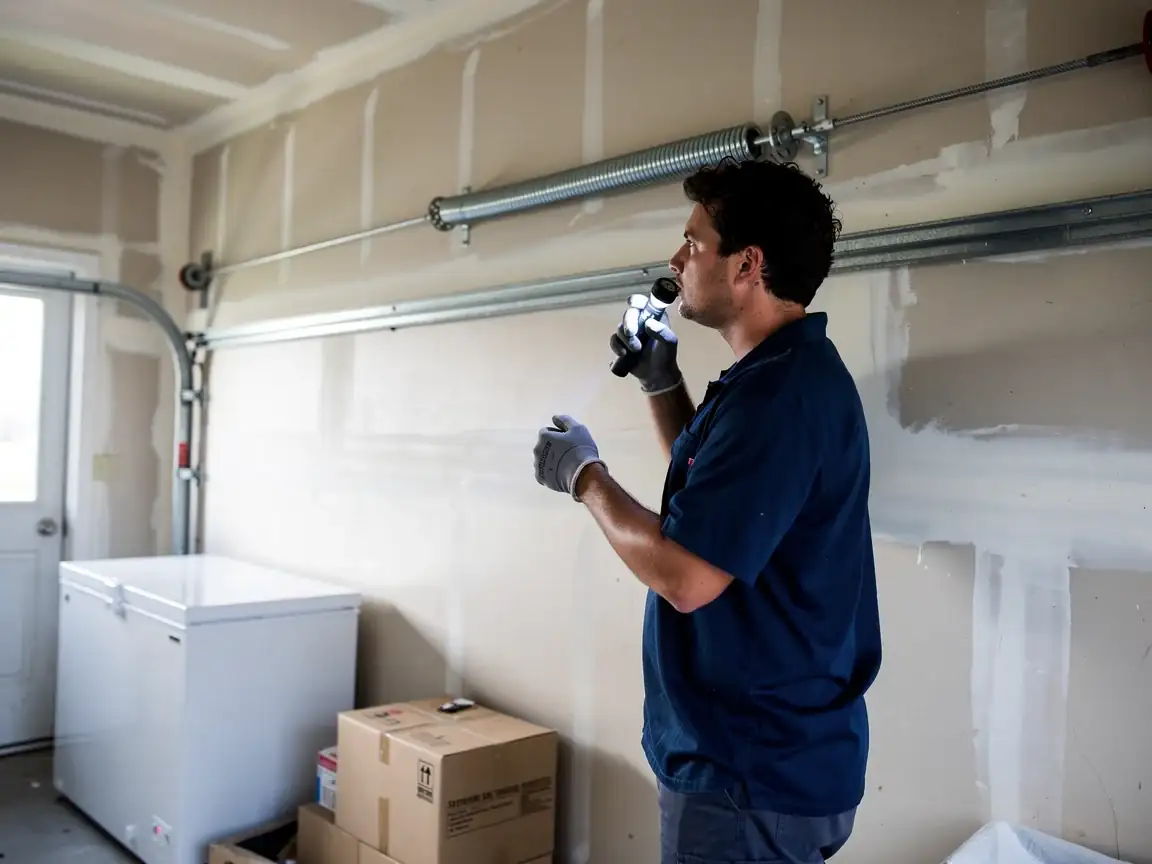
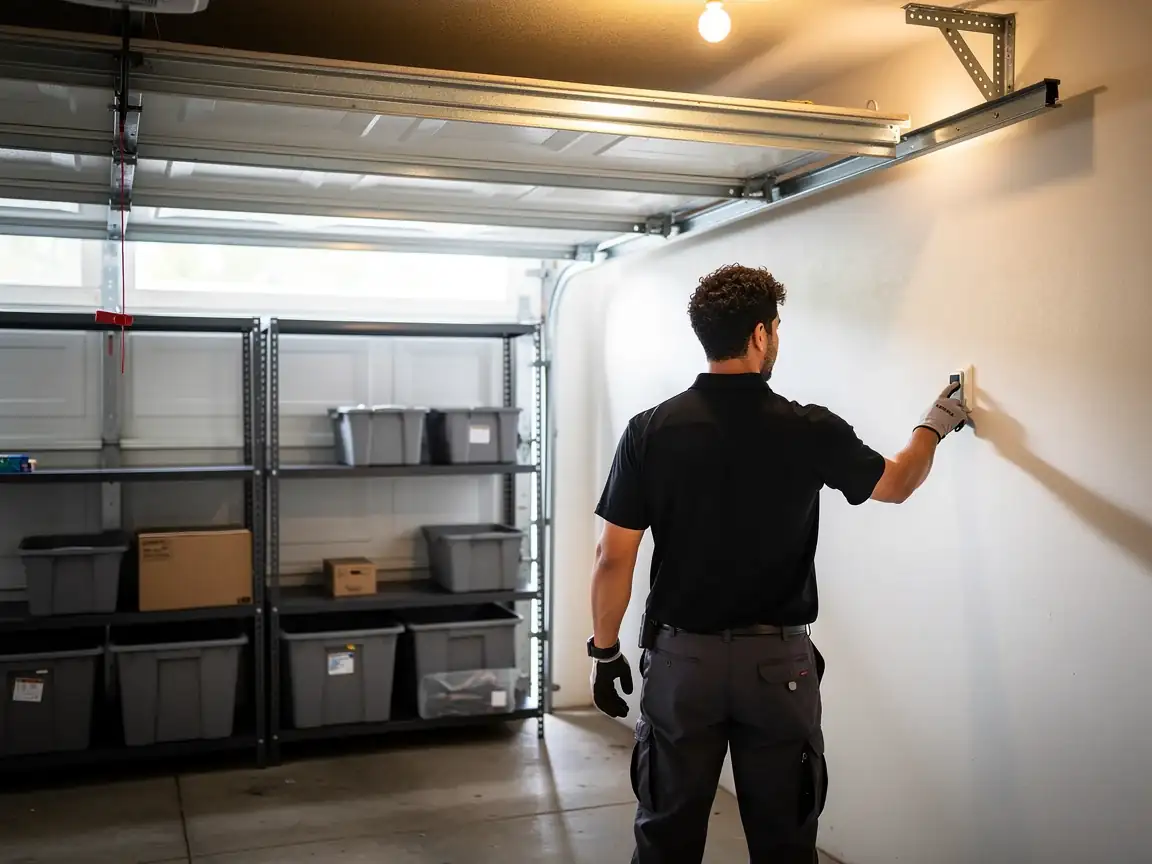
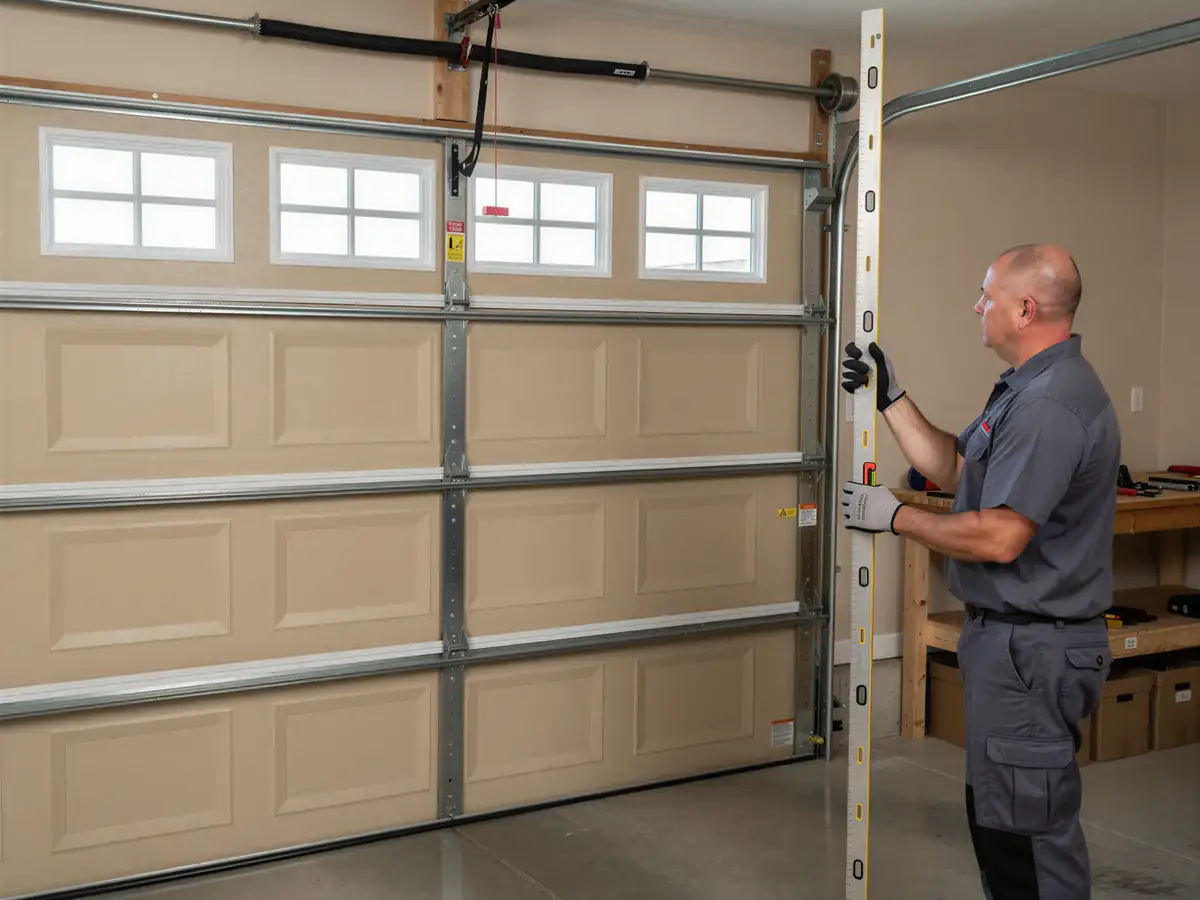
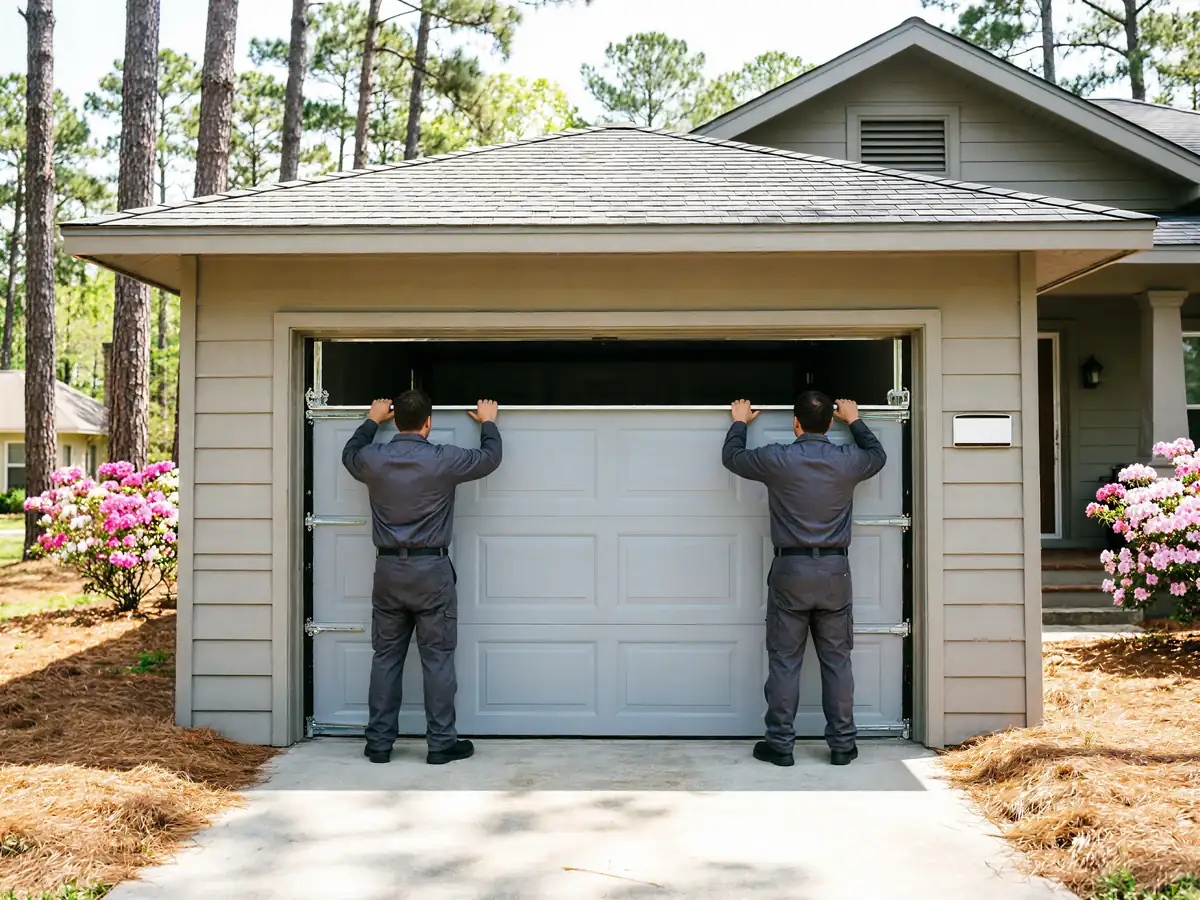
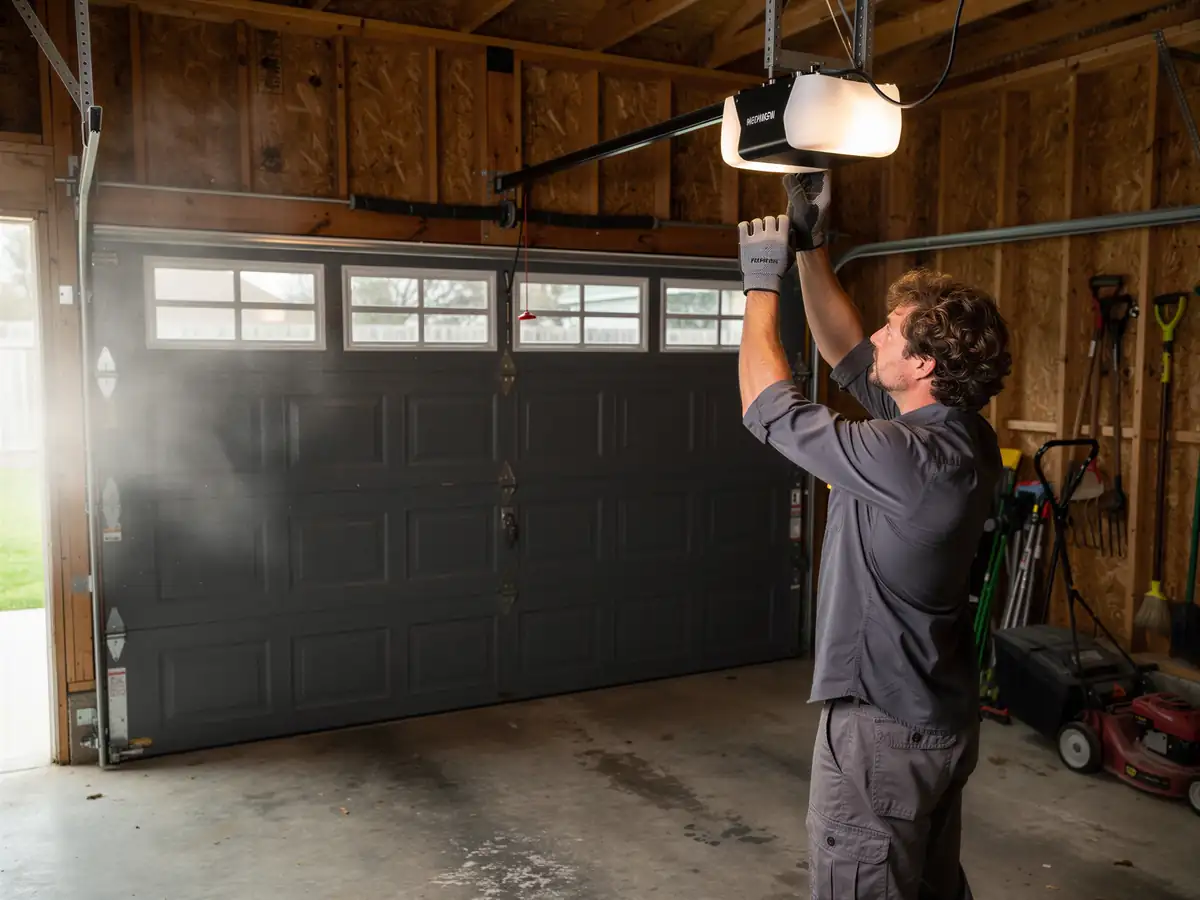
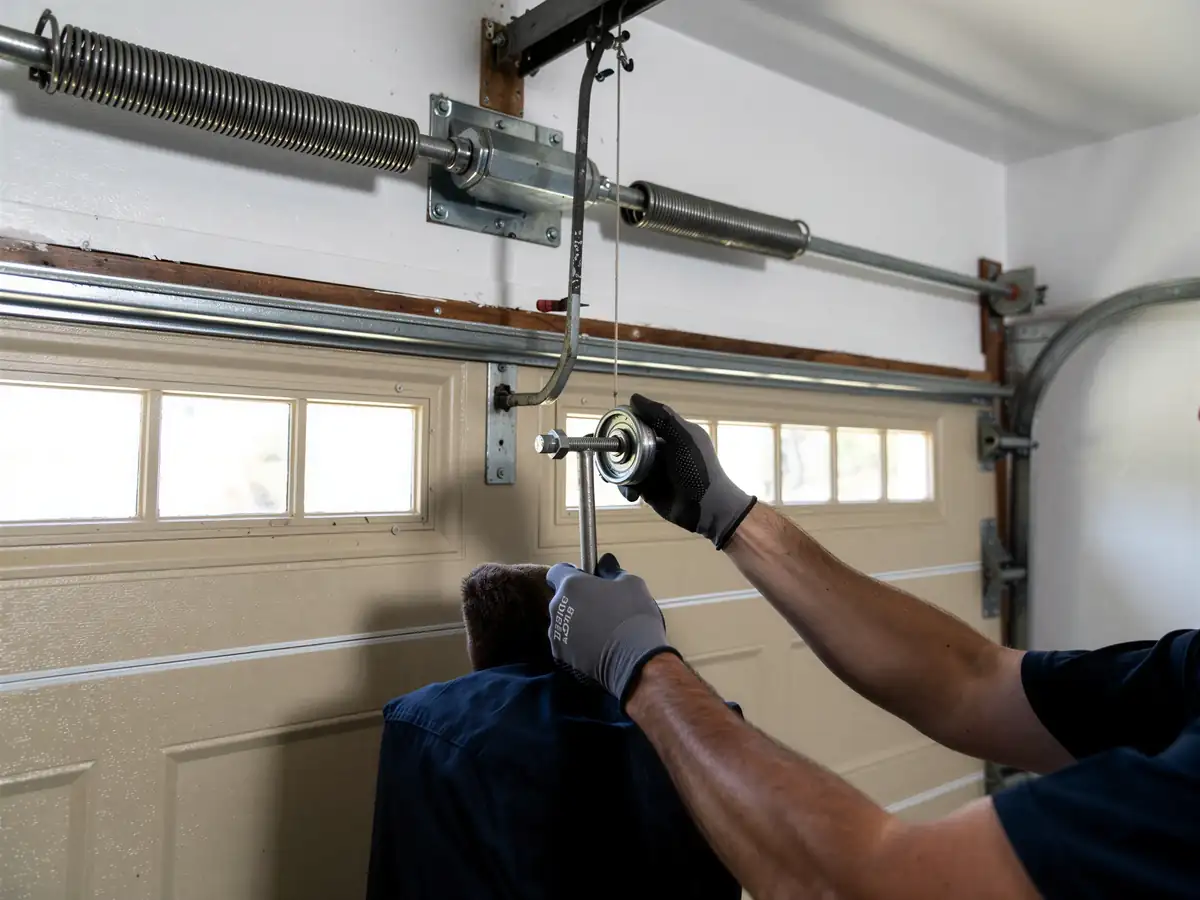
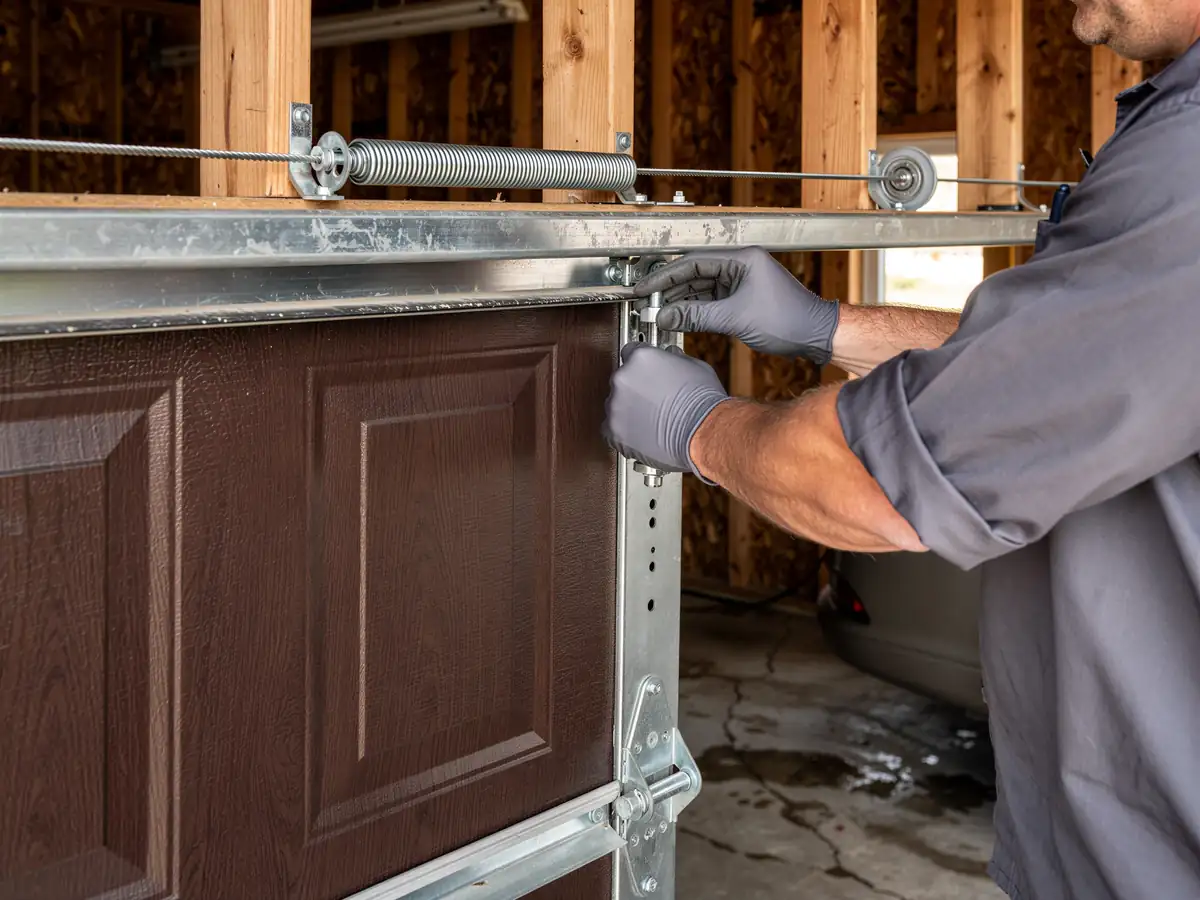
We start by running the door by hand with the opener disconnected, because that tells you more than watching it move under power ever will. A spring that's lost tension shows itself immediately - the door won't hold position halfway up. A bent track shows itself as a door that binds at the same spot every time. From there the fix is usually one of: replacing a broken or mismatched torsion spring, pulling and resetting a track that's walked out of alignment, swapping worn rollers and cables, or adjusting opener travel and force limits that have drifted out of spec. Honest limitation here: if the opener's logic board has failed on a door that's also got an undersized track and an obsolete spring size, patching each piece separately sometimes costs more than replacing the operator and bringing the hardware up to a single current spec. We'll tell you when that math doesn't favor a repair, rather than billing three separate fixes on a door that's done.
Parts We Carry
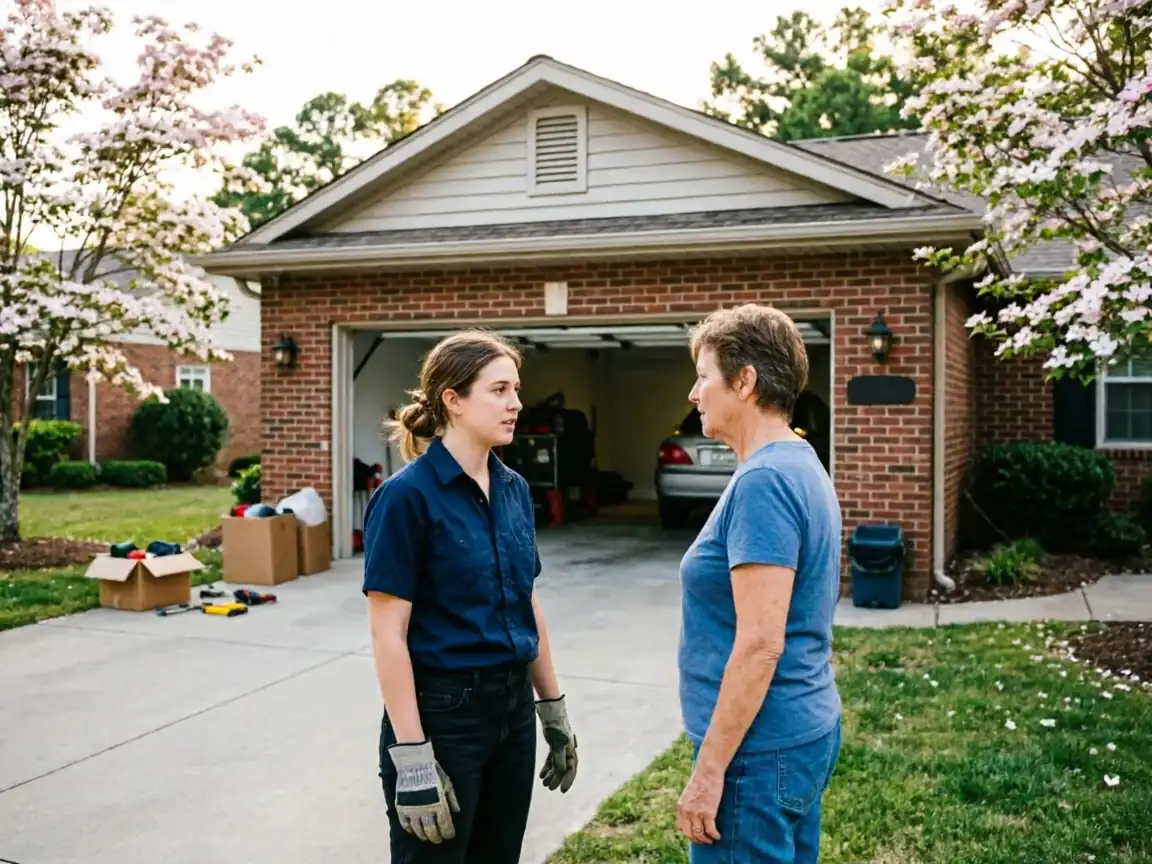
Because so much of the door stock here dates to the 1960s and 70s, we stock torsion springs and end bearing plates sized for that era alongside current door sizes, plus standard 2-inch track sections, rollers, and lift cables that cover most of what we run into on a given week. That covers the bulk of calls across the area, including houses out toward Morrow and Jonesboro, both about seven miles off, and Bonanza, Lovejoy, and Lake City a bit past that at eight. Honest limitation: a few original panel styles and some opener control boards from the oldest end of that 1938-2007 range are discontinued, and those can take longer to source than a same-day repair. When that's the case, we'll say so up front and give you the choice between waiting on the exact part or moving to a comparable current one.