How It Shows Up
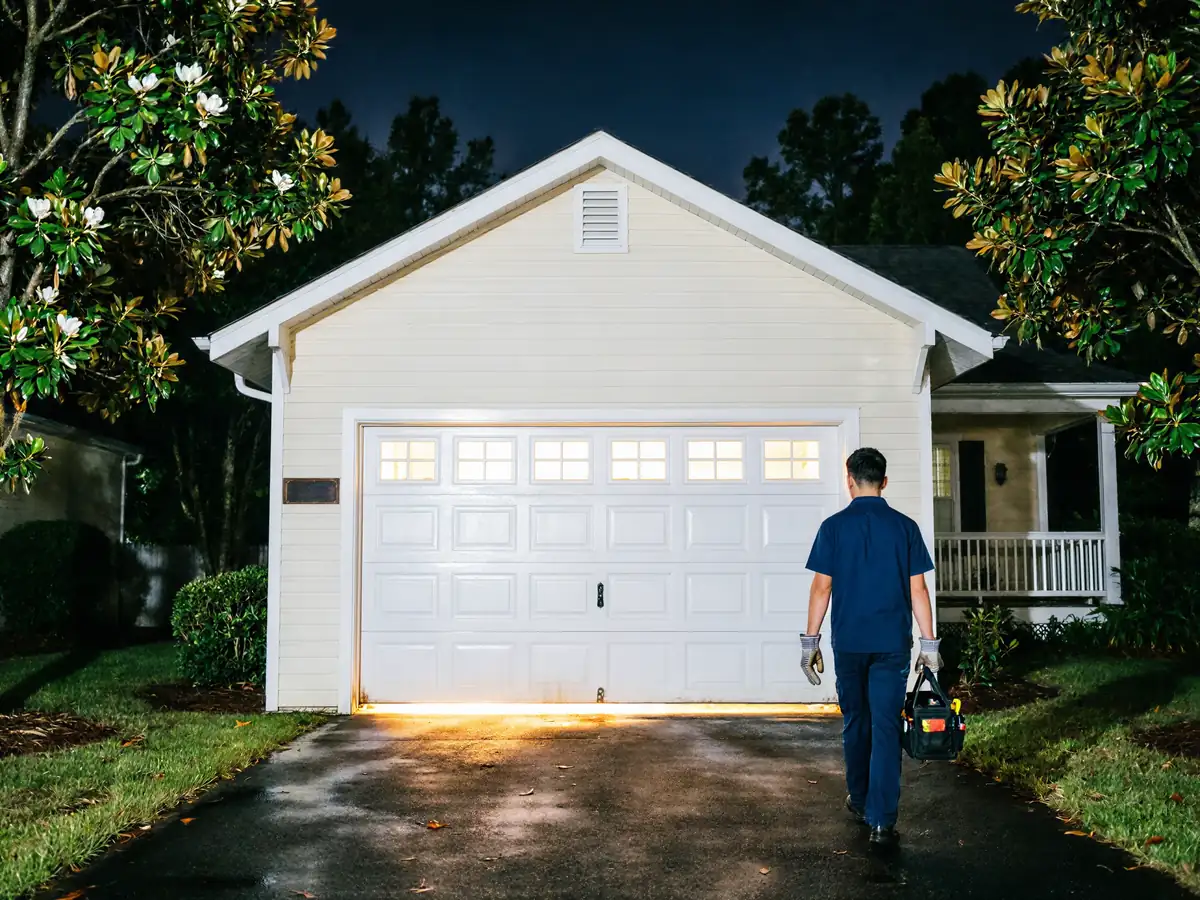
The call usually starts the same way: the door won't budge, or it jerks up six inches and stalls. Sometimes it's a loud bang from the garage at night - that's a torsion spring letting go, not a break-in. Other times the opener runs but the door doesn't move, which points to a stripped gear or a cable that's jumped the drum.
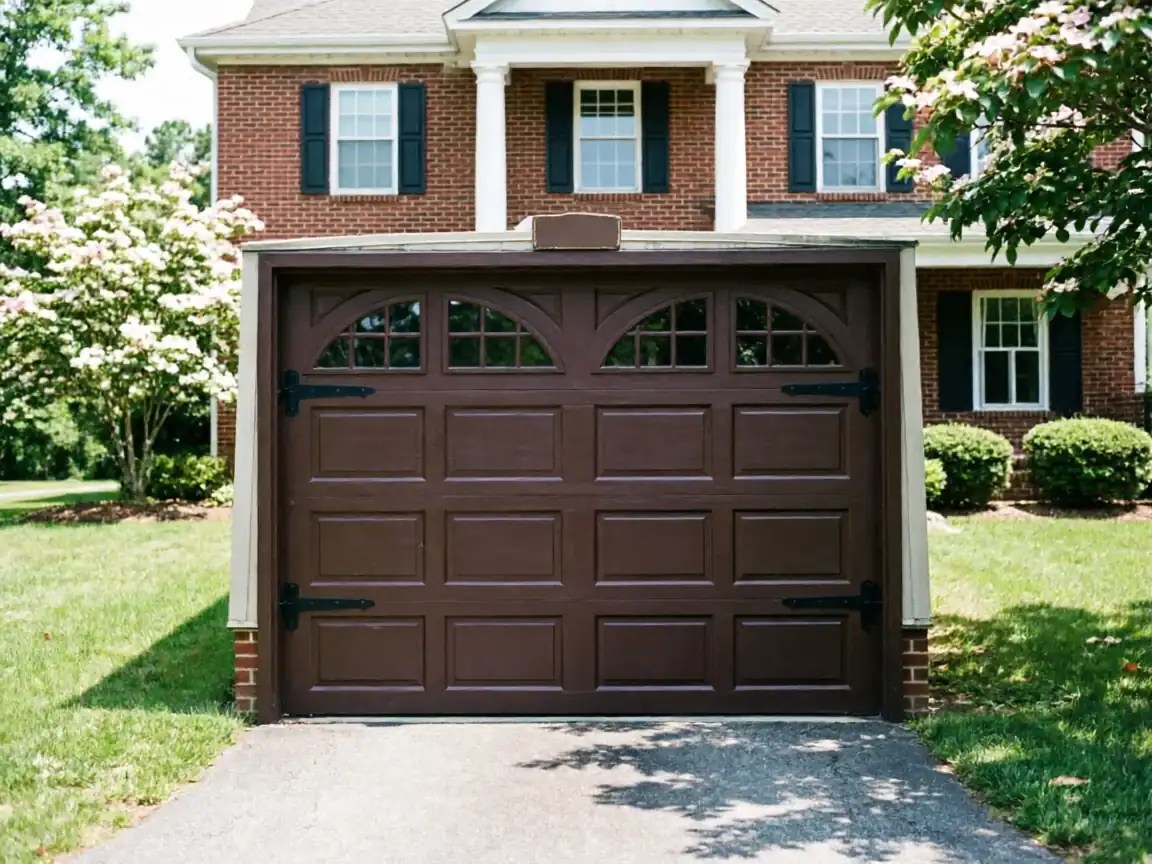
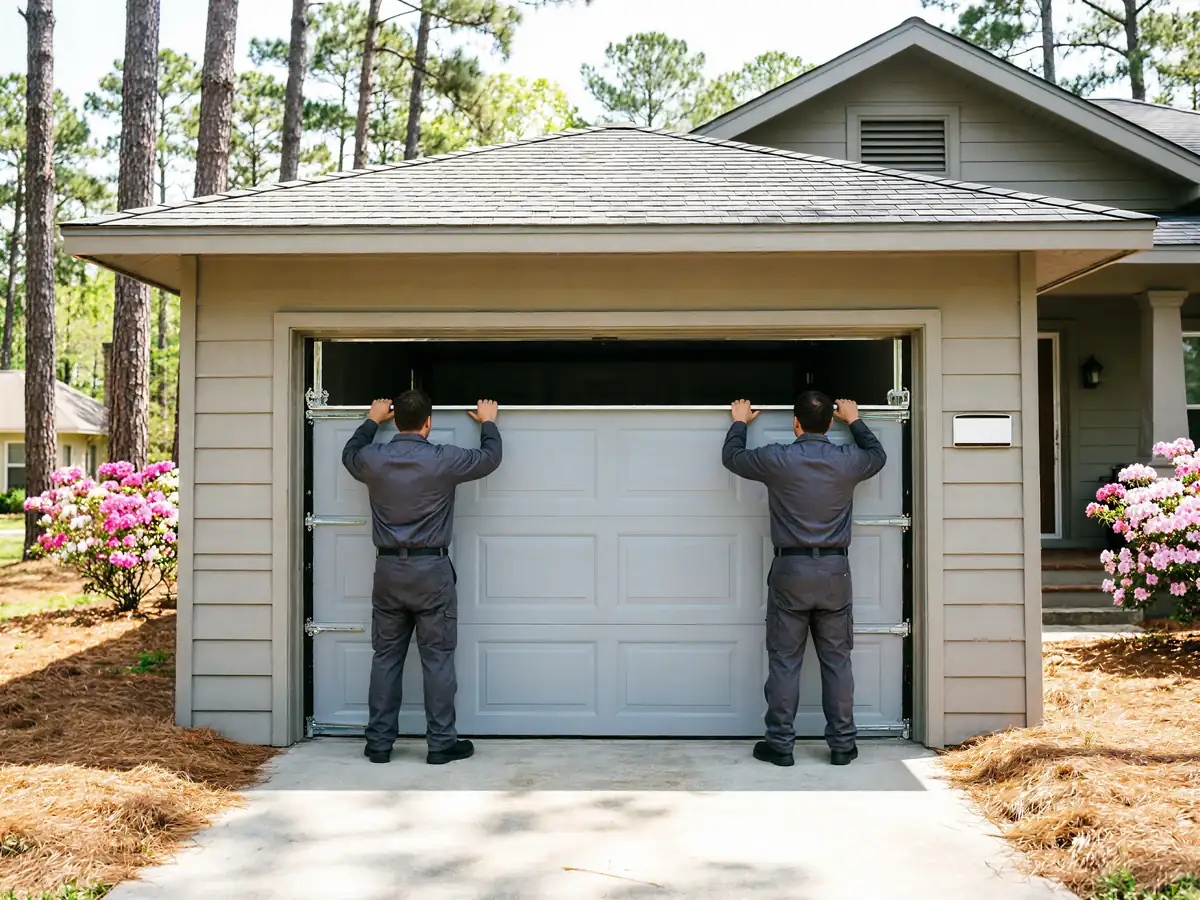
On older sectional doors common across this area, you'll also see the door go crooked on the way up, one side higher than the other, because one cable has frayed or one spring has lost tension while its partner hasn't. A door that slams down instead of lowering slowly is a spring problem almost every time, not an opener problem, even though the opener is what people blame first.
If the door is heavy to lift by hand with the opener disconnected, that's your spring losing its ability to counterbalance the weight of the panels. None of this fixes itself, and running the opener against a dead spring just burns out the motor faster.
What the Fix Involves
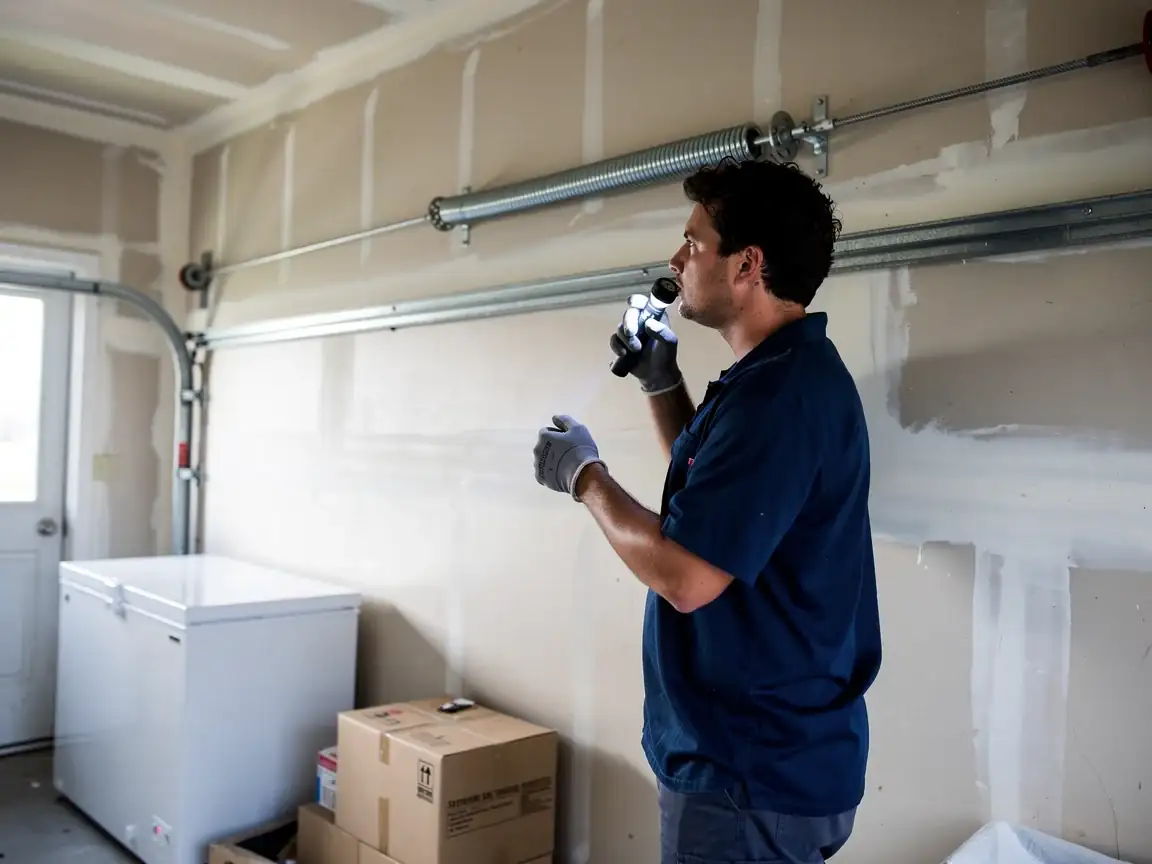
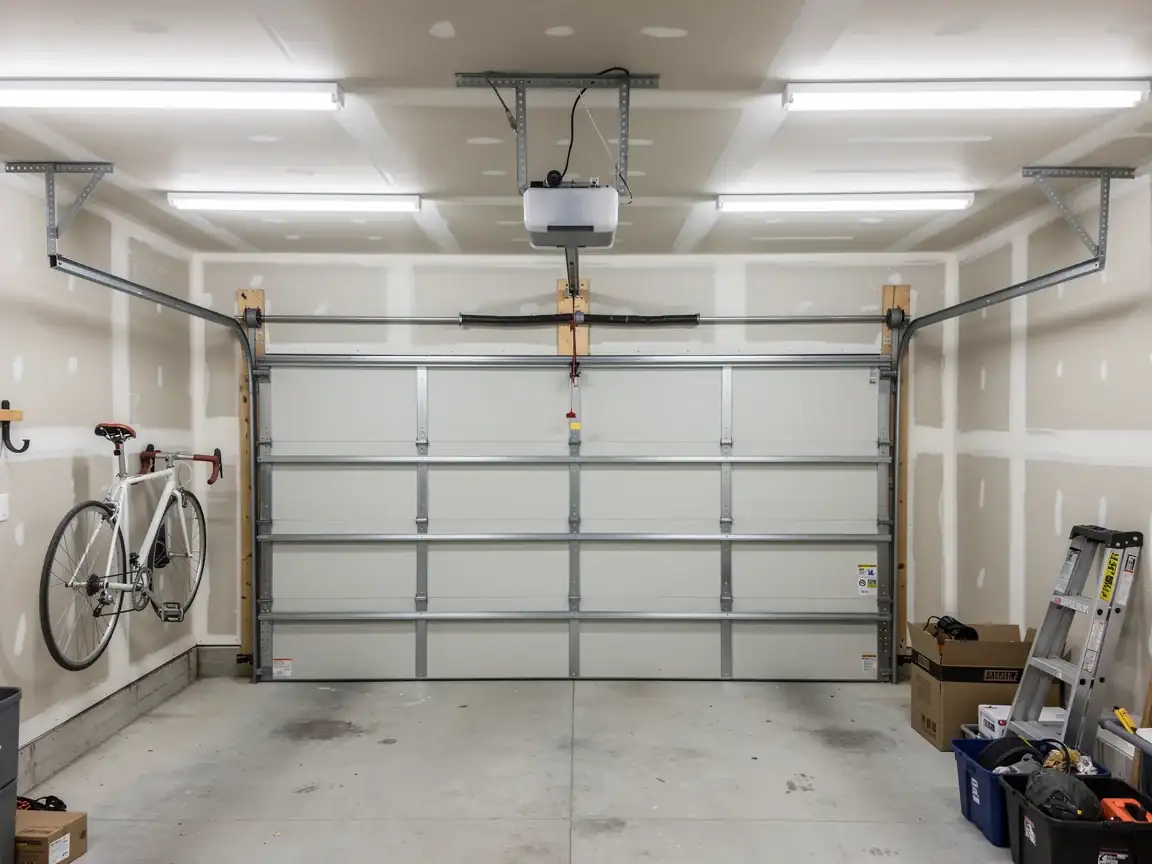
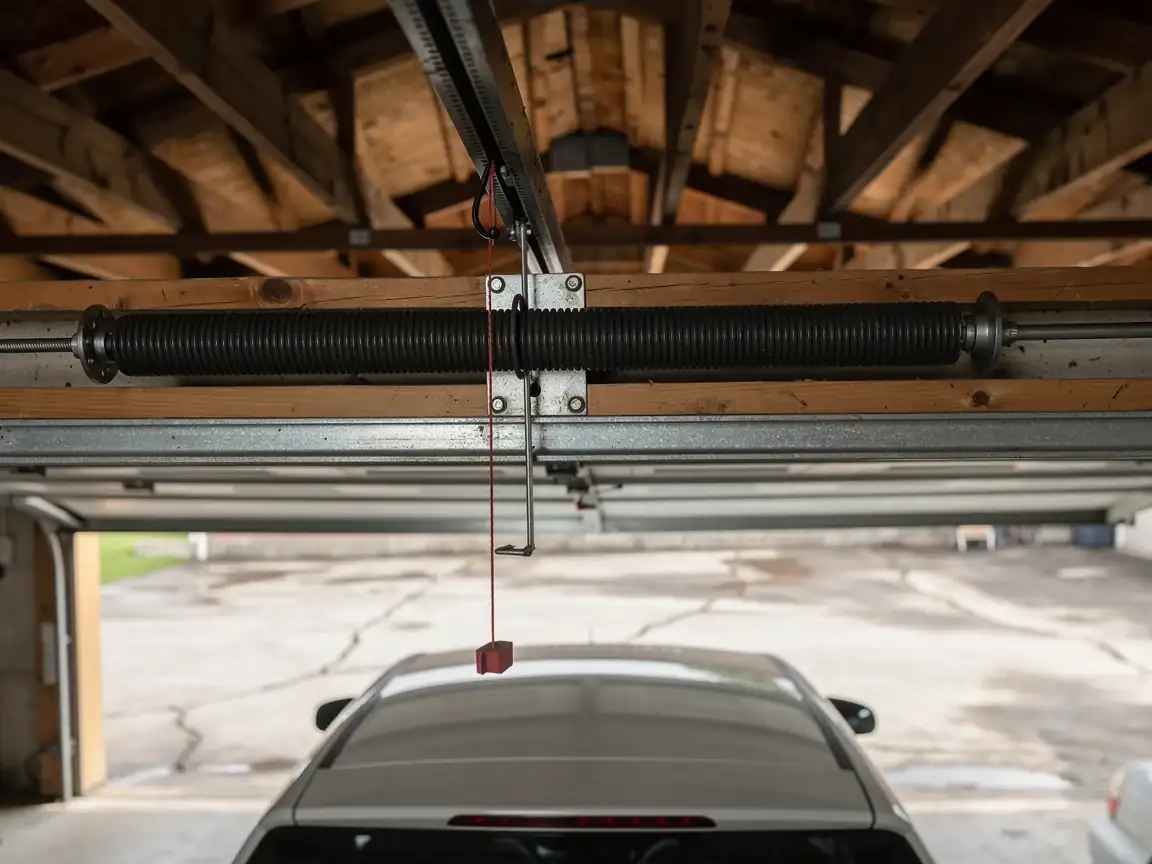
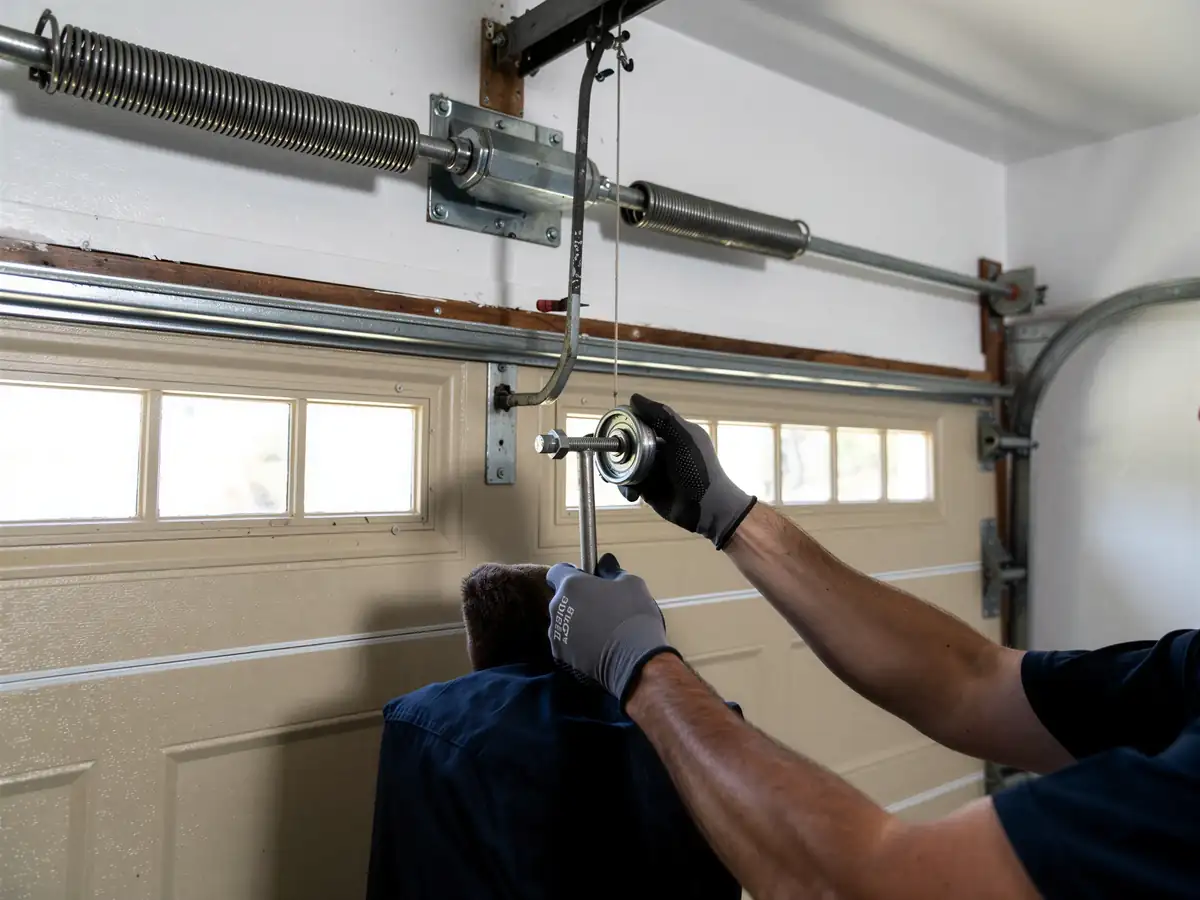
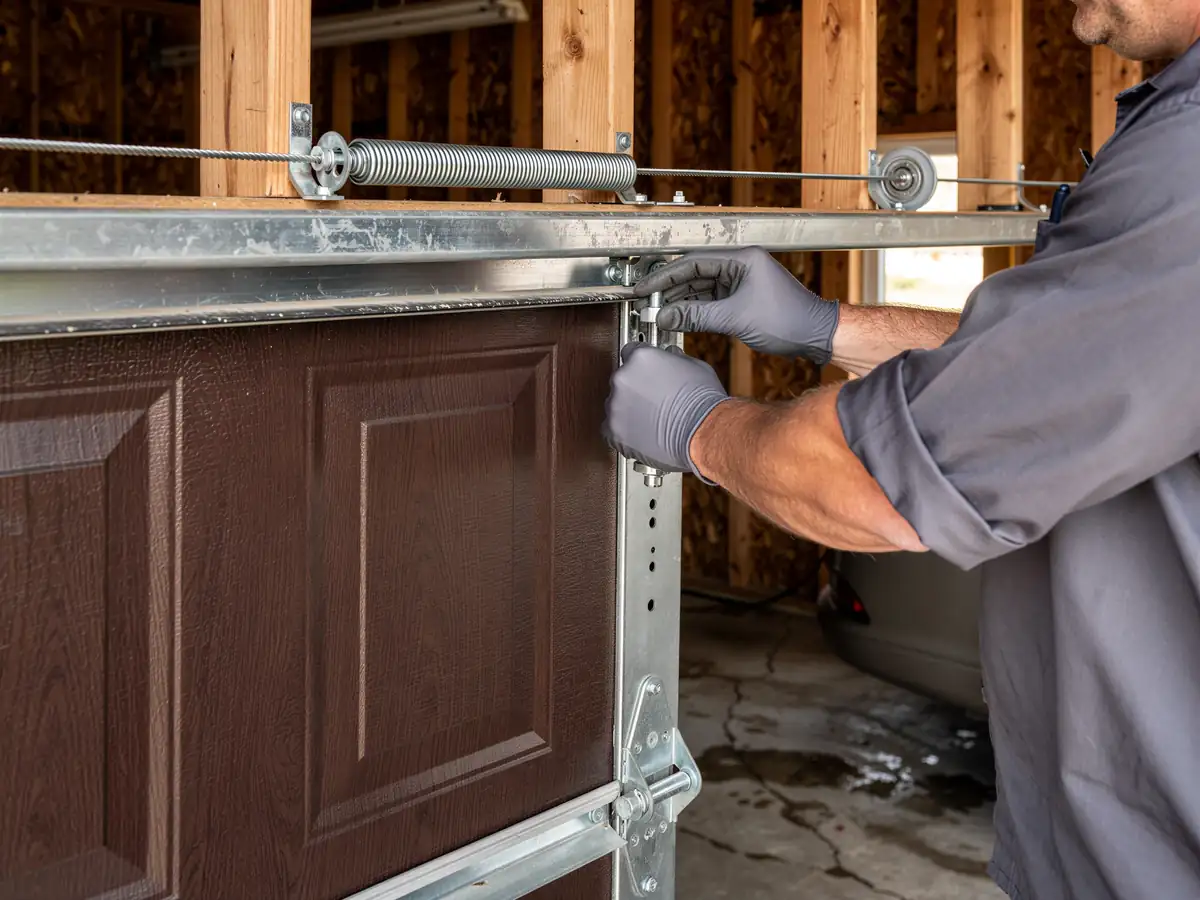
For a broken or weak torsion spring, the job is pulling the old coil off the shaft, matching wire size and wind direction to the door's weight, and setting the new spring to the right number of turns so the door balances - meaning it stays put at waist height when you lift it by hand. Get the turns wrong and the door either crashes down or won't stay open, so this isn't a guess-and-check job.
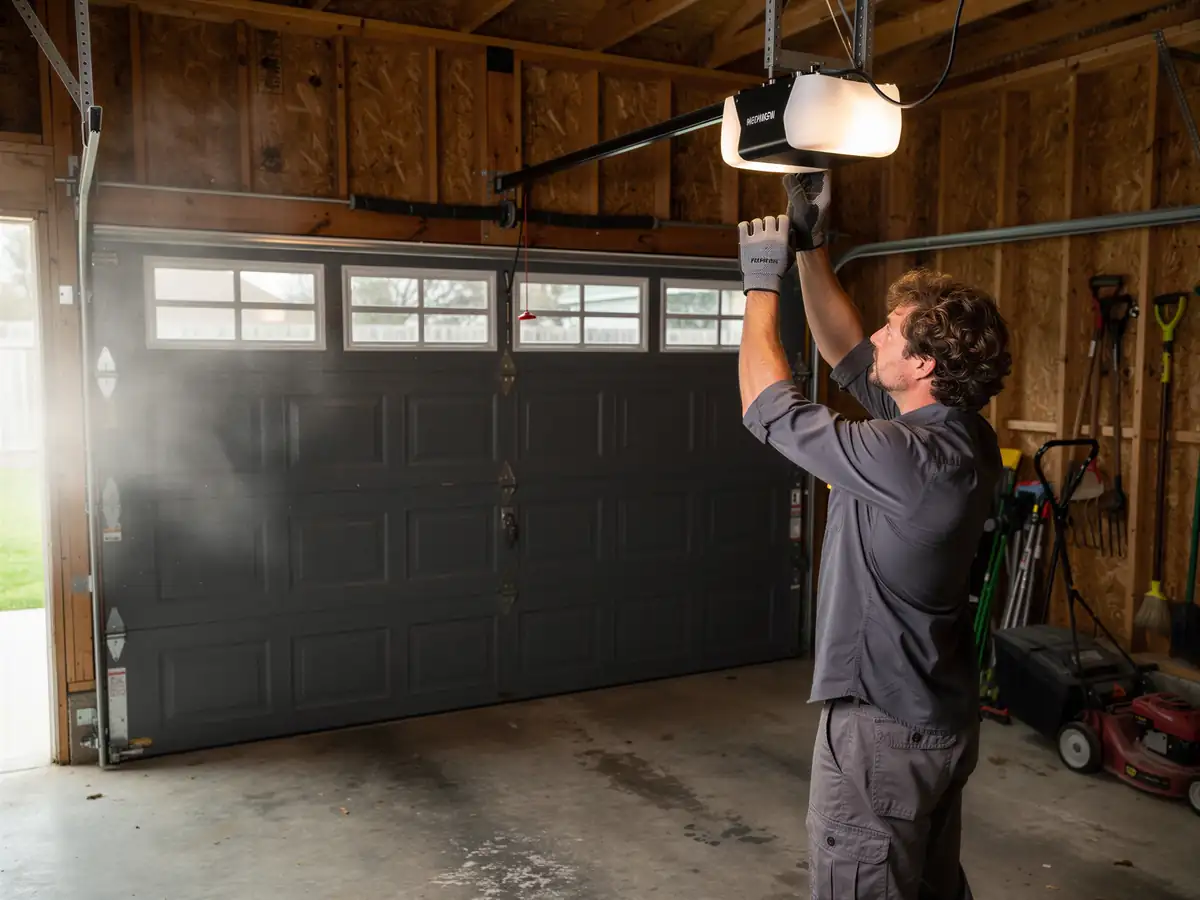
While the spring is off, we check the cables, the rollers, and the bottom brackets, since a spring failure often takes a cable partway with it. If the opener has been straining against a bad spring for weeks, we check the gear and the drive belt or chain too, because a motor that's been lifting dead weight wears out its internal gear early.
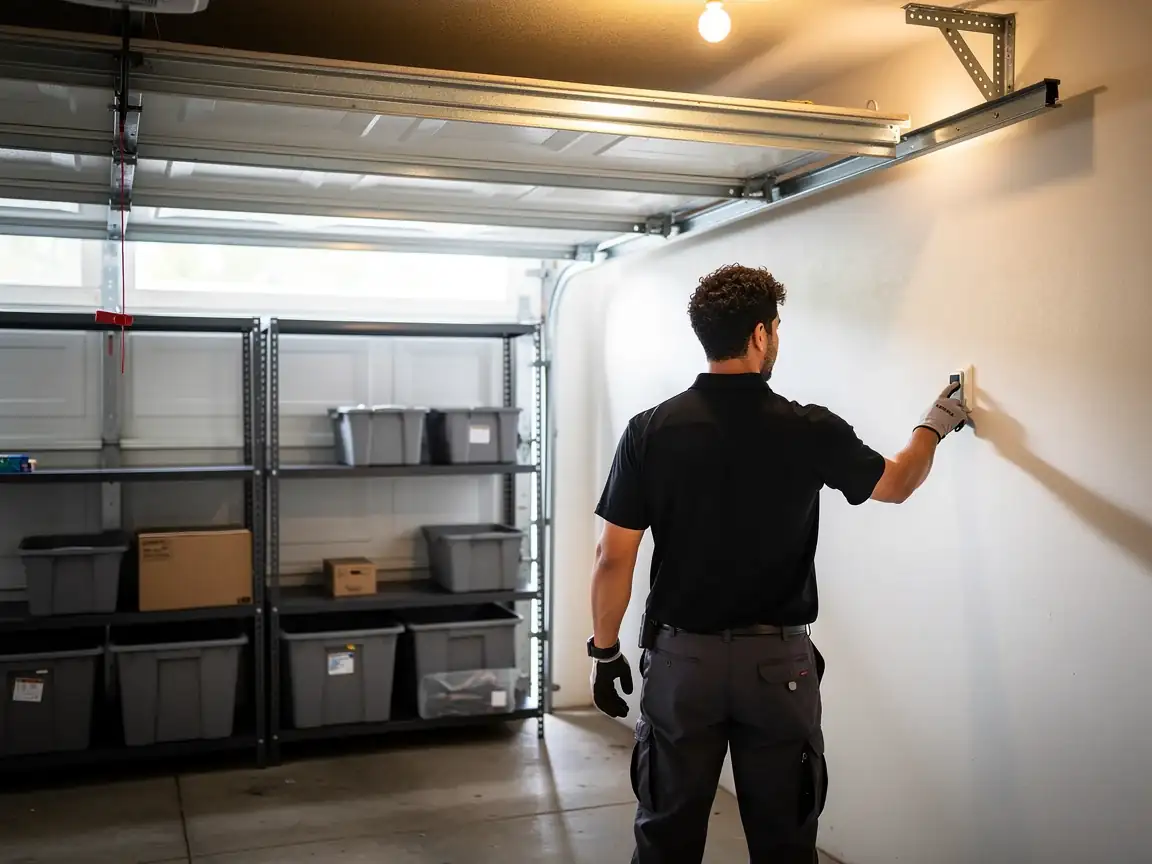
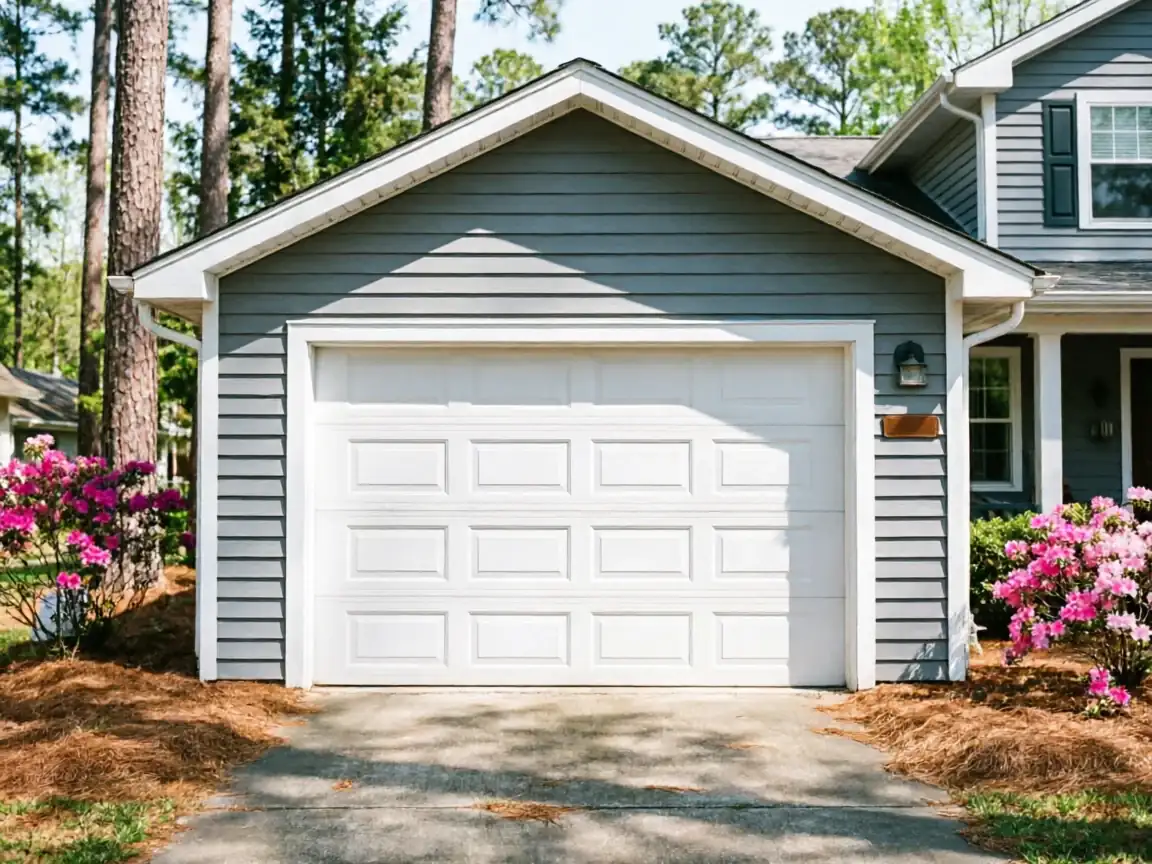
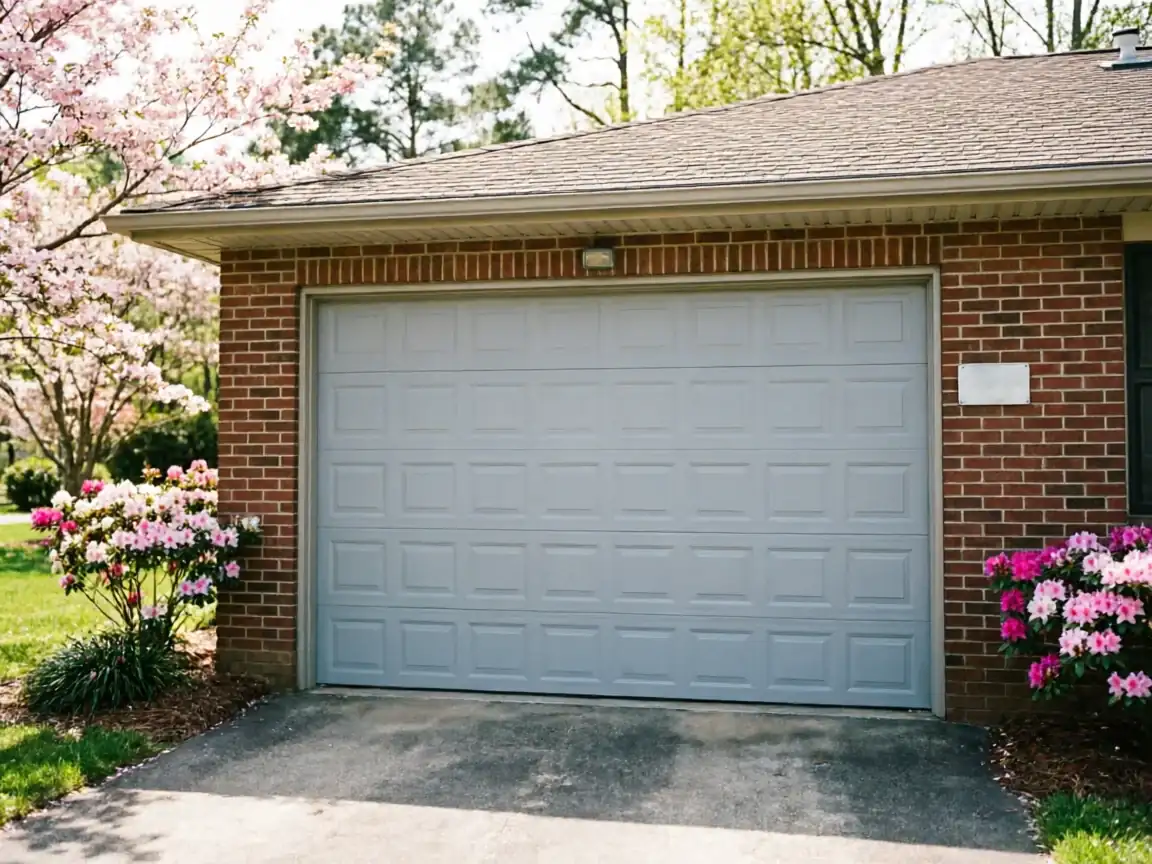
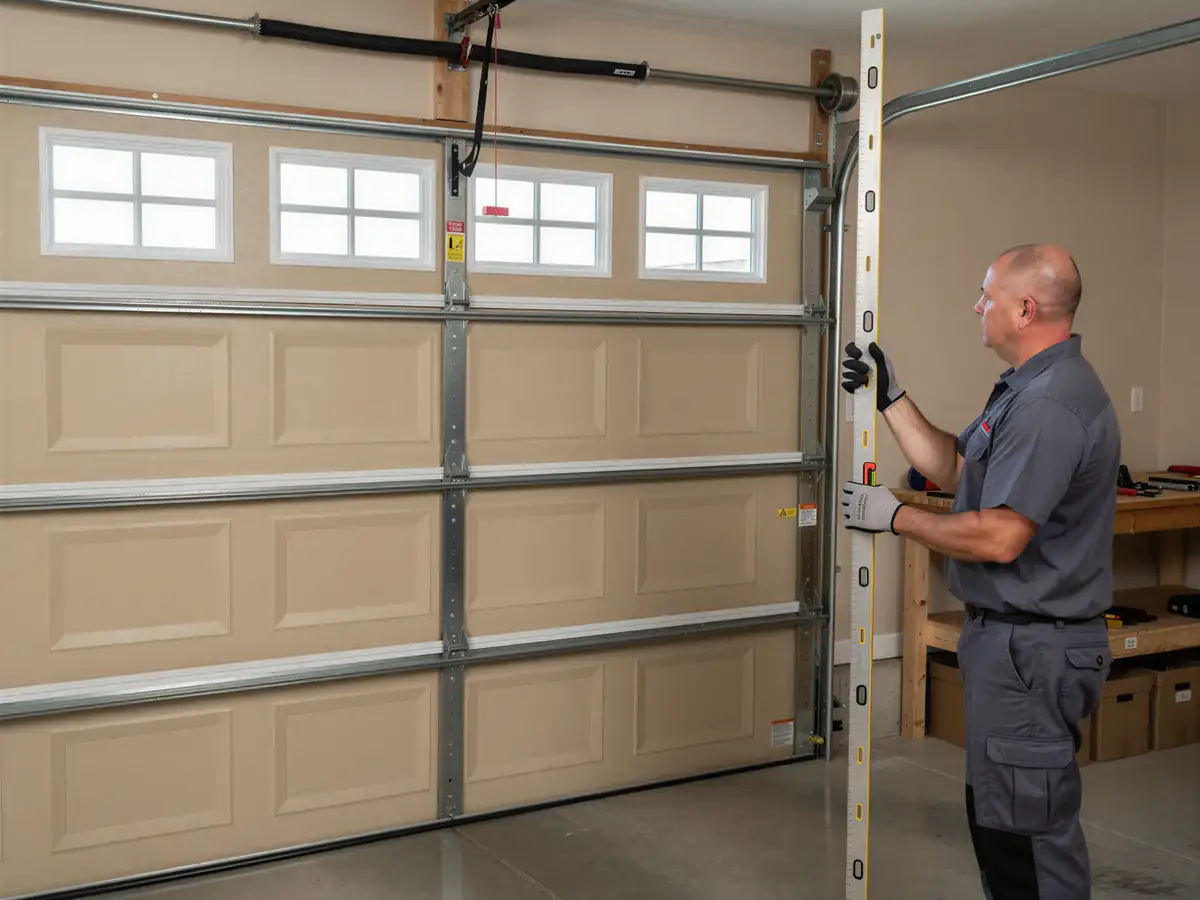
On a double-wide door we're setting two matched springs, not one, and they have to carry the load evenly or the door racks sideways again within months. We test the full cycle - open, stop, close, auto-reverse - before we call it done, because a door that opens fine but doesn't reverse on an obstruction isn't actually fixed.
Why This Fails Locally
Housing across this service area mostly went up between 1938 and 2007
With the median landing around 1974, and the bulk of it across the 29 named communities we work in dates to the 1960s and 70s. That matters because torsion springs have a duty cycle - they're rated for a number of open-close cycles, not a number of years - and a spring installed when a house was built in the Johnson or Nixon administration has been through decades of cycles whether or not anyone's replaced it since.
The climate here is cold-moderate
Which doesn't sound dramatic next to places that get real ice storms, but it's enough: steel spring wire contracts in a hard freeze and loses a little flex, lubricant on the coil thickens, and a spring already near the end of its cycle life is the one that snaps on the first cold morning of the season rather than a mild one. We see that pattern every winter on doors original to houses from that 1960s-70s wave.
With a median household income of $62,299 across roughly 95,226 households and 38,447 owner-occupied houses in the area
Most owners here are fixing the spring, not replacing the whole door, when the budget allows it - which is usually the right call on a door that's otherwise sound.
- $62,299 median household income
- 95,226 households
- 38,447 owner-occupied
Parts We Carry
We stock torsion springs in the wire sizes and wind directions that fit the one-piece and sectional doors common on houses from the 1960s and 70s, along with current production sizes, so most jobs don't wait on a special order. We also carry standard rollers, lift cables, and bottom brackets that match those same older doors.
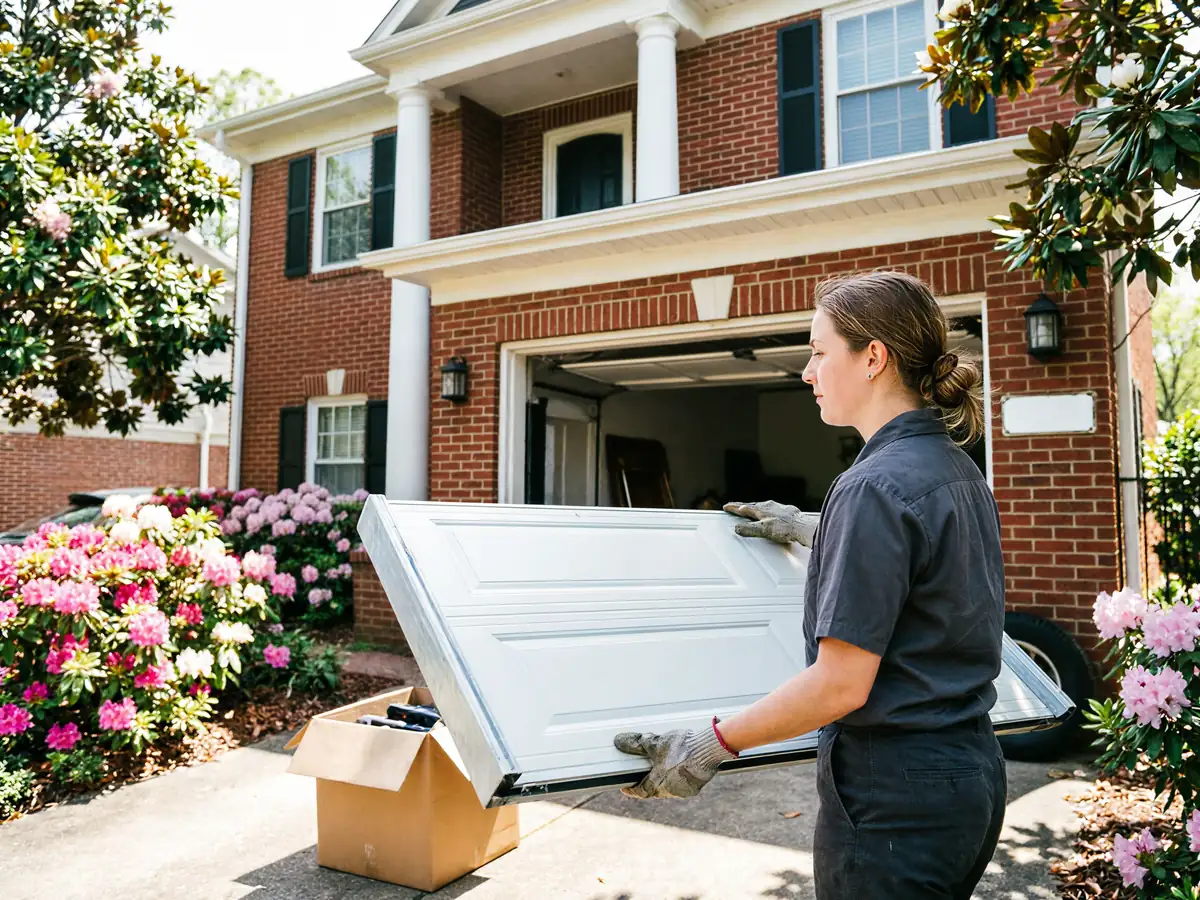
Here's the honest limit: a handful of doors from the earlier end of that 1938-2007 build range use hardware that's been discontinued by the manufacturer, and for those we sometimes have to source a part rather than pull it off the truck. When that happens we'll tell you up front rather than string the job out, and on a door that old, replacing the whole section sometimes makes more financial sense than chasing an obsolete part.