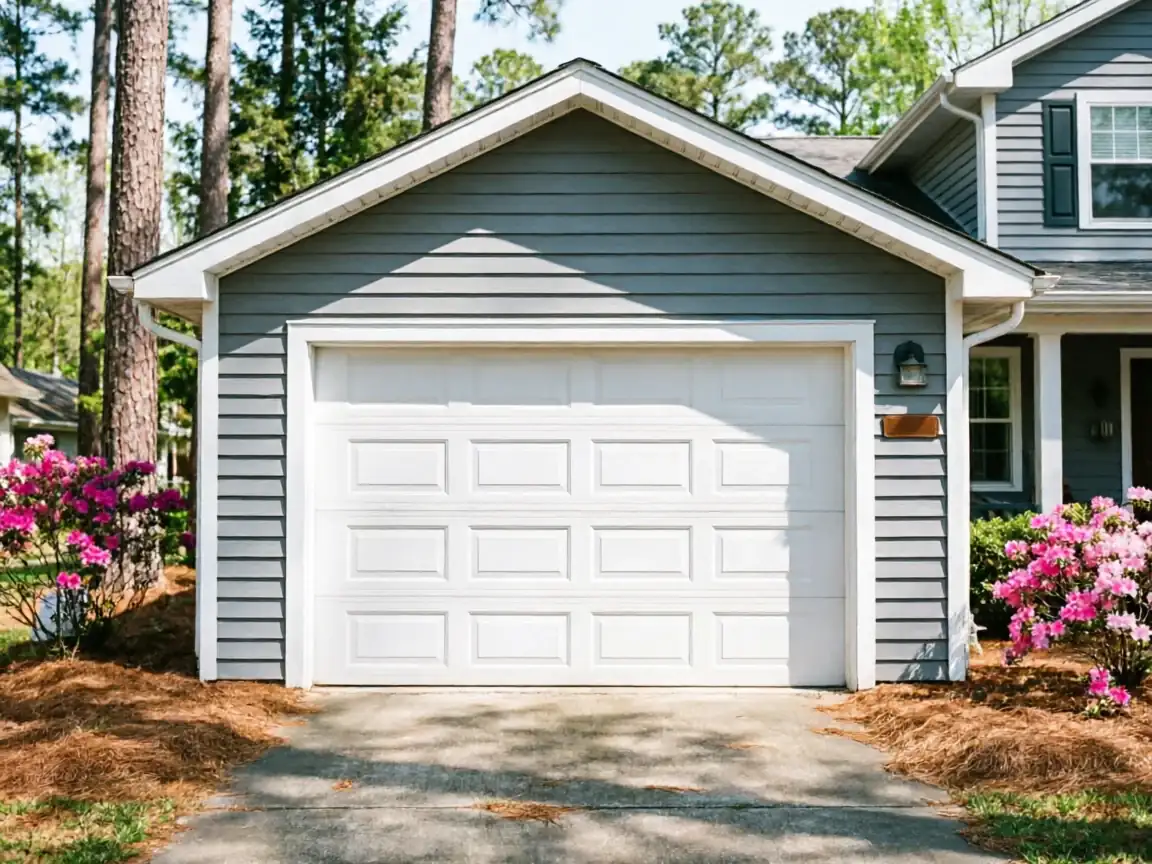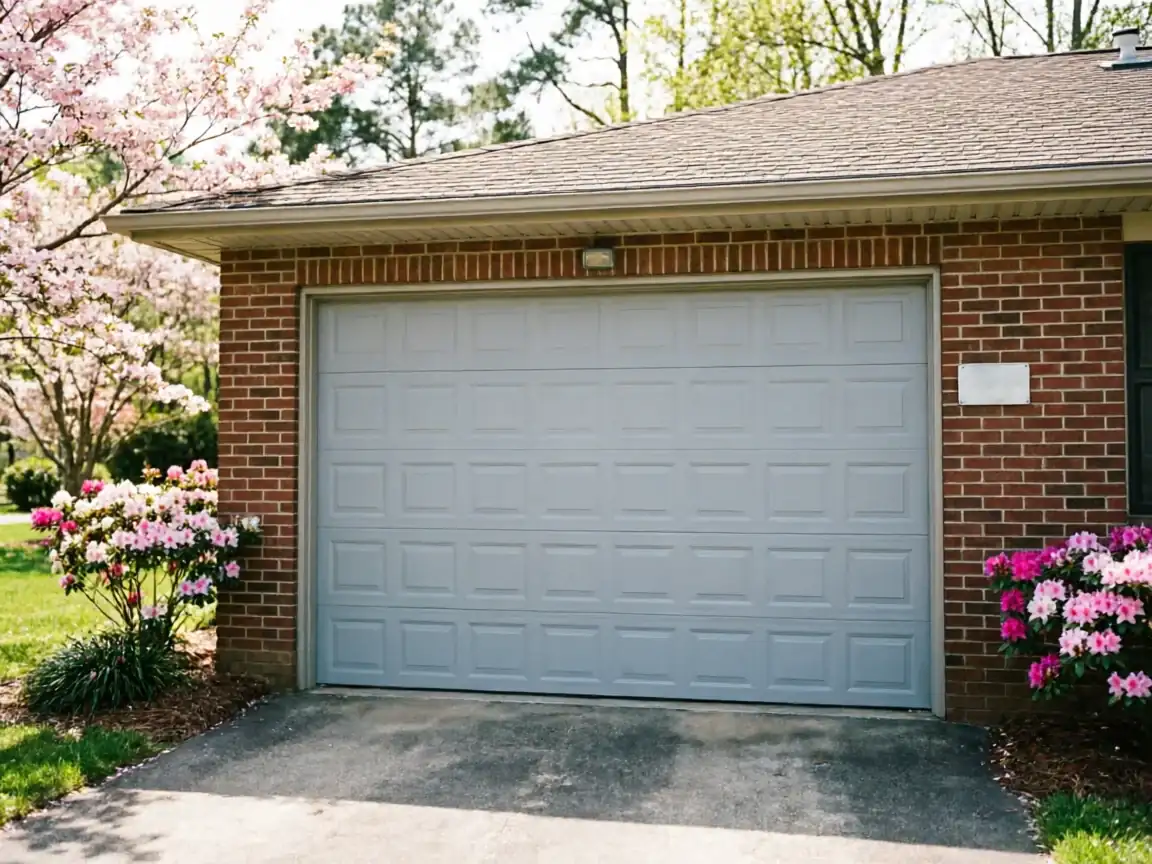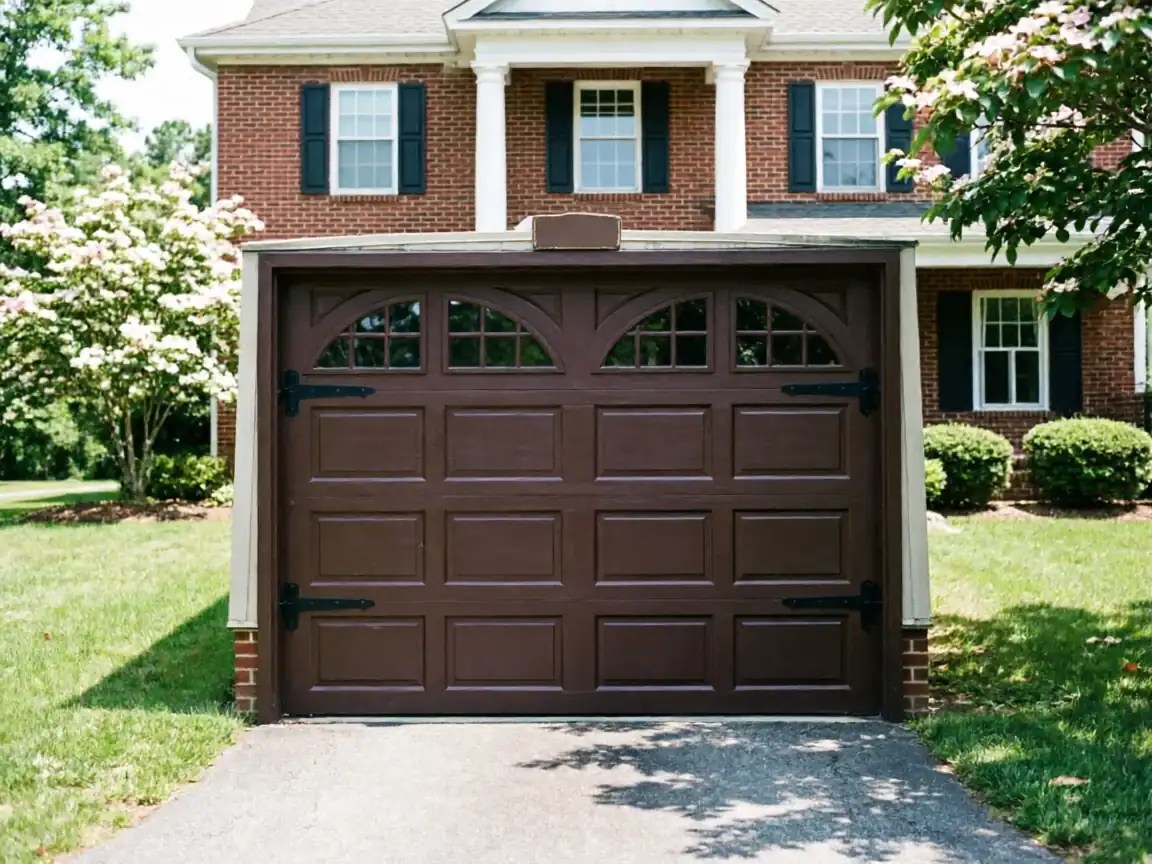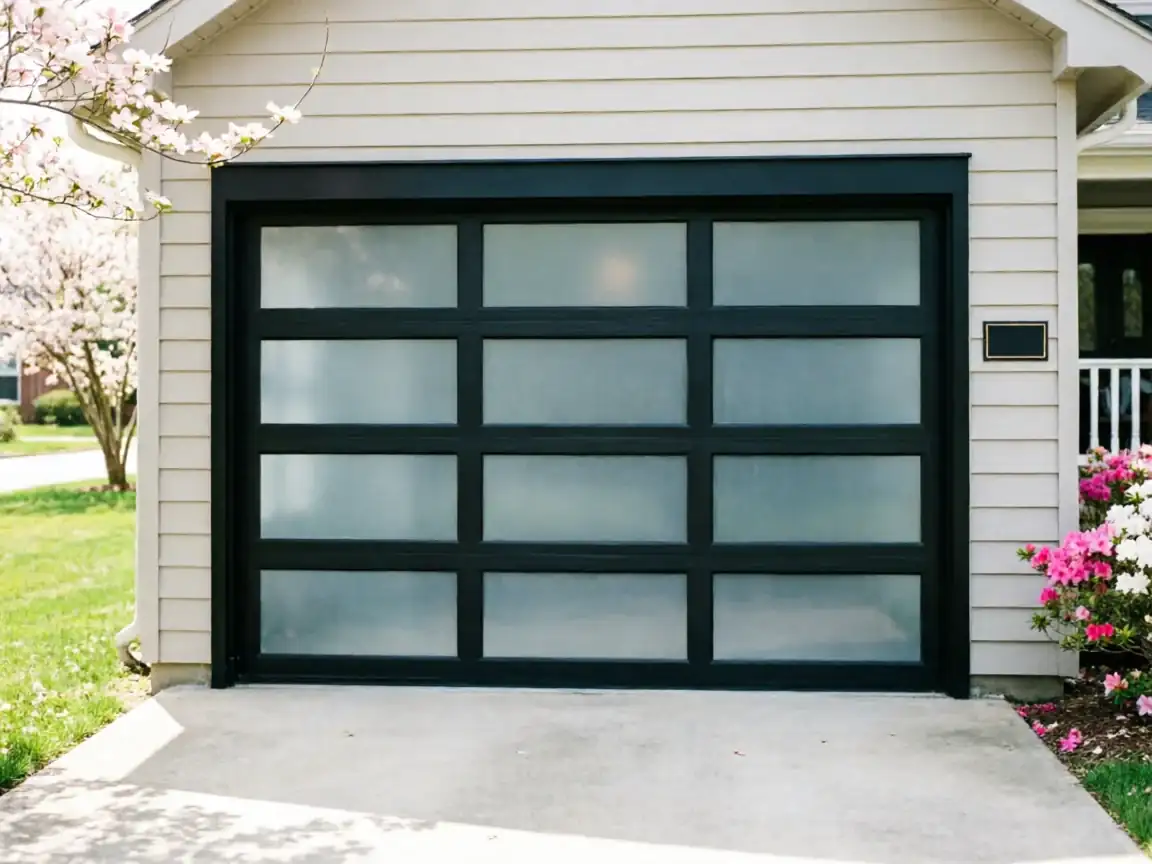
How It Shows Up
Most emergency calls start the same way: the door won't move, or it moves wrong. A spring snaps with a bang loud enough to bring someone running from the kitchen. A cable frays and jumps the drum, leaving one side of the door hanging low. An opener motor runs but the door sits still because the belt or chain let go overnight.
Across the service area's housing stock - built mostly between 1938 and 2007, with a lot of it from the 1960s and 70s - the failure points repeat. Original torsion hardware on older houses wasn't built for 50+ years of daily cycling. Newer doors from the 1990s and 2000s fail differently: plastic idler pulleys crack, extension spring cones rust through.
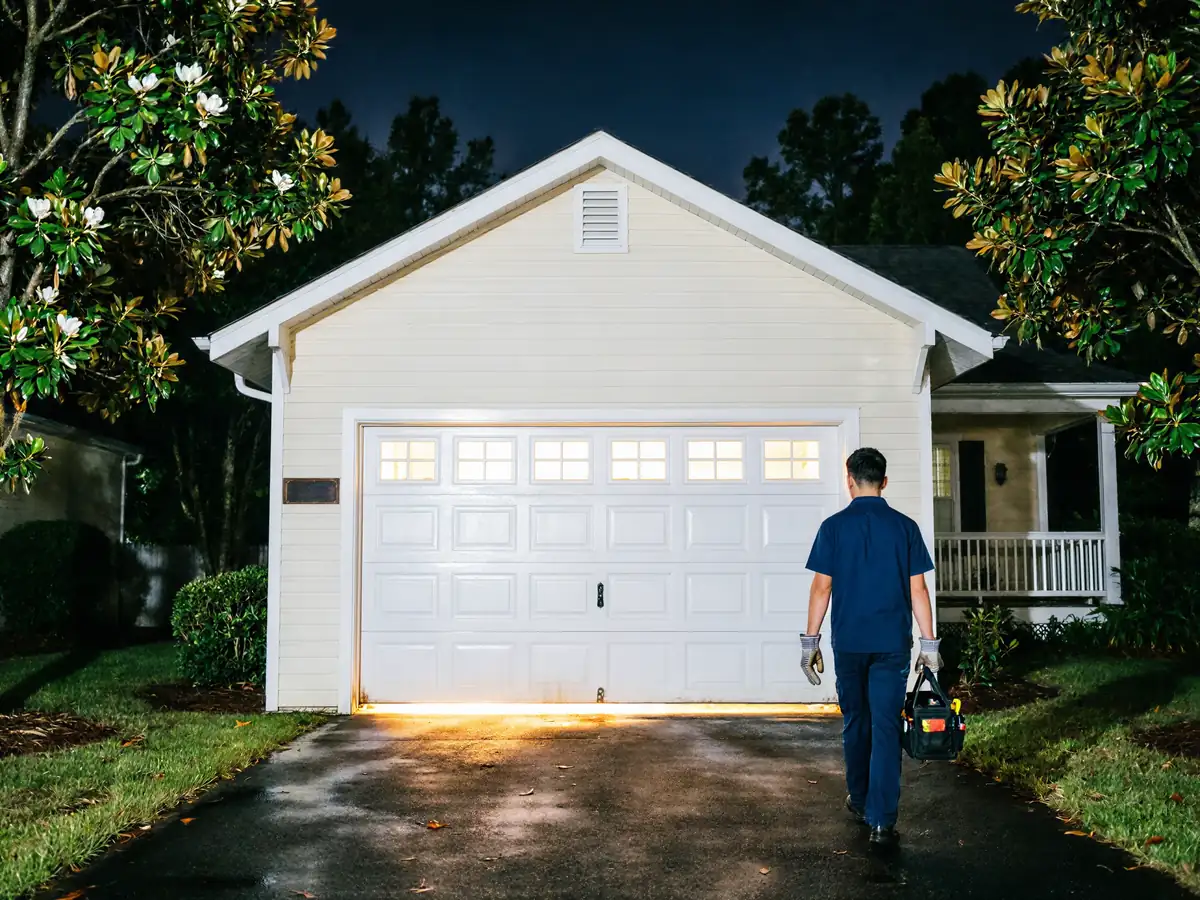
When it happens at 7pm on a weeknight or on a Saturday morning before anyone's left for errands, it reads as an emergency because the car is trapped, or the door is stuck open and the house is exposed. We treat both of those as same-category calls: something broke, and it needs a person on site, not a YouTube fix at 9pm with the wrong tools.
What the Fix Involves
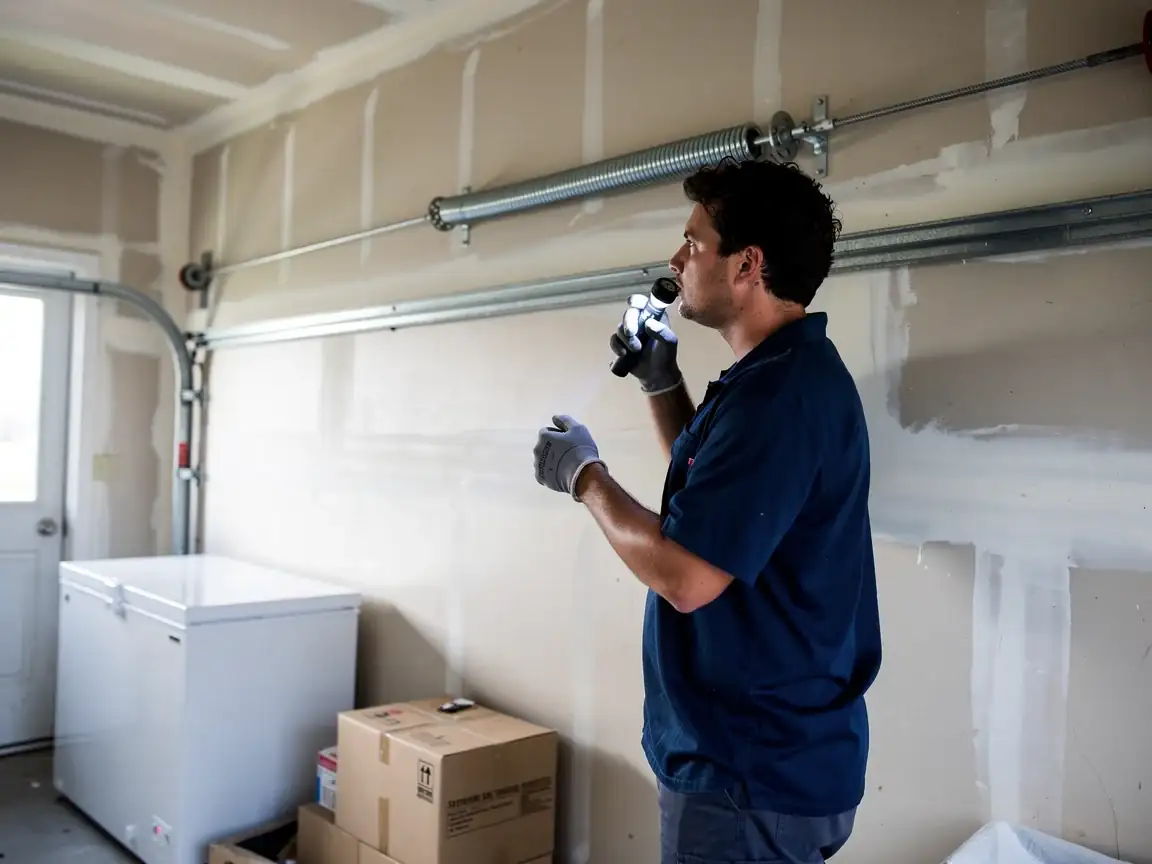
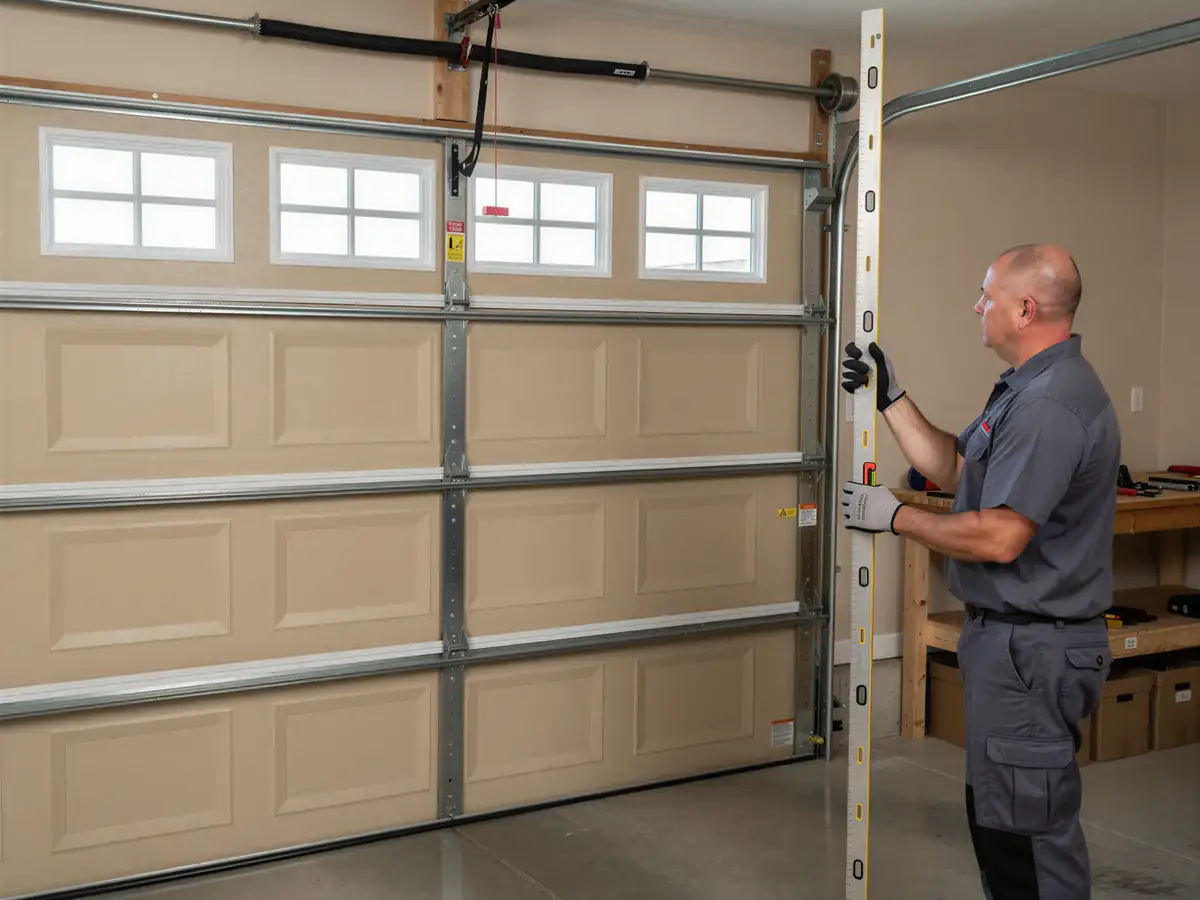
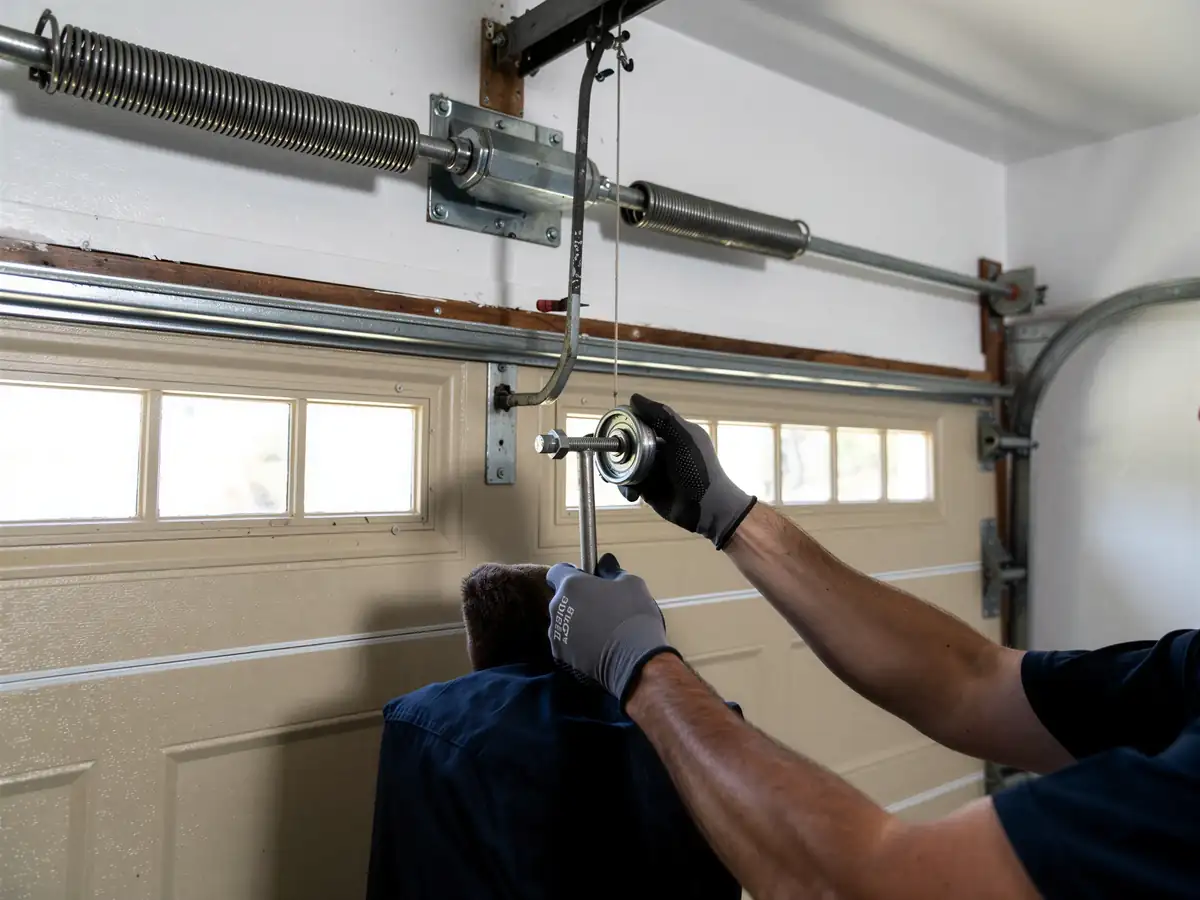
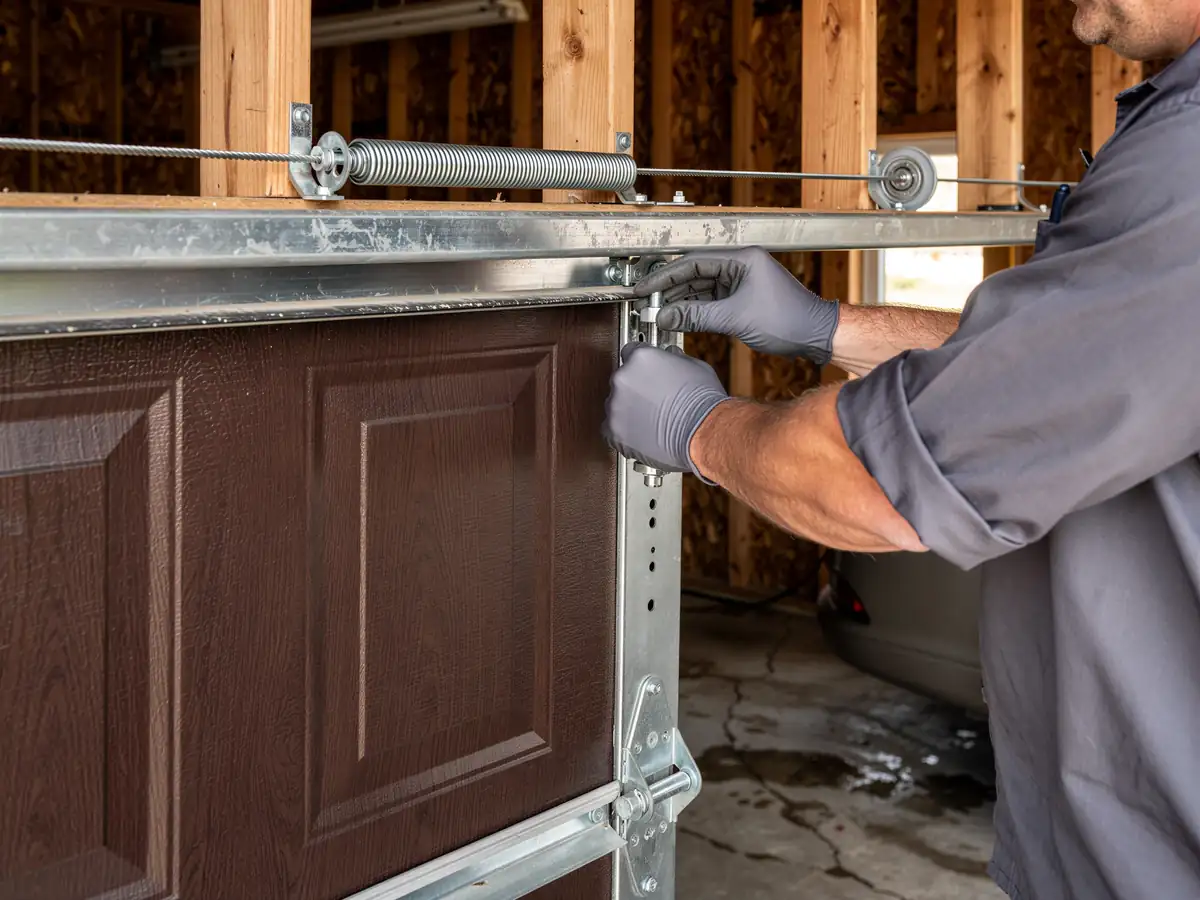
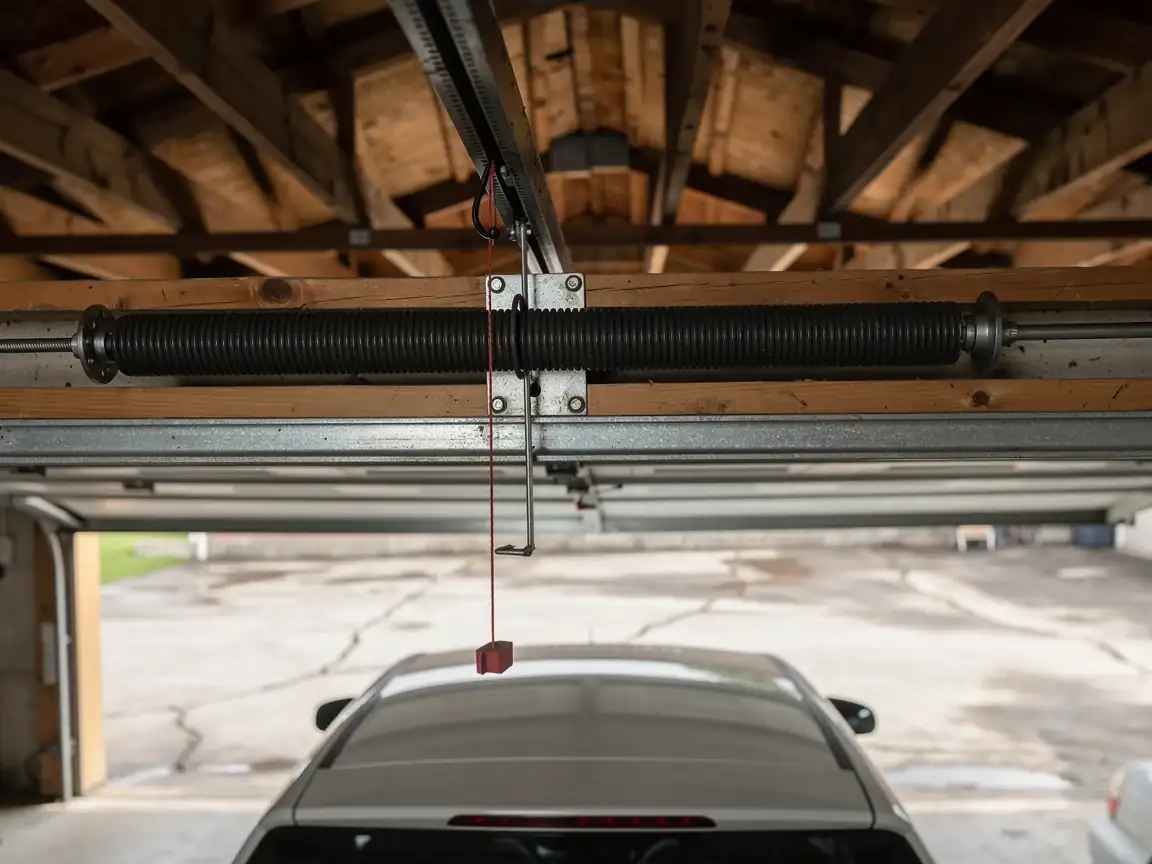
A broken torsion spring on a double door gets replaced in pairs, not one at a time - mismatched springs wear unevenly and you're back to a second call within a year. We measure wire size and wind, because original hardware from houses built before the 1990s often used sizes that aren't common stock anymore, which we address in the next section.
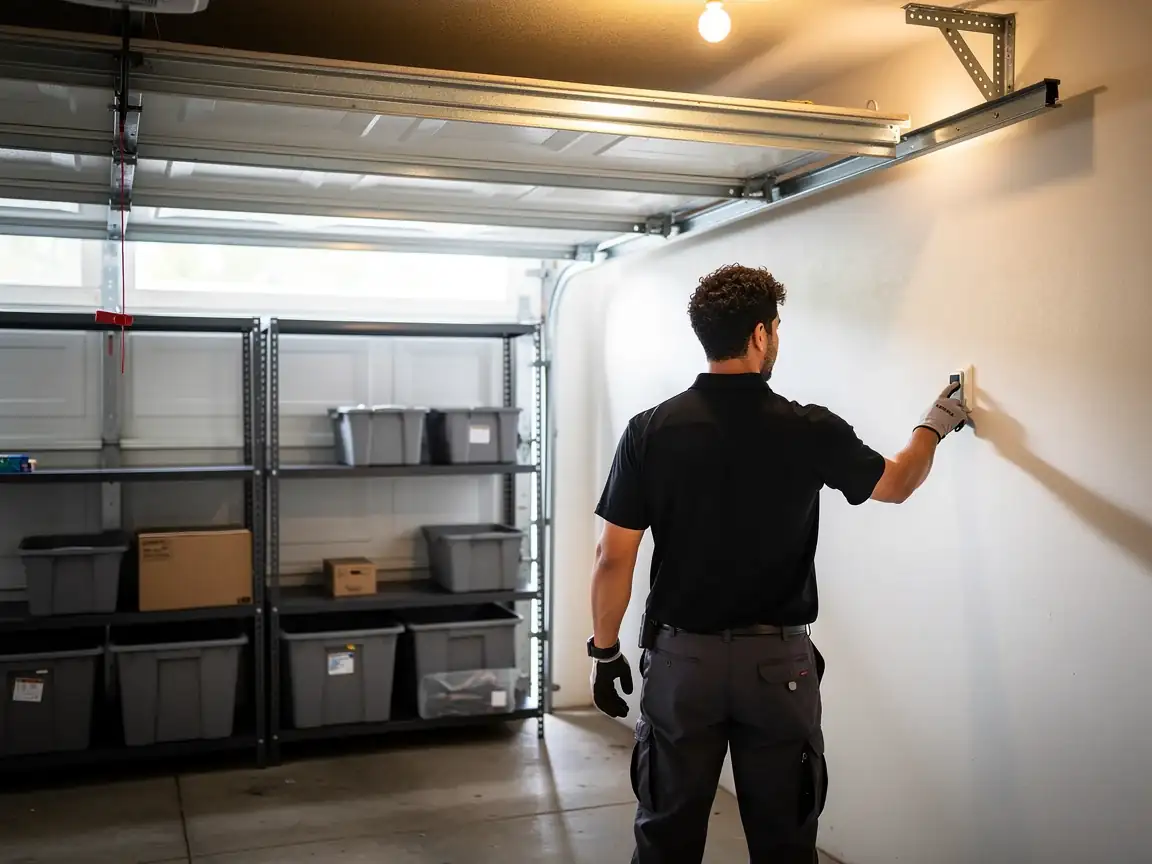
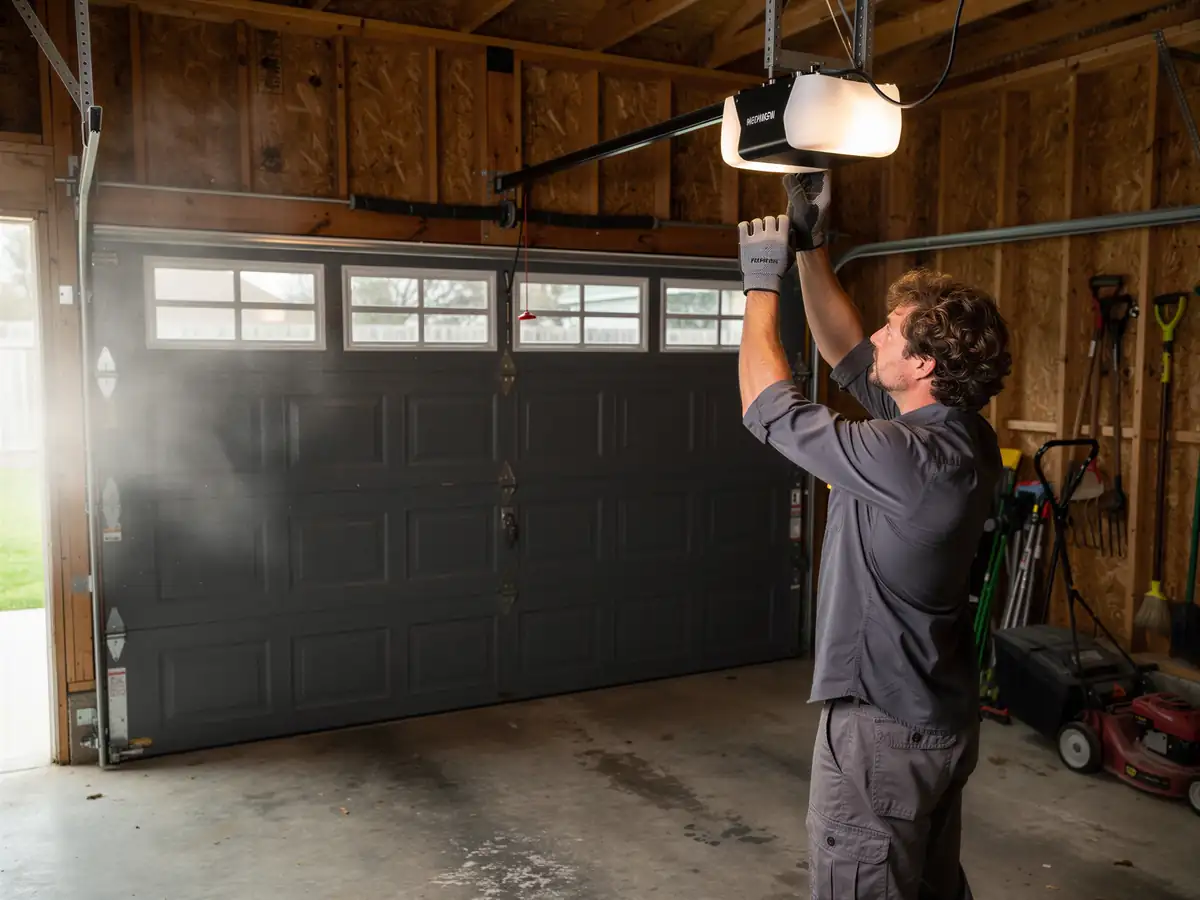
A jumped cable means inspecting the drum, the bottom bracket, and the track alignment before we re-tension - a cable that jumped once because the track was bent will jump again if we just re-seat it. Opener failures get split into two buckets: the motor itself, or the drive system (belt, chain, screw). We test the logic board and safety sensors before assuming it's mechanical, since a dead photo-eye looks like a dead opener to most homeowners.
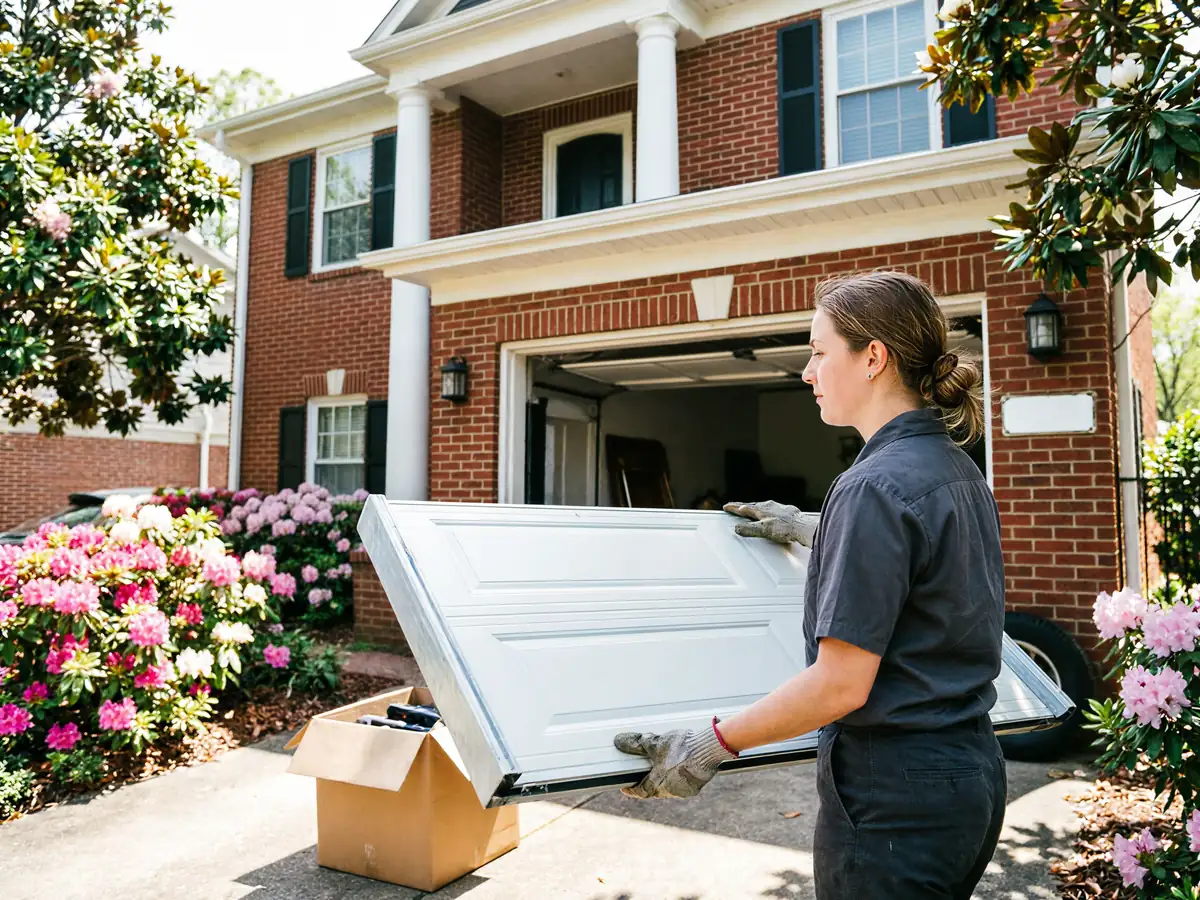
One honest limit: if the door panel itself is bent or rusted through from age, we'll tell you straight that spring or cable repair won't fix a door that's structurally failing. At that point replacement is the cheaper long-term call, even on an emergency visit, and we'll say so instead of patching something that'll fail again in a month.
Why This Fails Locally
The service area's housing runs older than people expect
Median build year 1974, with stock going back to 1938. That median year matters because it predates most of the torsion spring standardization that later doors use, so a lot of original hardware here is sized differently than what a big-box store carries off the shelf.
The cold-moderate climate band this area sits in isn't brutal
But it's enough: overnight temperature swings cause steel springs and cables to contract and expand on a daily cycle, and that repeated flex is what fatigues metal over decades, not any single cold snap. Houses from the 1960s and 70s - which make up most of the 29 named areas in this service territory - are hitting the age where that fatigue shows up as sudden failure rather than gradual wear, which is why spring breaks tend to be abrupt instead of slow.
With 38,447 owner-occupied houses across the service area and a median household income of $62,299
Most of these are owner-maintained homes where a spring gets replaced once and then ignored for another 20-plus years - which is exactly the interval where it breaks again.
- 38,447 owner-occupied
- $62,299 median household income
Parts We Carry
We stock common torsion spring sizes for the wind and wire gauges that show up most often in houses built from the 1960s through the 1990s, plus standard 1/4 inch and 3/8 inch cable in the lengths that fit most residential track heights. Bottom brackets, rollers (steel and nylon), and the drums for both 2-inch and 3-inch torsion tubes are on the truck.
Opener parts are more mixed - we carry common belt and chain drive sprockets and standard safety sensor pairs, but logic boards vary enough by brand and decade that board swaps sometimes need an order. If your opener dates to the earlier end of this area's 1938-2007 housing range, the control board may not be something we can hand you from the truck the same day.
That's the one gap worth naming up front: we won't pretend a same-day board replacement is always possible when the unit is old enough that the manufacturer's stopped making the exact part. In that case we'll get the door moving safely on manual override first, then order the part.