What the Fix Involves
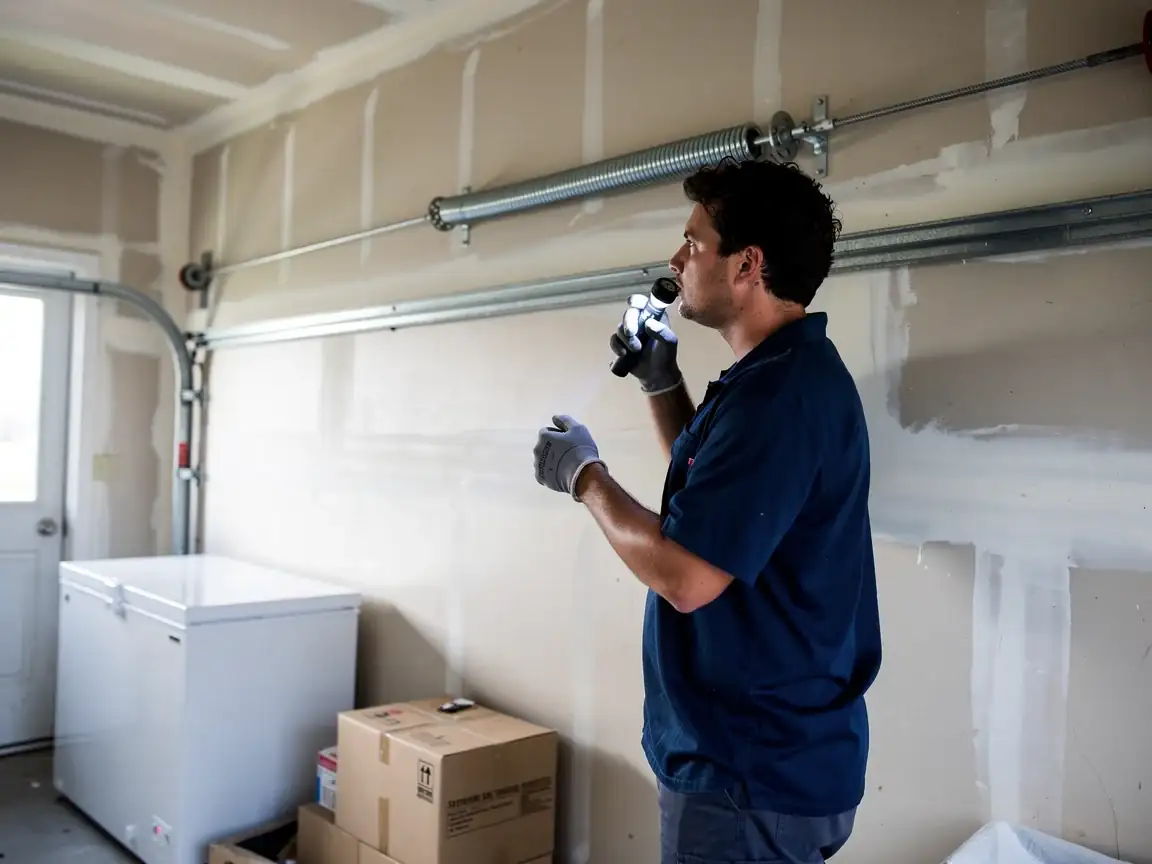
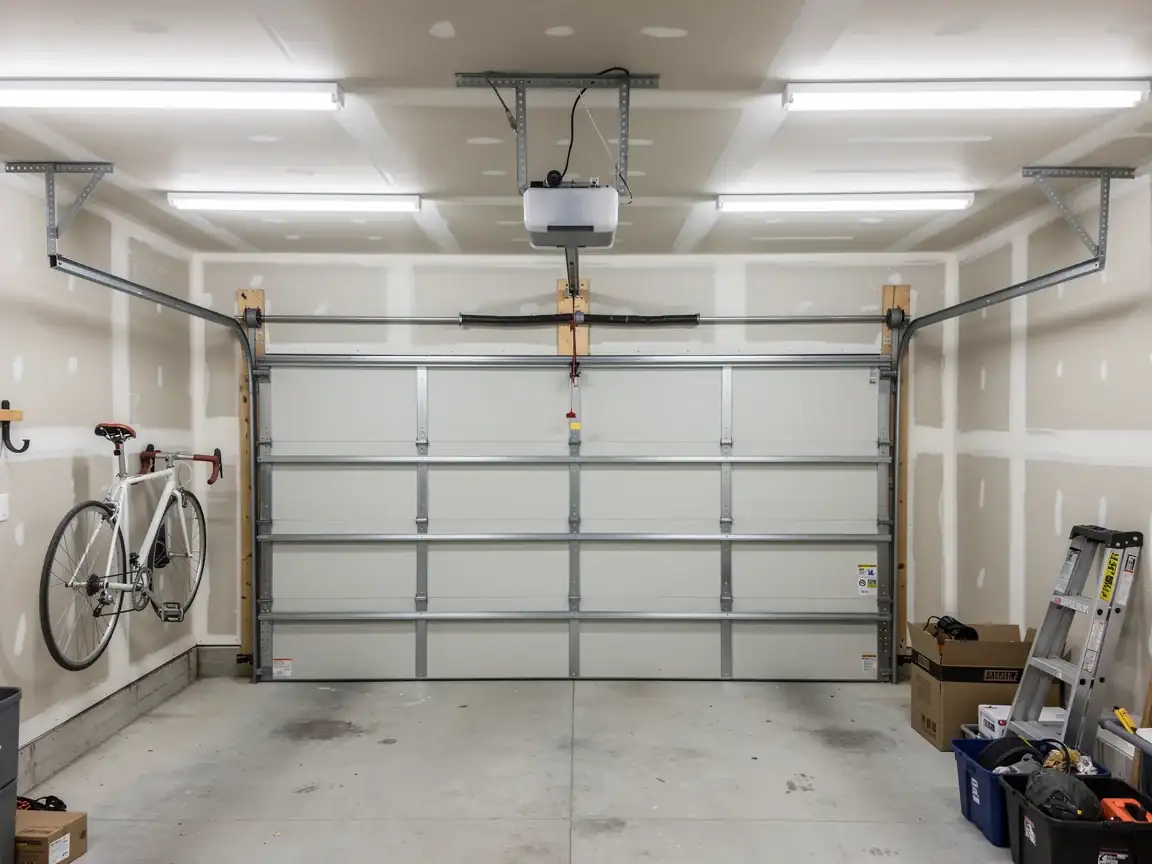
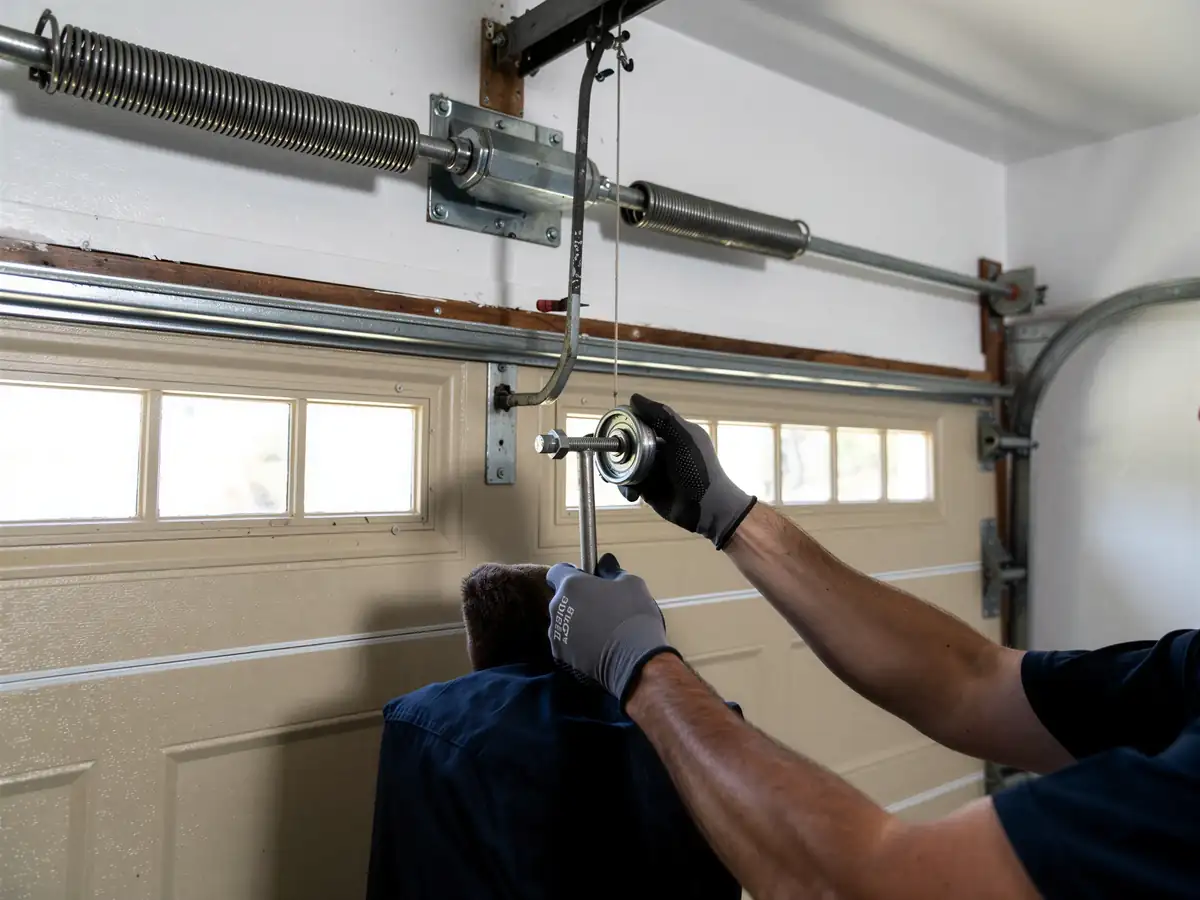
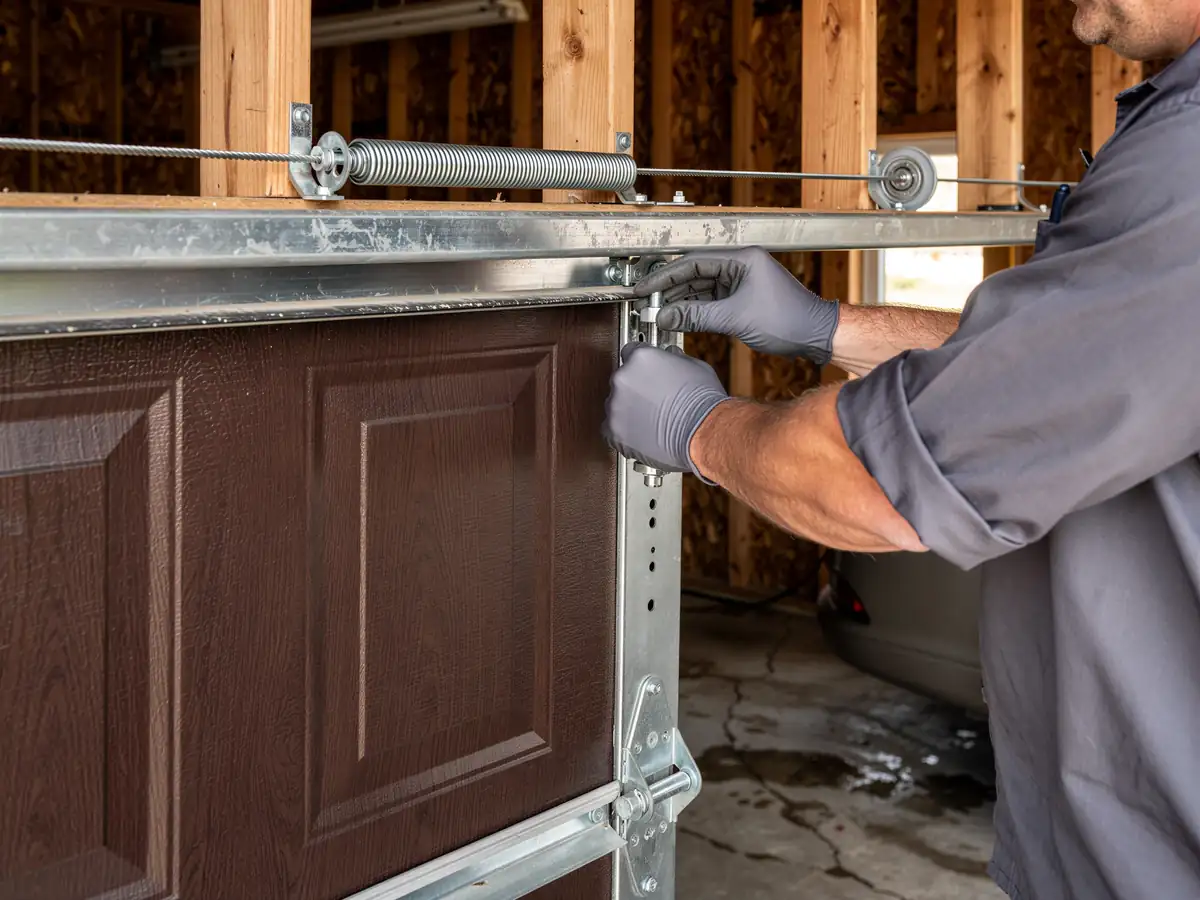
Most of the calls we get from Druid Hills trace back to one thing: the house is old enough that the garage door hardware was never upgraded. The median home here went up around 1964, which puts a lot of these garages on extension springs rather than the torsion setups you see in newer construction. Extension springs wear differently - they stretch, the safety cables fray, and the pulleys they ride on rust out long before anyone notices a problem, until the door comes down crooked or won't come down at all.
That 1964 build date matters because it's roughly a decade earlier than a lot of the broader service area, where the median sits closer to 1974. A decade in garage door hardware is a real gap - later doors often got torsion conversions during a remodel, earlier ones frequently didn't. So when we pull up to a Druid Hills job, we're already expecting original or near-original extension hardware, not torsion, and we bring the parts for that rather than guessing on site.
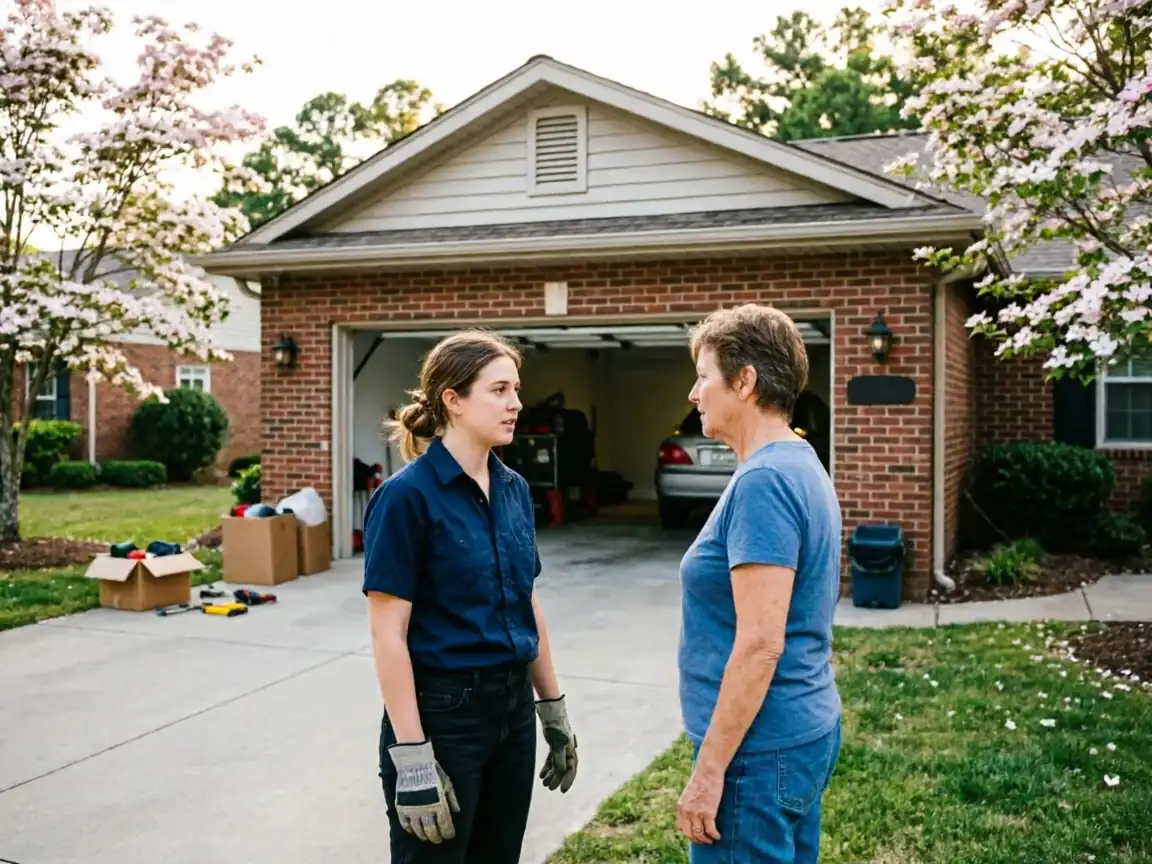
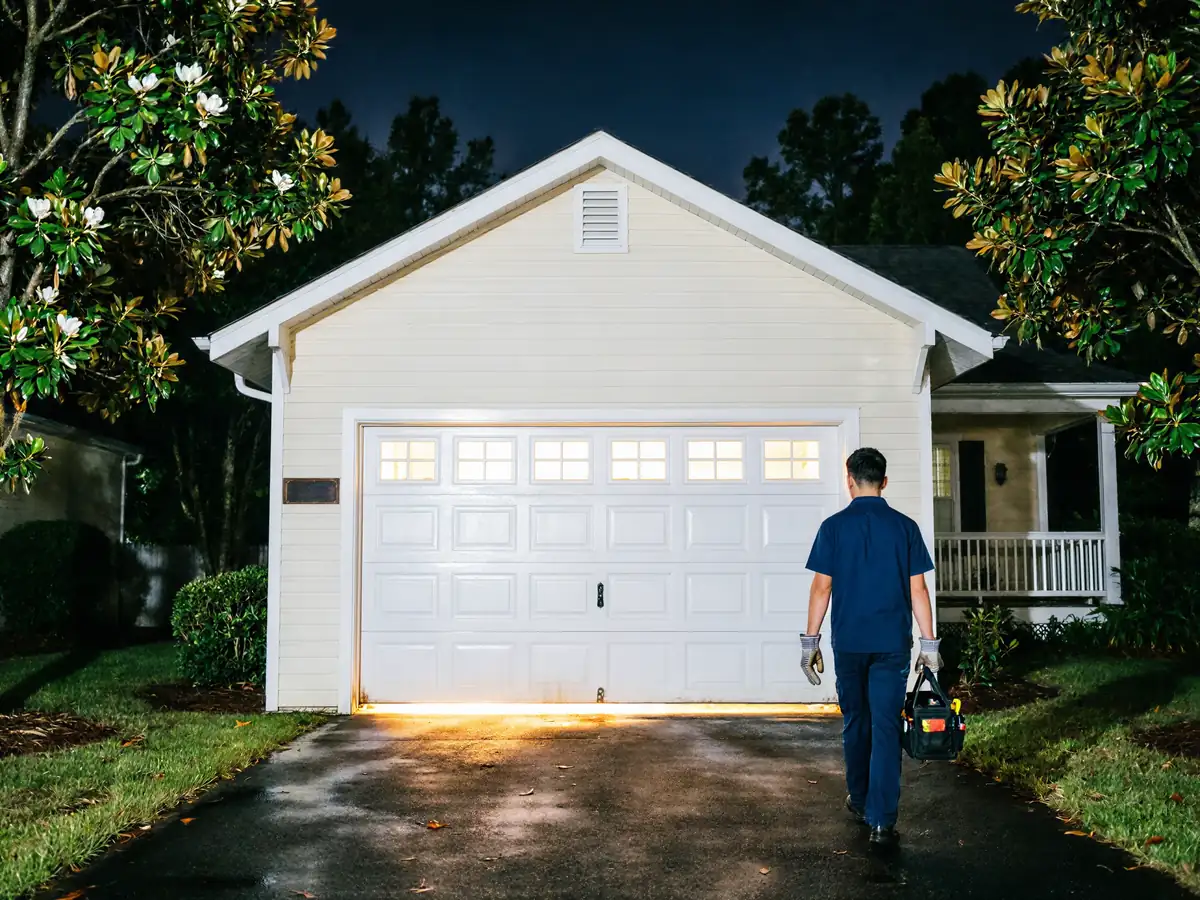
We're driving in from Stockbridge for this, about 18 miles each way, so we try to diagnose as much as we can over the phone before the truck leaves - what the door is doing, what it sounds like, whether it's one side or both. That saves a second trip when the fix needs a part we'd otherwise have to go back for.
How It Shows Up
On a house from the 1960s, the first sign is usually noise - a grinding or popping sound as one of two aging extension springs stretches past where it should. The door will start looking uneven: it drops fast on one side, or it won't clear the floor at all once a spring lets go completely.
Cold mornings make it worse. The service area sits in a moderate-cold climate band, and metal fatigue in old springs and worn rollers tends to show up hardest on the first genuinely cold day - nothing broke overnight, the hardware had just been getting there for a while and the cold finishes the job.
On these older openers, the eye bolt brackets at the top of the track corrode before the spring itself gives out, which is actually a warning sign if you catch it: rust streaking down from where the spring connects to the bracket means a failure is coming, not that one already happened. We'd rather get called out for that than for a door that's already come off its track.
Parts We Carry
Because the hardware we expect to find in Druid Hills skews toward older extension-spring systems
We stock the parts that fail on that kind of setup - correctly sized extension springs, safety cables, pulley sets, and the galvanized track sections that hold up better in the cold than the plain steel used when these houses were built. We don't carry every spring size on the truck for every job; a nonstandard or custom-length spring sometimes means ordering it and coming back, and we'll tell you that up front rather than string you along on a first visit.
One honest limitation
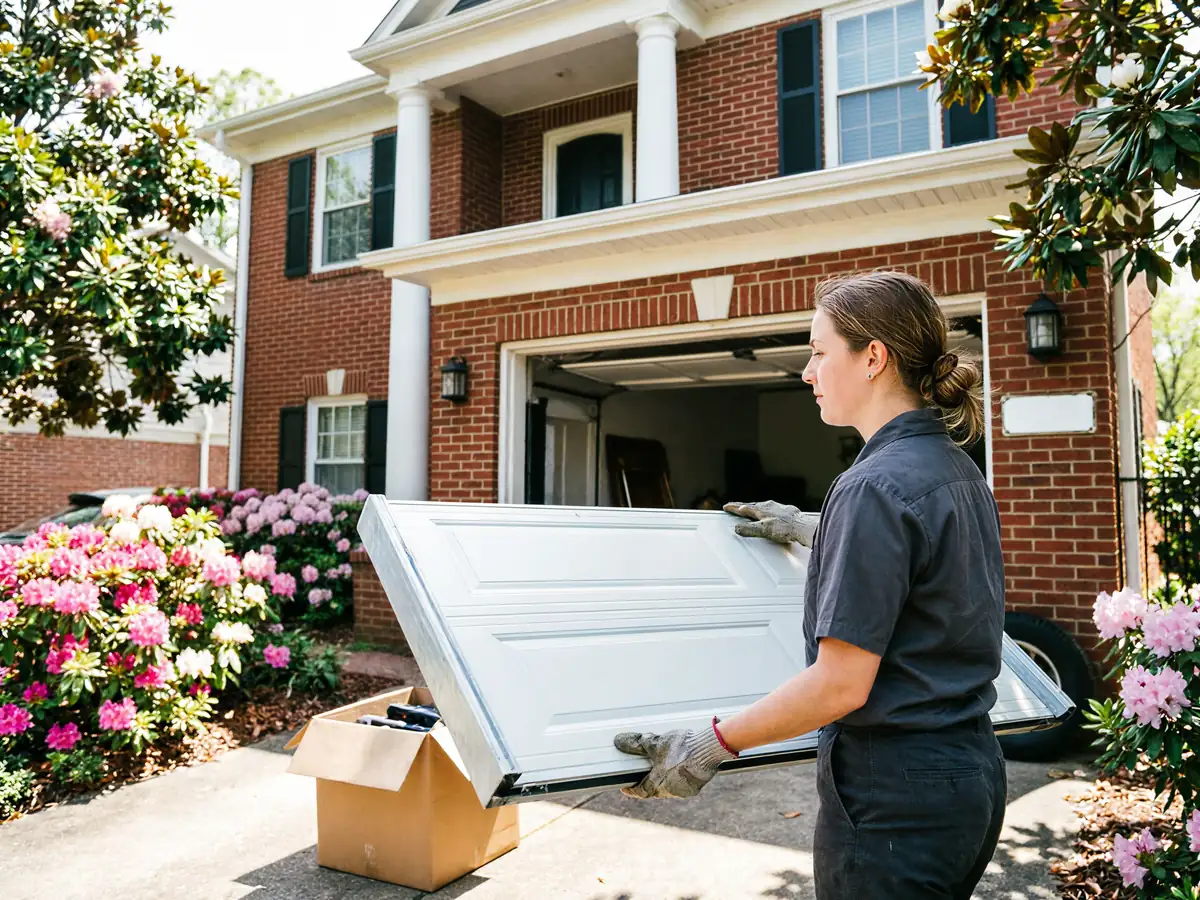
If a door's track is bent badly enough, or the hardware is so far gone that patching it would just move the next failure down the road a few months, we'll say so and talk through full replacement instead of a repair that won't hold. A 1960s door with good bones is worth fixing. One that's been failing piece by piece for years usually isn't.
How to Book
We cover Druid Hills from our base in Stockbridge, about 18 miles out, so we ask for a clear description of the problem when you call - what the door's doing, which side, any noise - so the right parts are on the truck before we leave. You can also start with our Druid Hills service page for an overview of what we handle in this area, or see the full rundown of repair work on the Stockbridge garage door repair page.