How Long You Are Without the Door
Redan sits about 15 miles from our shop in Stockbridge, so the truck has to make that drive before anyone touches your spring. We don't promise a response window we can't back up from that distance, but the truck does carry common torsion and extension spring sizes for doors built from the mid-1980s on, since that's what most of Redan is working with. If your door uses an odd length or a double-spring setup on a heavier insulated panel, that part may need to be ordered, and that's the one honest gap here - we'd rather tell you that up front than guess wrong on the truck. Either way, the door stays down and the opener stays off until the spring is replaced; running a garage door opener against a broken spring strains the drive gear and can bend the track, so don't try to force it open with the motor.
Most Redan houses being 1980s builds means the openers themselves are often newer replacements layered onto original torsion hardware, which is its own wrinkle - the mounting bracket may not match a spring bought off a shelf without adapting it.
What You Pay
We don't post a flat number here because spring cost depends on what's actually on your door - a single torsion spring, a pair, or an older extension-spring setup with side pulleys. Doors from the 1985 construction wave in Redan were generally built single-car or double-car with torsion springs rated for the door weight at the time; if a homeowner has since swapped in a heavier insulated steel door, the original spring is often undersized and failing early, which changes the repair from a straight swap to a resizing job. We size the spring to the actual door in front of us, not the one the house shipped with forty years ago. That's a cost driver more than a mileage one - the 15-mile trip from Stockbridge doesn't change the price of the part, but a mismatched spring from a past door upgrade usually does.
What the Fix Involves
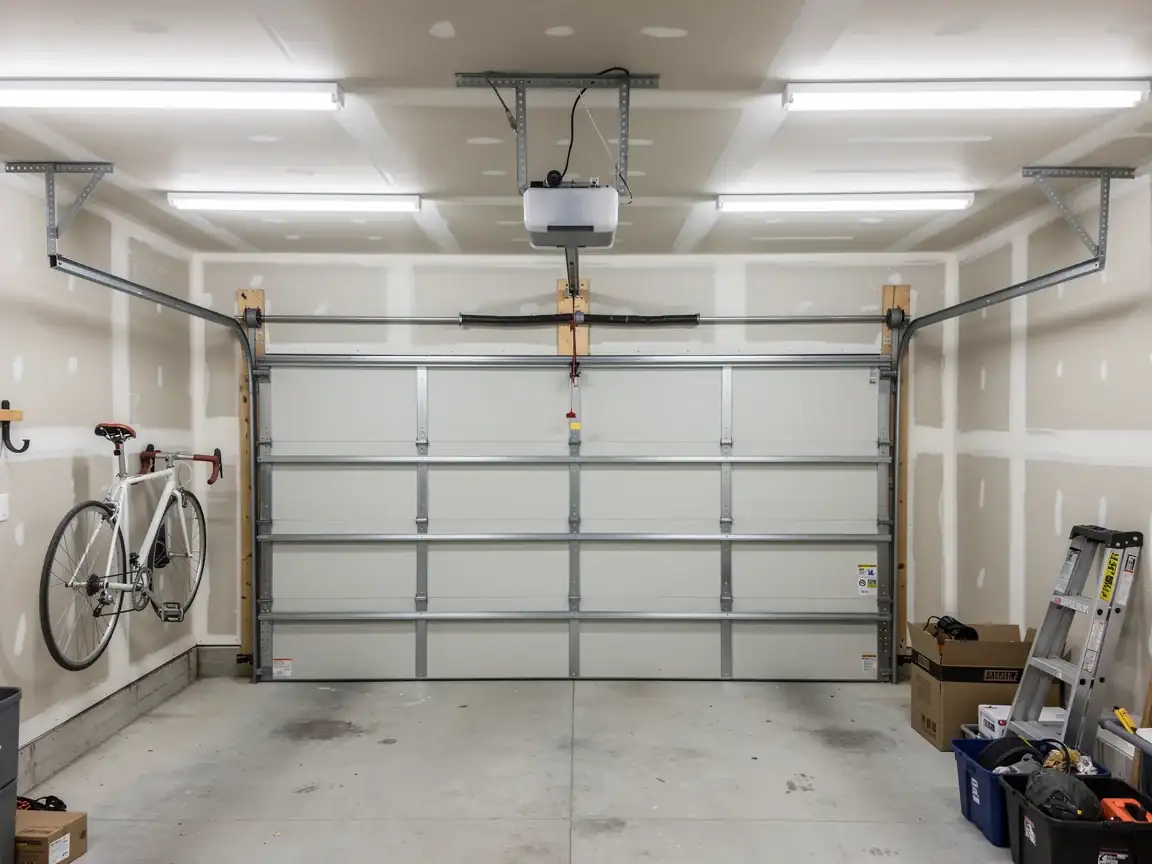
On a torsion setup
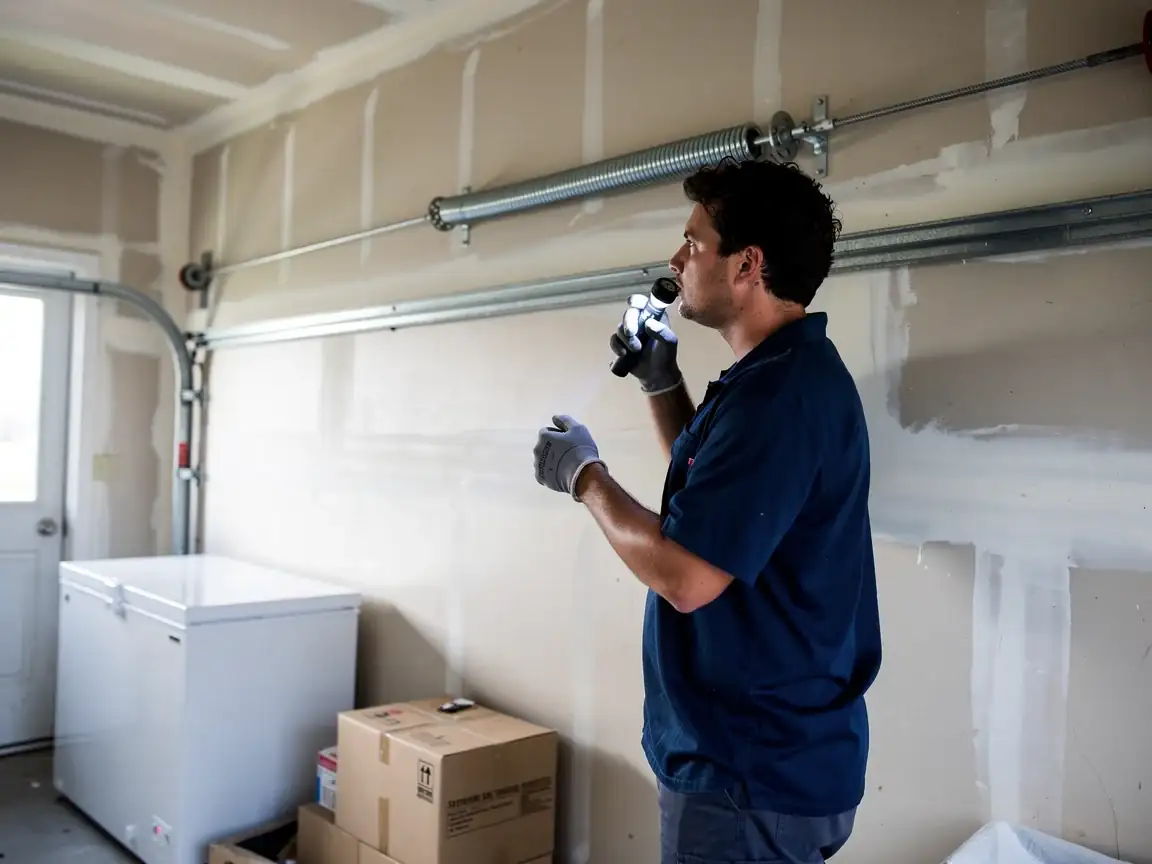
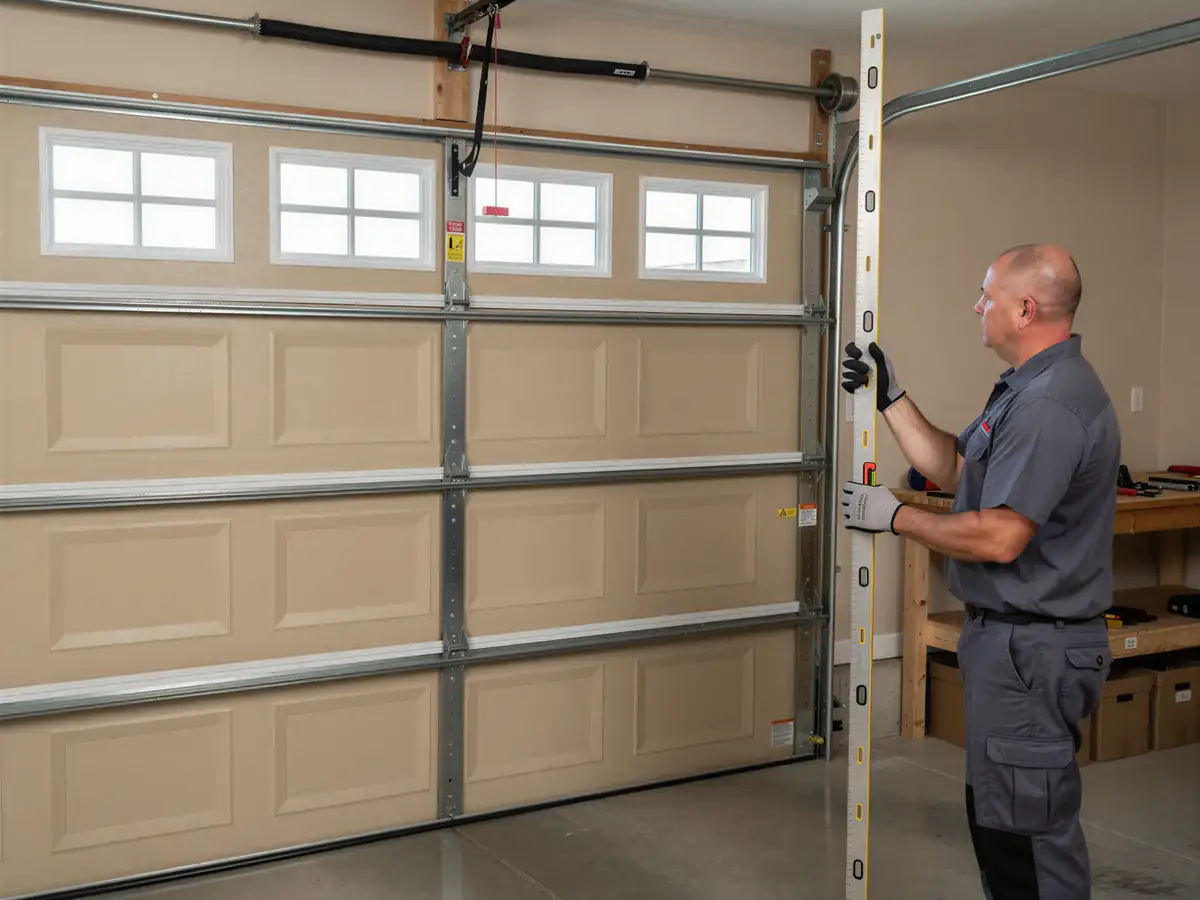
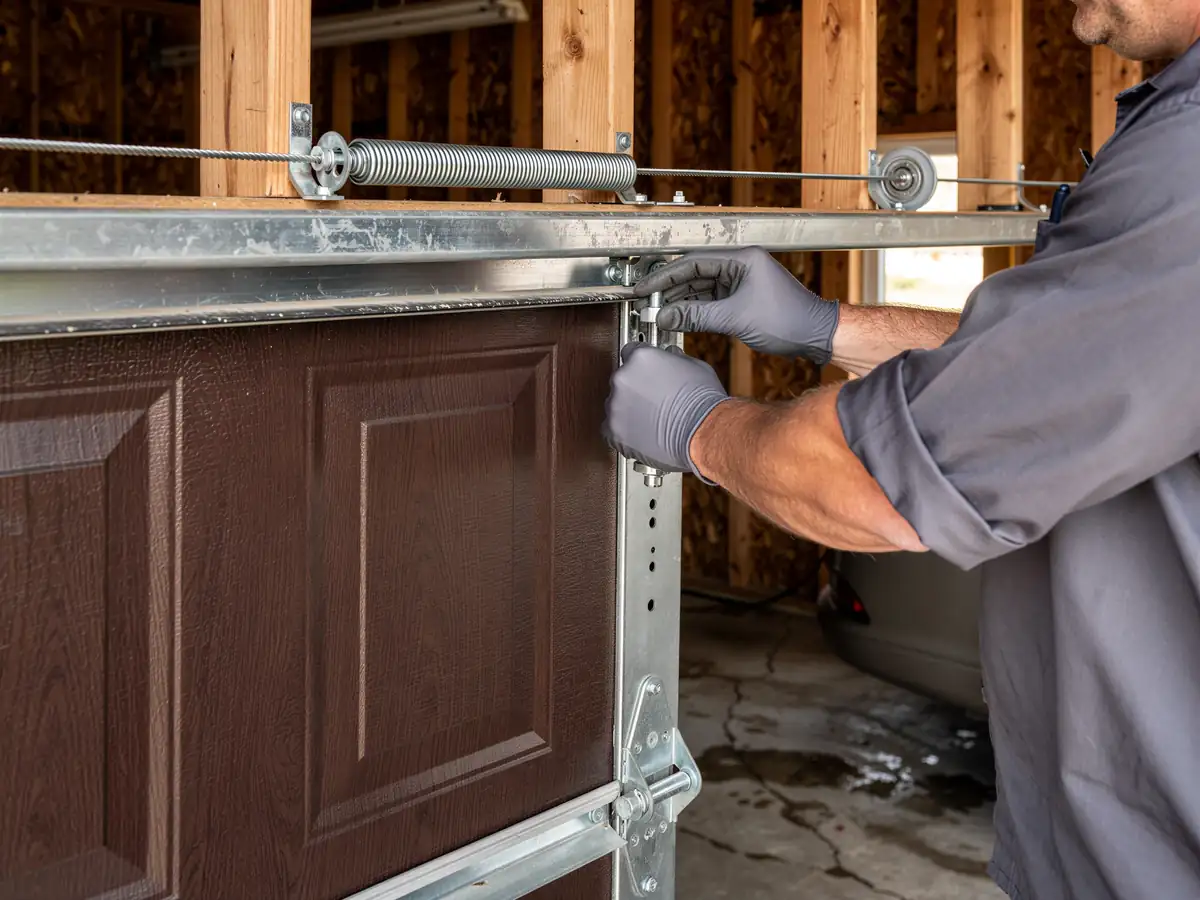
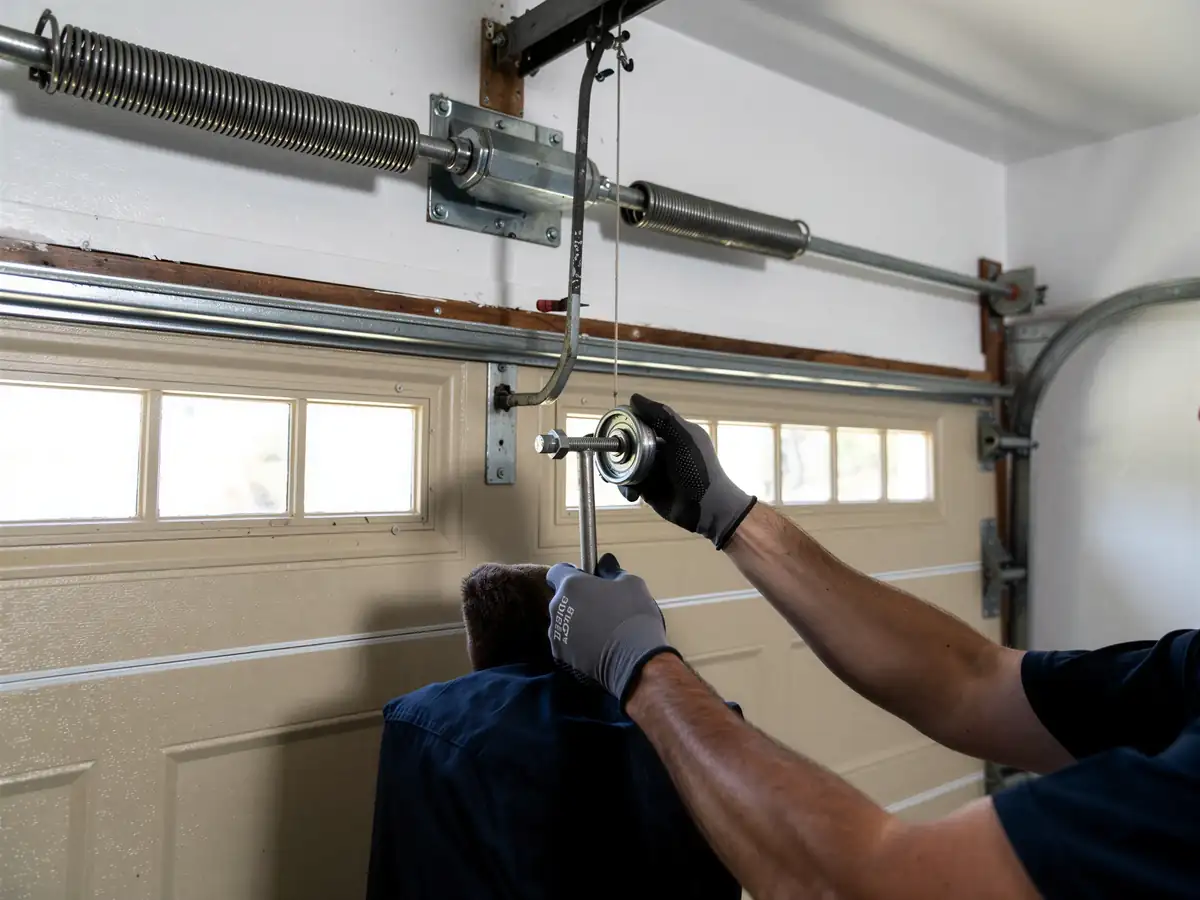
Which is what most Redan garages from the 1985 era have, the job means clamping the door, unwinding the old spring under tension, pulling the cones, and winding in a replacement matched to door weight and track length. If your house still has its original extension springs mounted over the horizontal tracks - less common on 1980s builds but not rare - the fix includes checking for safety containment cables, since houses built before the mid-1990s often never had them added. We add them if they're missing; an extension spring without a cable is a real hazard if it lets go.
We also check the cable drums and end bearings while the door is open
Because a spring from this era failing usually means the bearings are close behind it, and replacing one without checking the other is how a second call gets booked within the year.
Why This Fails Locally
The Redan area sits in a cold-moderate climate band, which means springs here go through real seasonal temperature swings rather than staying in one range year-round. Steel contracts in cold mornings and expands through the afternoon, and that daily cycling adds fatigue beyond the plain open-close count most spring ratings are based on. A 1985-era door usually started with a spring sized for the cycle count expected then, and most of those have long since passed their rated life - torsion springs are rated in cycles, typically somewhere in the 10,000-cycle range for standard residential doors, and a door opened twice a day for most of the last four decades has used that up regardless of how it looks.
Houses across the wider area we cover range from 1938 to 2007 construction, with most clustered in the 1960s-70s, so Redan's 1985 median actually puts it on the newer side of that range - meaning original hardware here, when it's still in place, is usually in worse shape than its age alone would suggest, since it's been cycling longer than a same-year spring in a less temperature-swingy climate would.
The Complications
The biggest complication we run into in Redan is mismatched upgrades - a newer opener bolted to original 1985 track and spring hardware, or a heavier replacement door riding on a spring sized for the lighter original. Neither failure shows up until the spring snaps, and by then the fix usually needs the drums and cables checked too, not just the spring. We don't recommend patching a spring that's the wrong size for the door; it'll just fail again, sooner. If the torsion tube itself is bent or the bearing plates are rusted through - more likely on a door that's been cycling for most of 40 years - replacing the spring alone won't hold, and that's a conversation we have on site, not over the phone.