How to Book
At a median household income of $62,299 here, the question we hear most isn't "can you fix it" - it's "is it worth fixing." On a door that's original to a house built in 1963, a spring job usually pencils out fine. A full opener-and-track replacement on the same door starts to compete with just putting in a new unit, and at this income level that's a real decision, not an easy one. When you call, tell us the year the door went in if you know it and what it's doing - that's enough for us to quote you honestly before a truck leaves Stockbridge. We dispatch from there, 14 miles out, so we ask for a window rather than an exact minute. No job gets booked sight-unseen for a spring or cable call; we want eyes on the hardware first, because guessing on torsion spring size over the phone is how people get the wrong part installed twice.
How It Shows Up
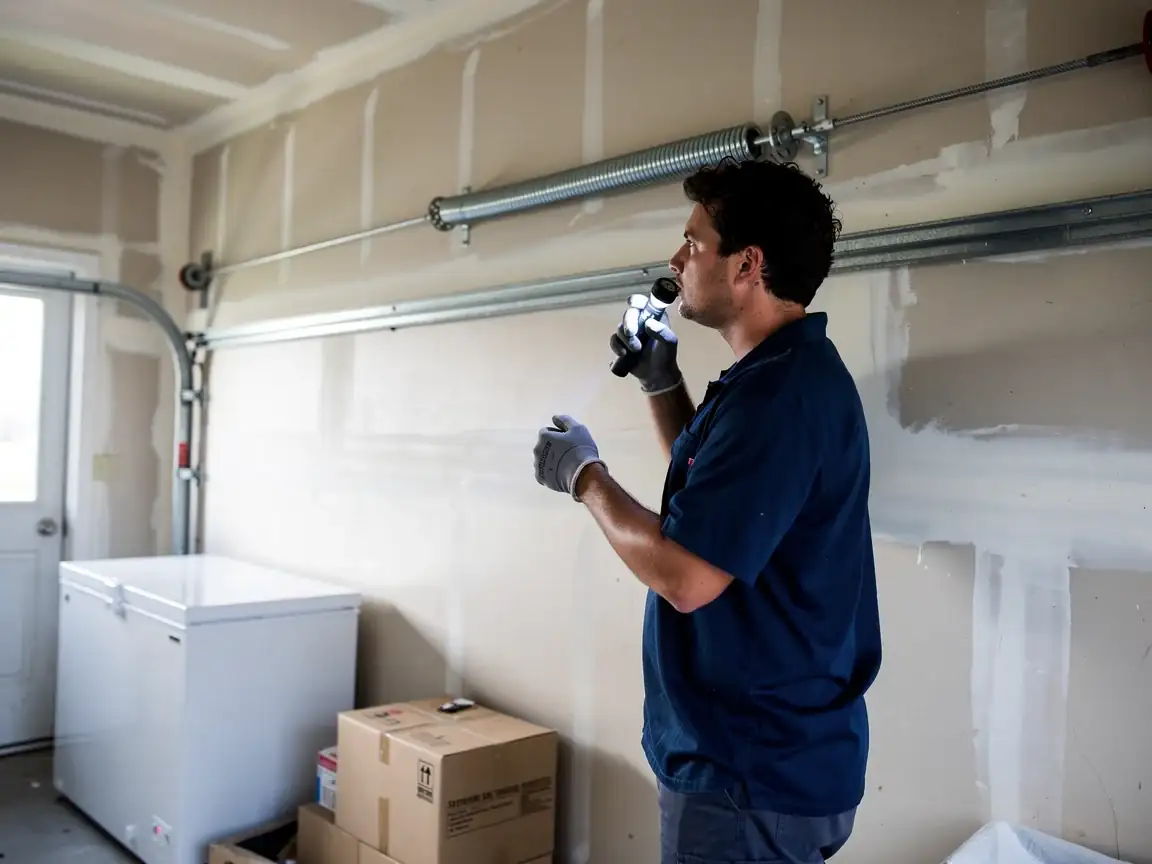
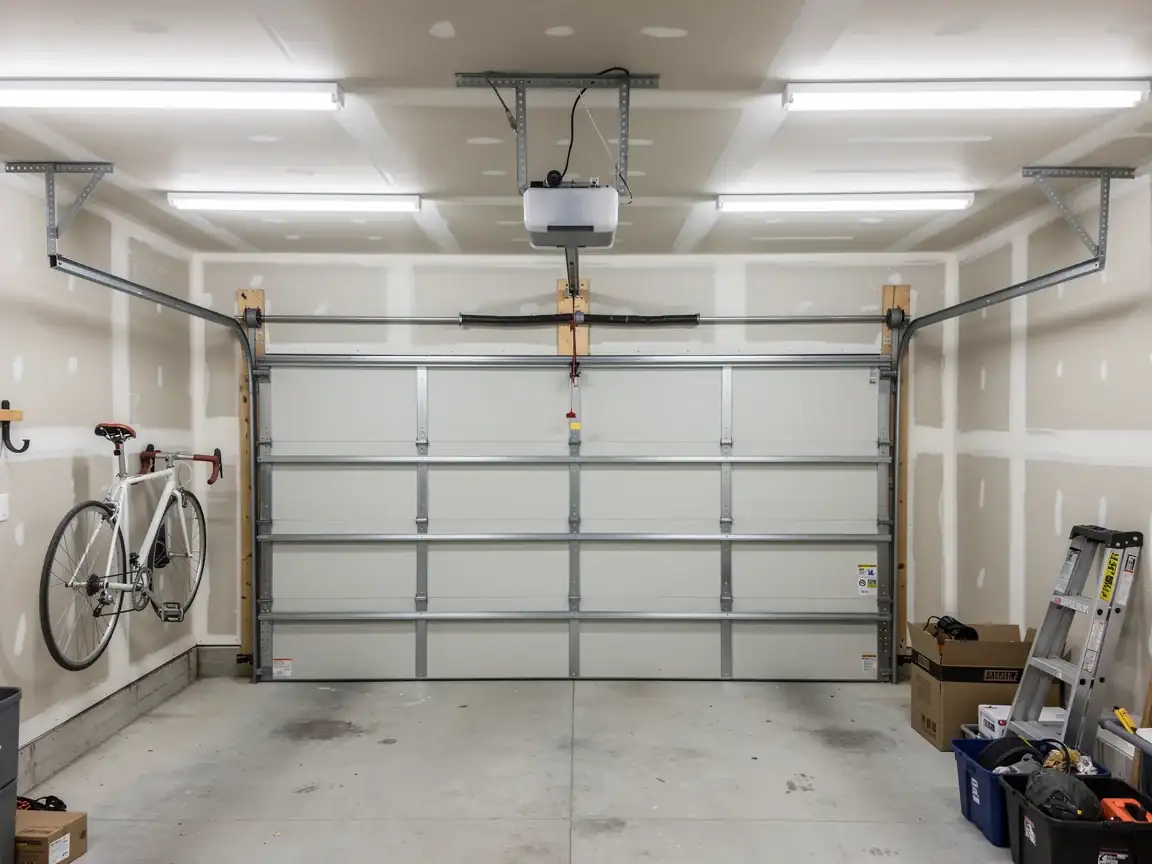
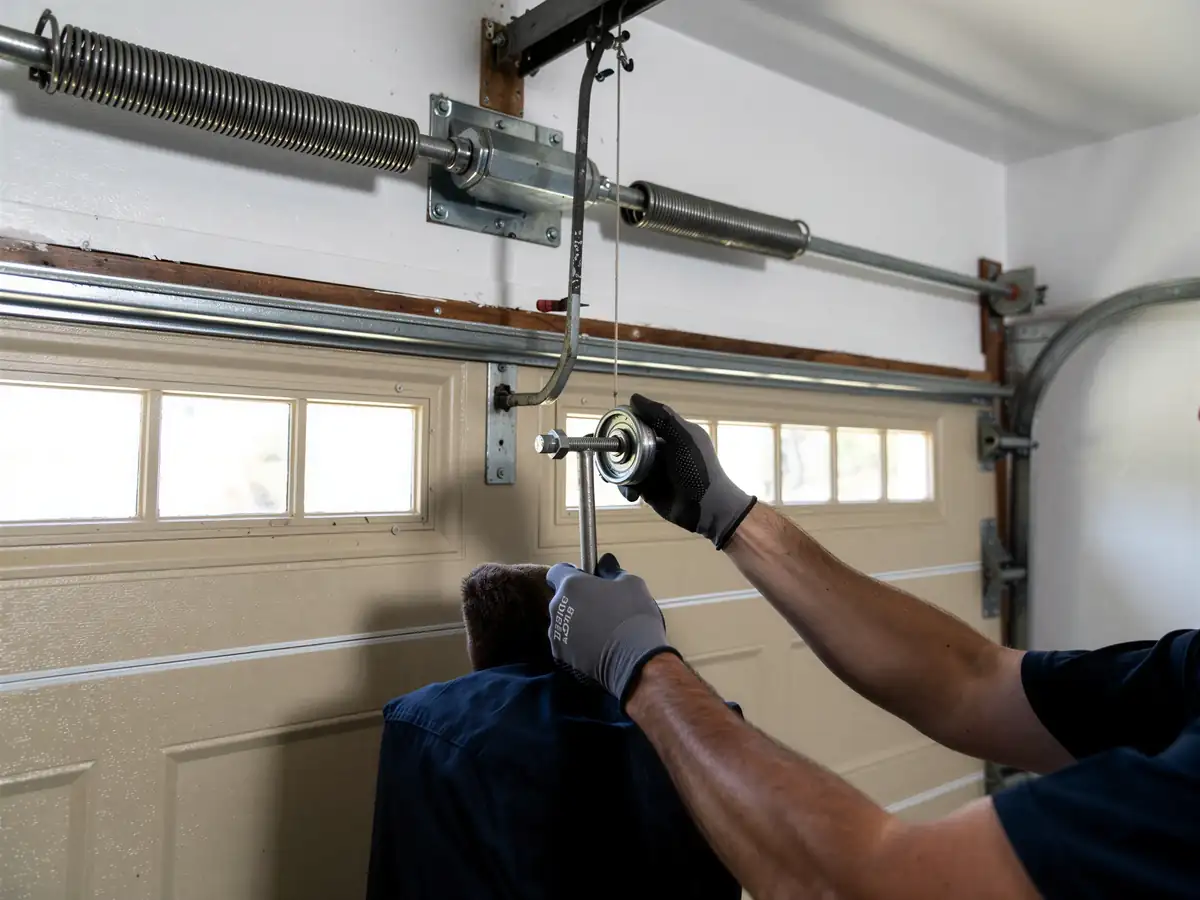
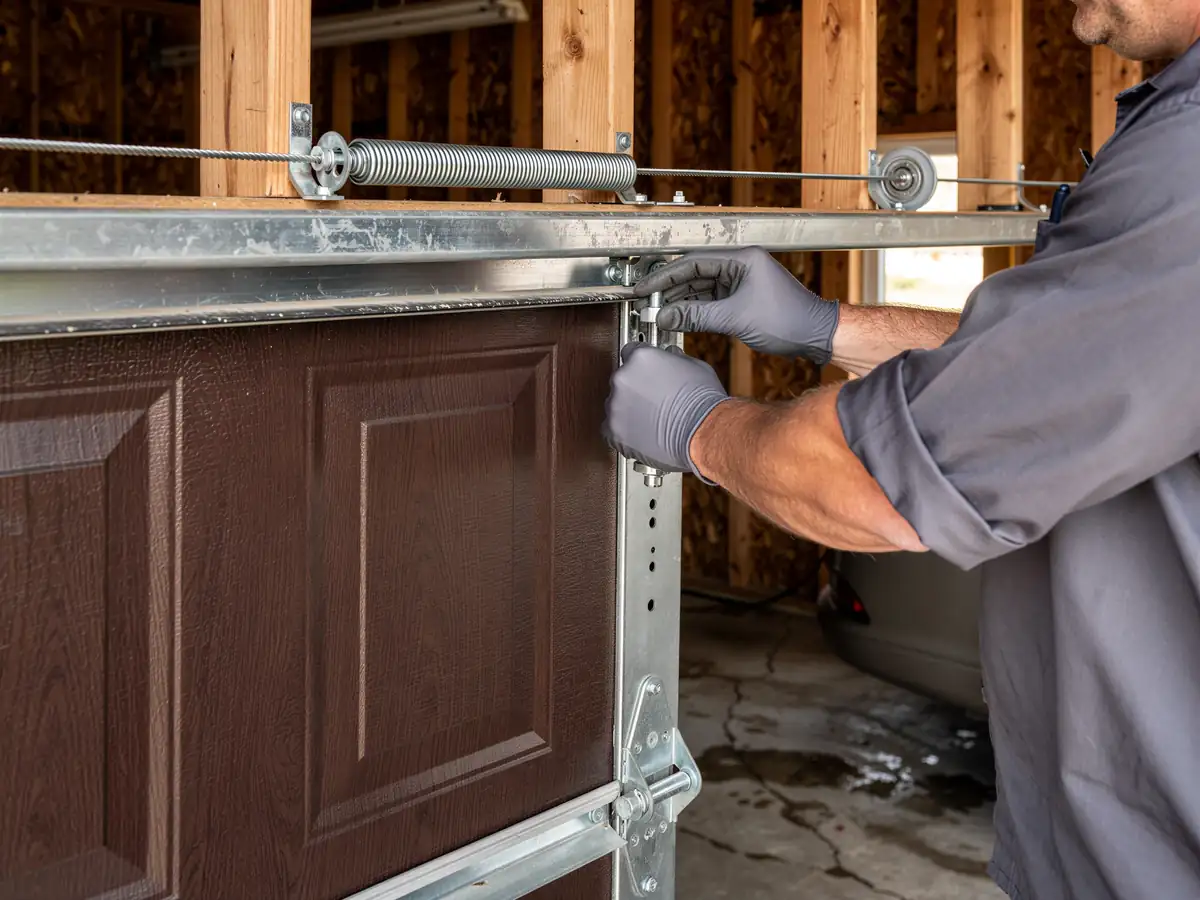
Most of Candler-McAfee went up in the 1960s and 70s, and a lot of that stock still carries its original torsion spring and the side-mounted hardware that went with it. On a door that old, failure doesn't usually announce itself - it's a slow list. The door gets heavier to lift by hand before the opener finally strains and stalls. A cable frays near the drum and starts throwing rust flakes onto the floor under the track. Rollers that were steel wheels in a steel track, not nylon, start grinding instead of rolling, and you hear it before you see it. On a house this age, a loud bang followed by the door refusing to move at all is almost always the spring letting go - not the opener, even though the opener gets blamed first.
How Long You Are Without the Door
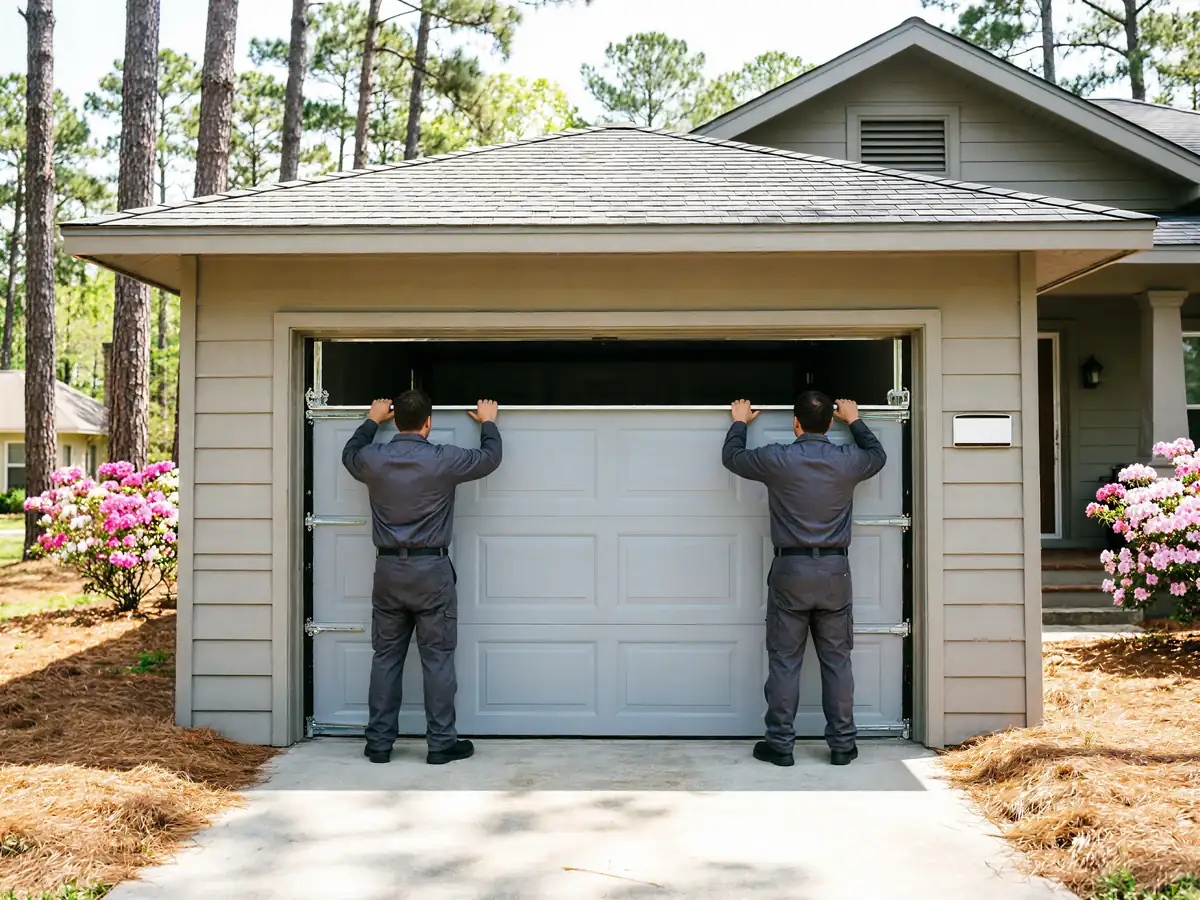
A straightforward spring or cable swap on one of these doors is usually a same-visit fix once we're on-site - an hour or two, not a day. Where it stretches out is parts. If the spring size or drum on an original 1963-era door isn't something we carry on the truck, that's an order, and depending on the part, that can mean a few days before we're back. We won't leave a door that won't close secure on its own - if it has to wait on a part, we'll tell you what to do in the meantime rather than leave you guessing. This is the honest limitation worth saying up front: we don't carry every obsolete spring size for every house built before 1970, and pretending otherwise would just mean a second trip.
The Complications
This area sits in a moderate cold climate band, which matters more for garage doors than most people expect. Steel contracts in cold weather, and a torsion spring that was already fatigued from fifty-plus years of cycles is more likely to snap on a cold morning than a mild one - it's not coincidence that winter calls skew toward spring failure. On uninsulated doors common to houses from this era, condensation on the inside face in cold months can rust cable and hardware faster than homes with a newer, insulated door see. We also run into tracks that were leveled for a slab that has shifted slightly over sixty years - not dramatic, but enough that a new roller won't sit right until the track gets reset, not just the part replaced.