How to Book
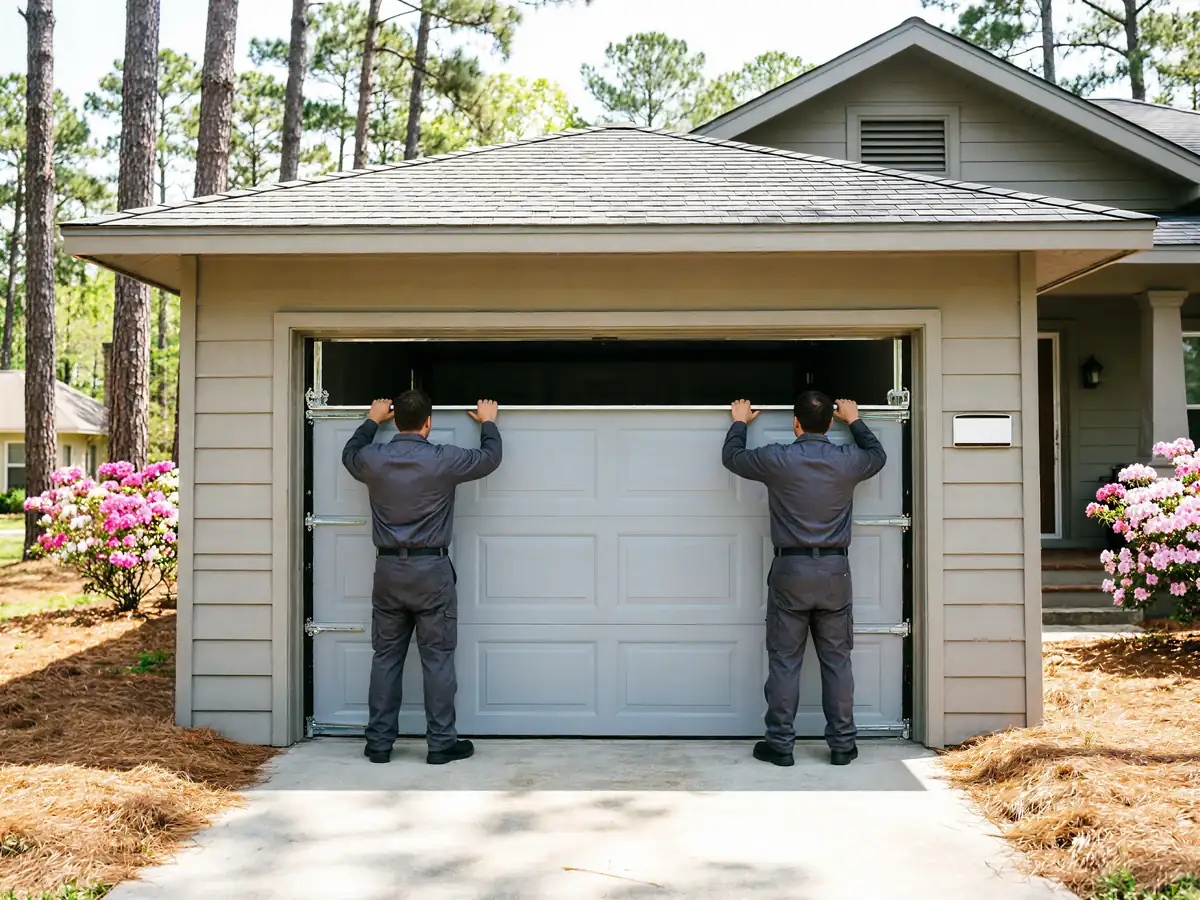
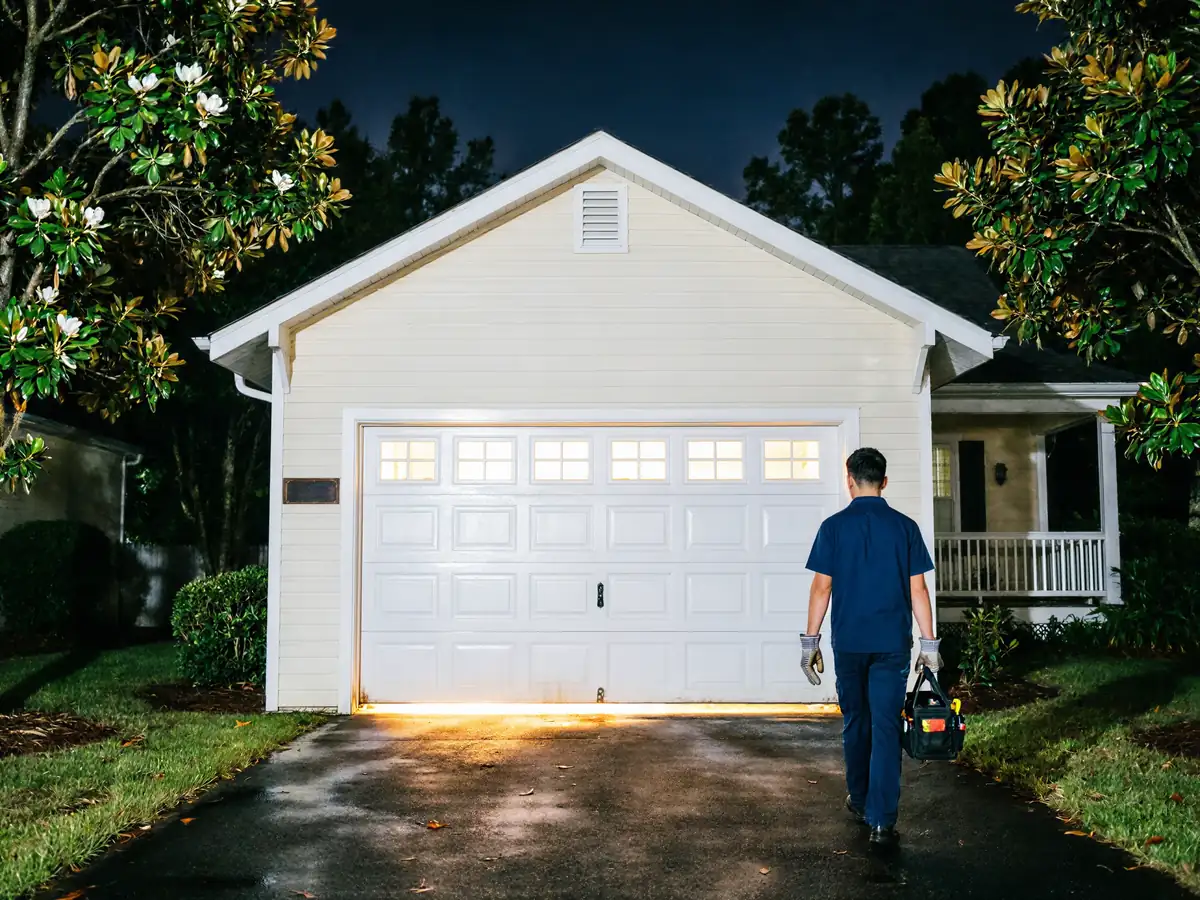
Candler-McAfee is a smaller pocket of the service area - 7,676 households, not a sprawling grid - which means the spring calls we get out here tend to cluster around the same handful of door styles rather than a wide mix. You call, tell us whether the door won't budge or dropped crooked on one side, and we figure out if it's a torsion spring, an extension spring, or a cable that let go alongside it. Because this is 14 miles from our Stockbridge base, we ask for a little lead time to route the truck rather than promising a same-hour arrival we can't back up. If your door is sagging on one side or the opener is straining and reversing, that's spring fatigue talking, and it's worth describing exactly what you see when you call - which side drops, whether you hear a bang, whether the door still moves at all. That detail shapes which spring and cable stock we load before we leave Stockbridge, since this part of the service area wasn't built around one single hardware spec.
How It Shows Up
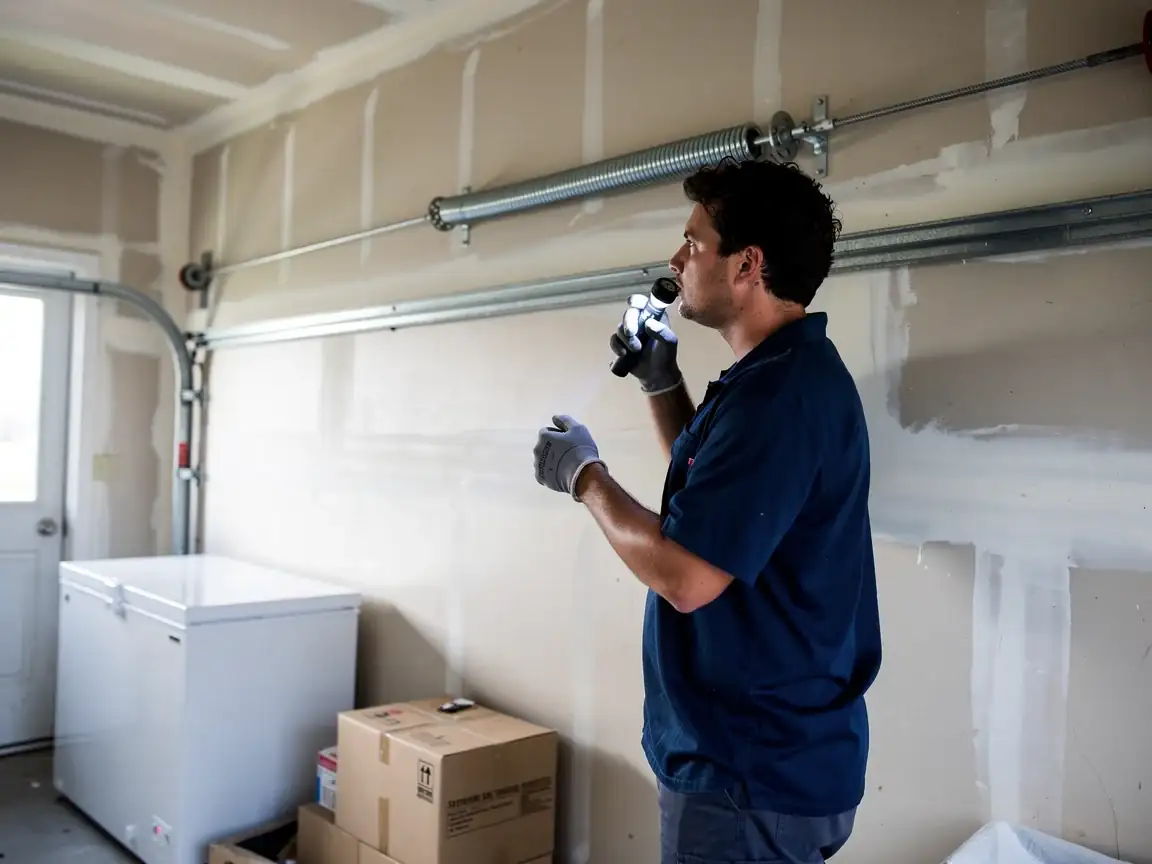
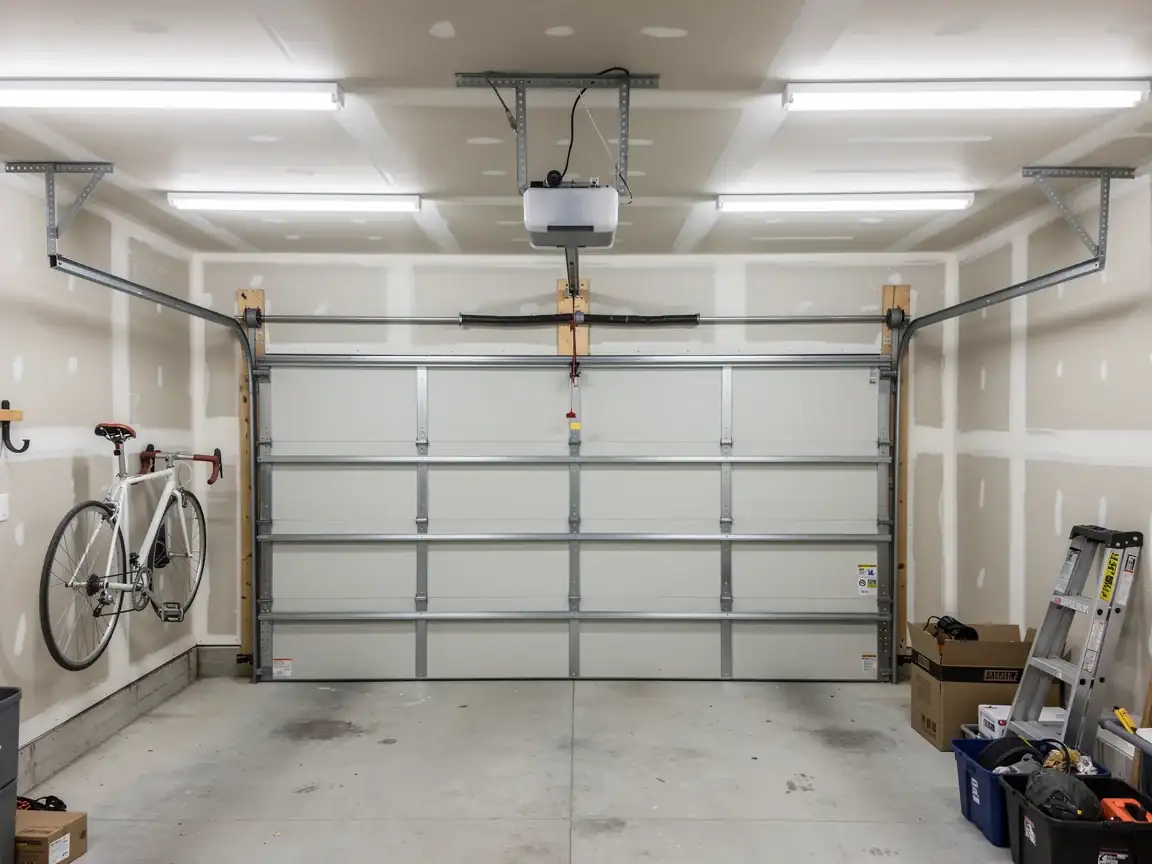
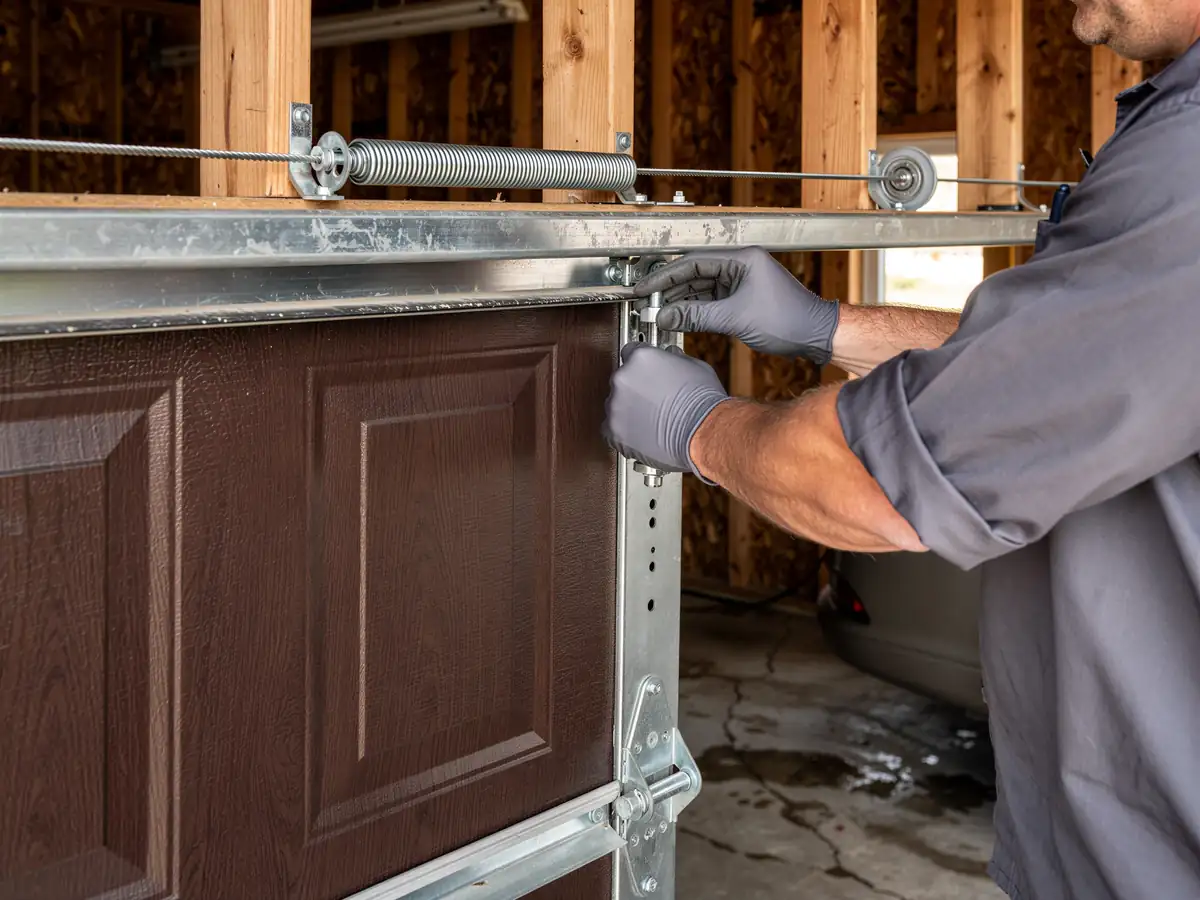
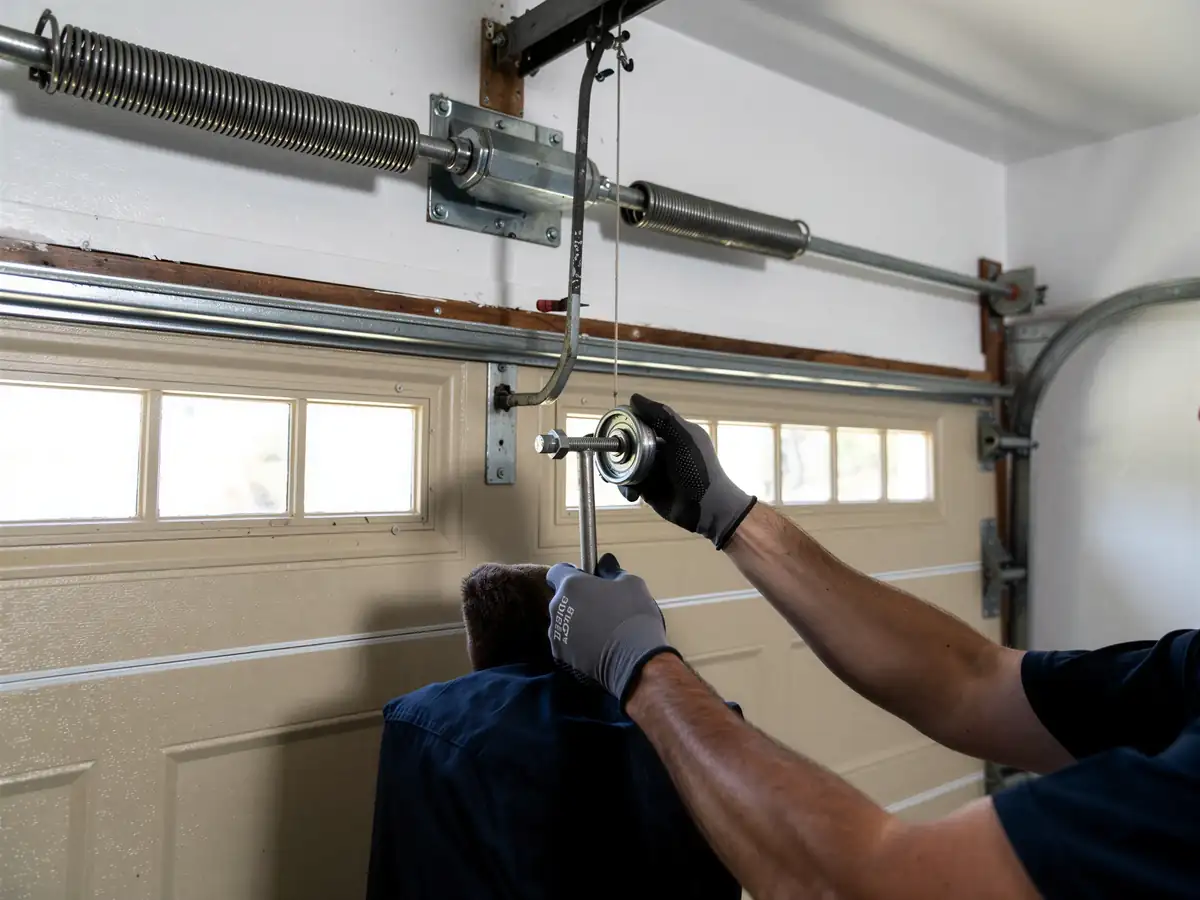
Most houses in this part of the service area went up when the median build year across the broader area was 1974, but Candler-McAfee itself centers closer to 1963 - a decade earlier, and that decade matters. Doors from that build window were commonly hung on torsion springs sized for heavier, often single-layer panels, and after close to sixty years those springs are well past a normal fatigue life even if nobody's touched them. The failure usually isn't dramatic. The door gets heavier to lift by hand, the opener starts working harder and making a different sound, or one side of the door hangs noticeably lower than the other because one spring gave out while its twin on a double-spring setup is still holding. Some owners hear a sharp bang from the garage - that's the spring letting go, not the opener failing. On a 1960s build, that's almost always the spring, not the motor.
How Long You Are Without the Door
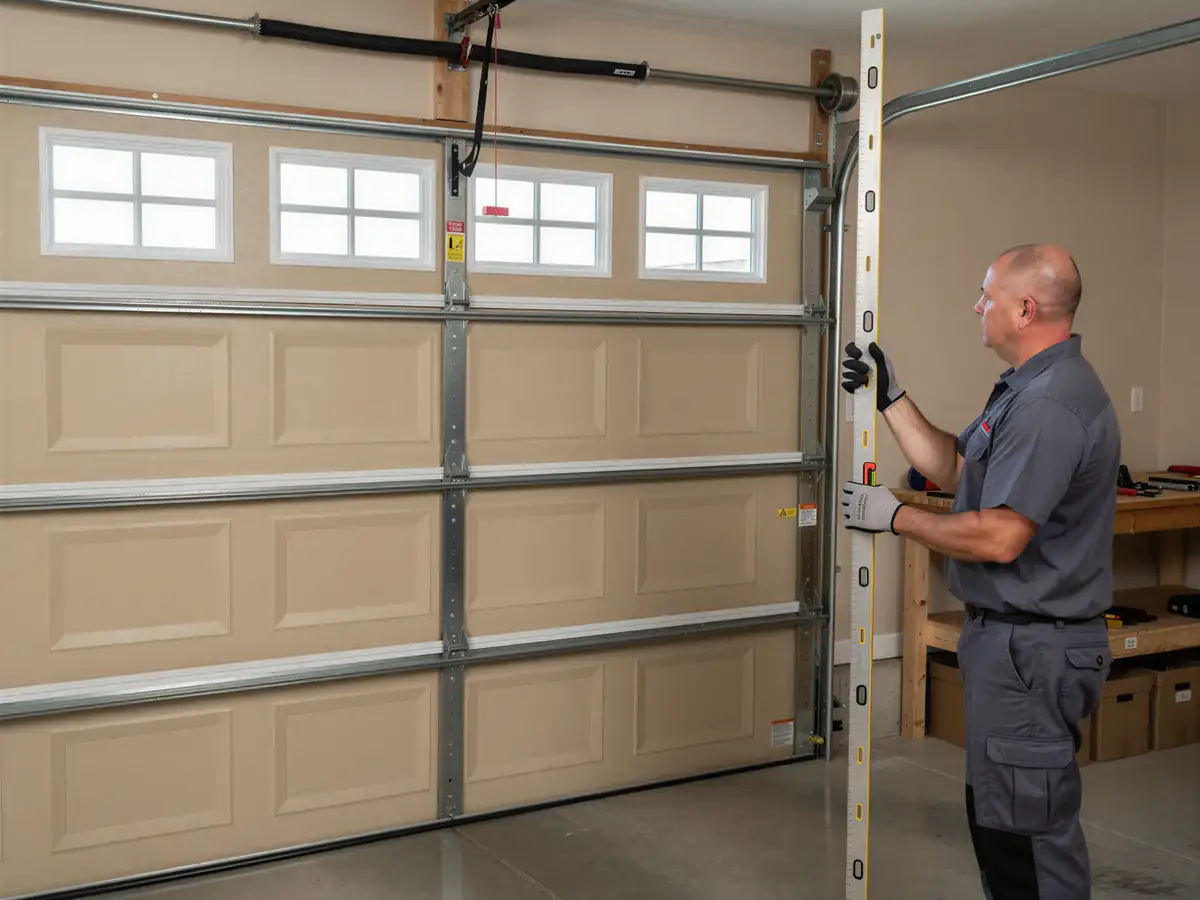
A standard torsion spring job on one door, once we're on site, usually runs an hour to ninety minutes door to truck-packed, assuming the drums and cable are in decent shape and we're not dealing with a bent track from someone trying to force the door open by hand. Add time if both springs need replacing or if a cable needs swapping at the same visit - not a lot, but enough that we'll tell you upfront rather than surprise you. The bigger variable for Candler-McAfee specifically is the drive: we're coming from Stockbridge, 14 miles out, so the door-down time you feel starts before the truck arrives, not when the spring gets cut loose. We don't stock every spring size on the truck for every call, so if your door needs a size we don't carry that day, we're honest about a short return trip rather than forcing a wrong-size spring onto your door.
The Complications
The cold band this region sits in means steel springs lose a little flex in winter cold snaps, and a spring that's been marginal for a year can pick the coldest morning to finally snap - it's not bad luck, it's just the last straw on hardware that was already tired. On houses built close to that 1963-era median, we also run into torsion hardware that's been patched once already with a mismatched spring from a prior repair, which throws off the balance even when the new spring is technically fine. If your opener is a newer add-on to a decades-old door, the opener's force settings sometimes mask spring wear for a while, so the failure looks sudden when it's really been building. We're straightforward when a repair isn't worth it: if the drums are rusted through or the door itself has sagged out of square, a new spring won't fix the real problem, and we'll say so instead of selling a patch.