How to Book
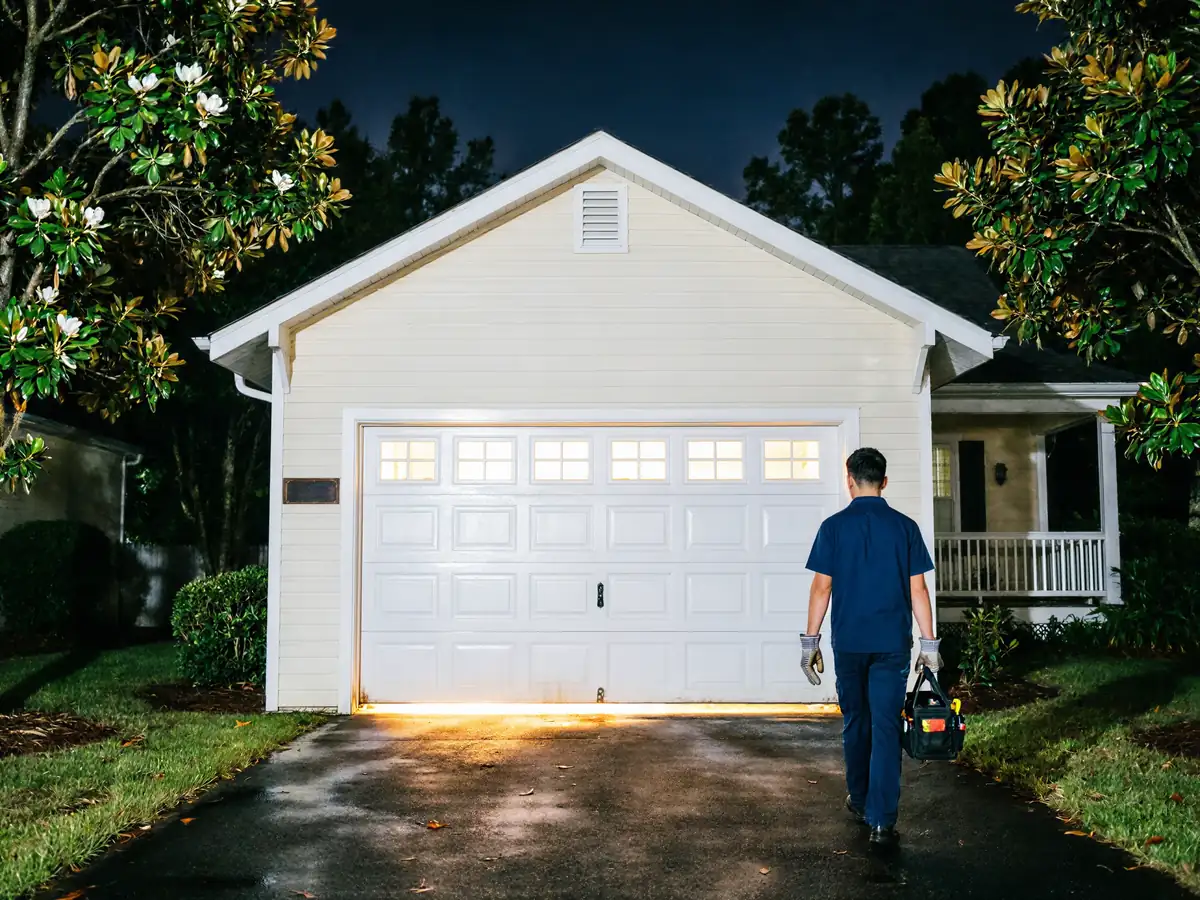
We run maintenance calls out to Candler-McAfee from our shop in Stockbridge, about 14 miles down the road. Because this is a travel call rather than a local branch, we book maintenance visits in advance rather than same-day drop-ins - the truck has to make the trip. When you call, tell us the age of the house if you know it; a door installed when the house was built in the early 1960s gets inspected differently than a door that's been swapped out since. You can see the full rundown of what we handle in this area at our Candler-McAfee service page. If your issue turns out to be bigger than a tune-up - a cracked panel, a dead opener - that's a separate job, not part of a standard maintenance visit, and we'll tell you straight if that's where you're headed.
How It Shows Up
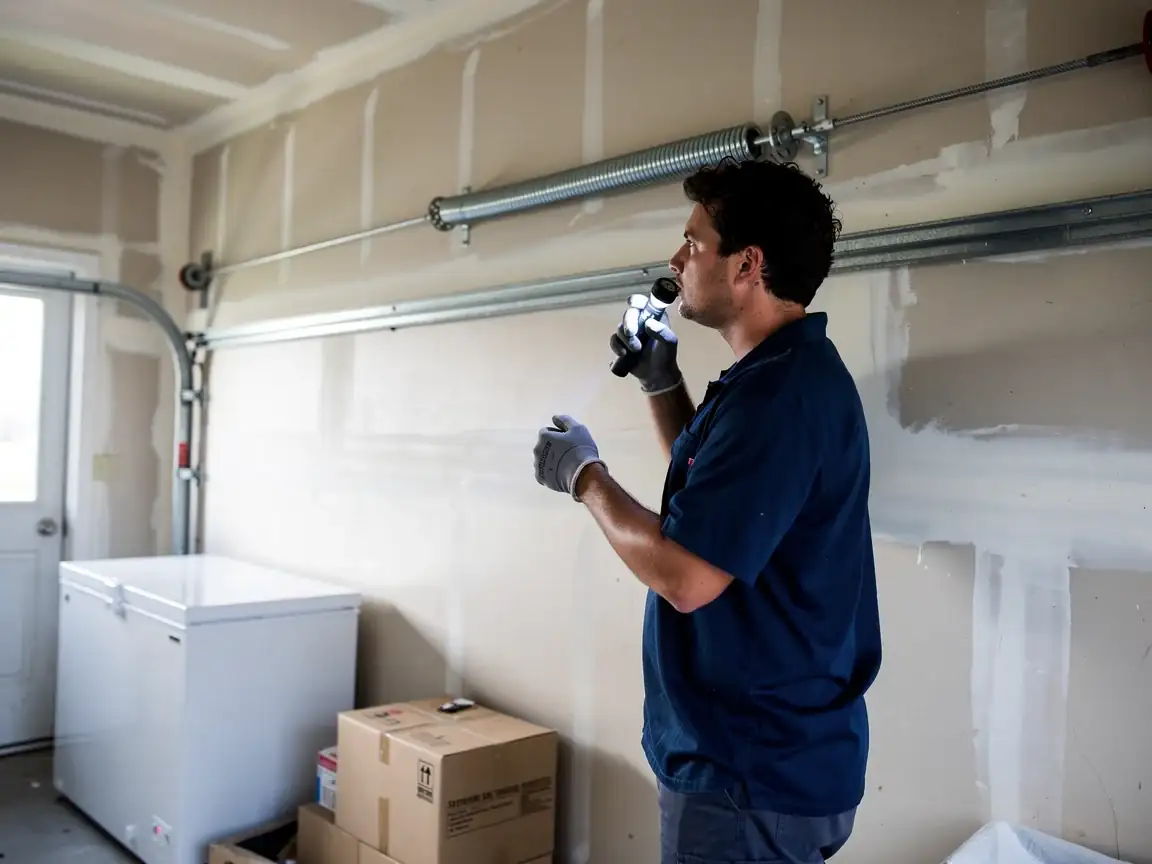
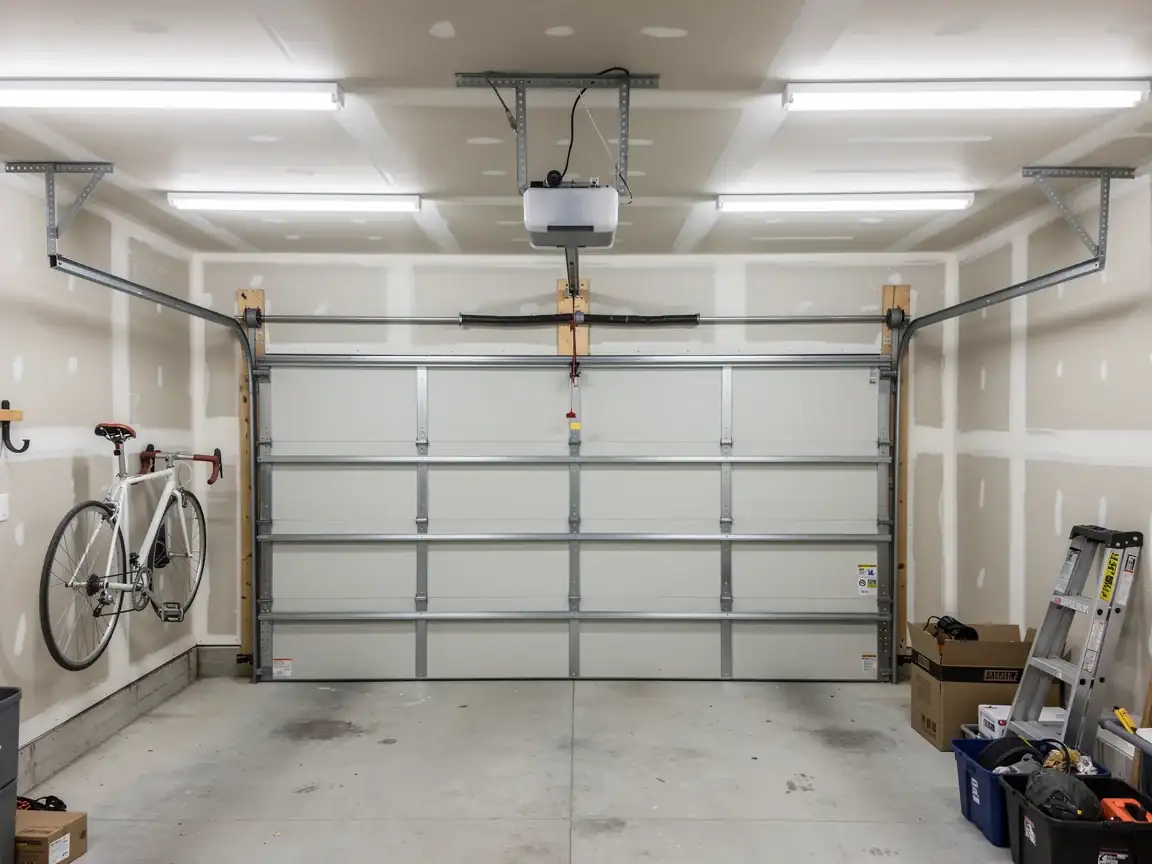
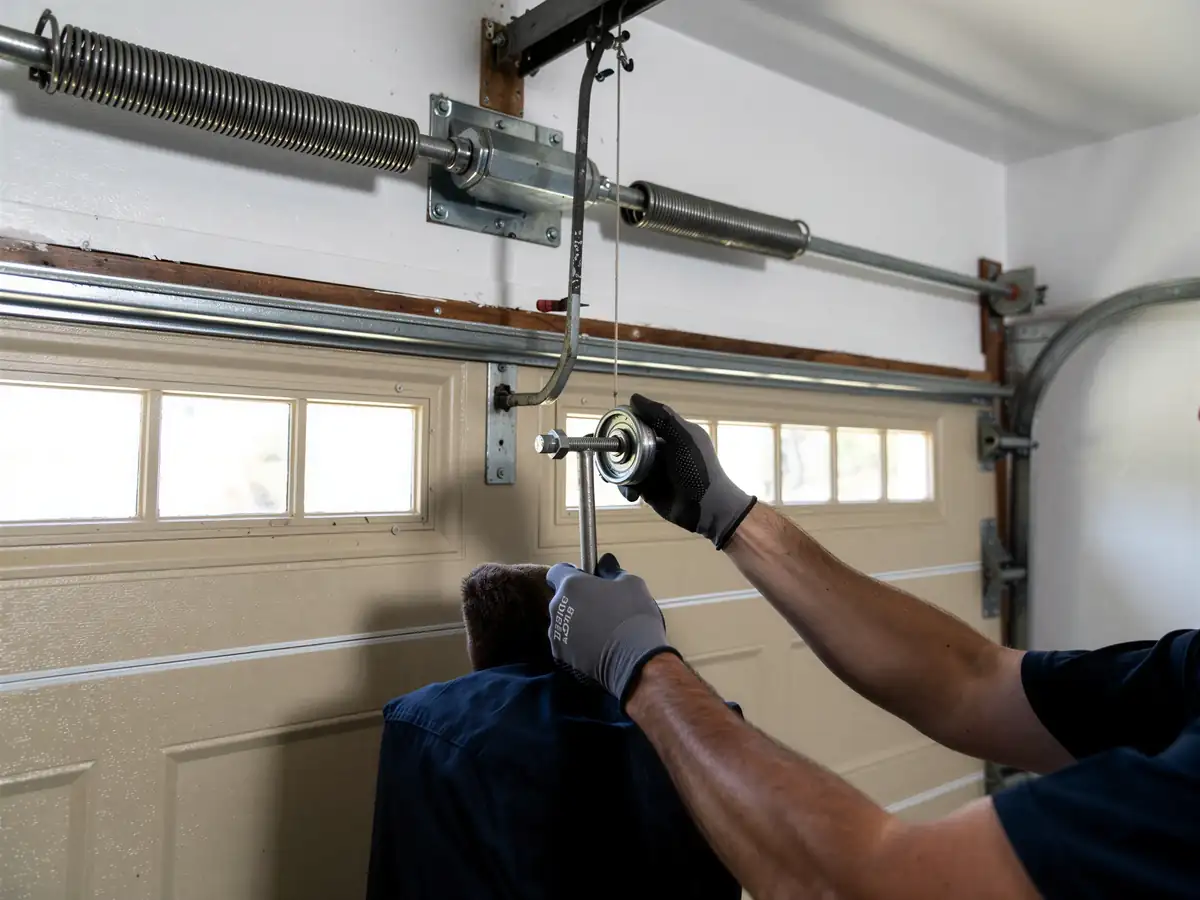
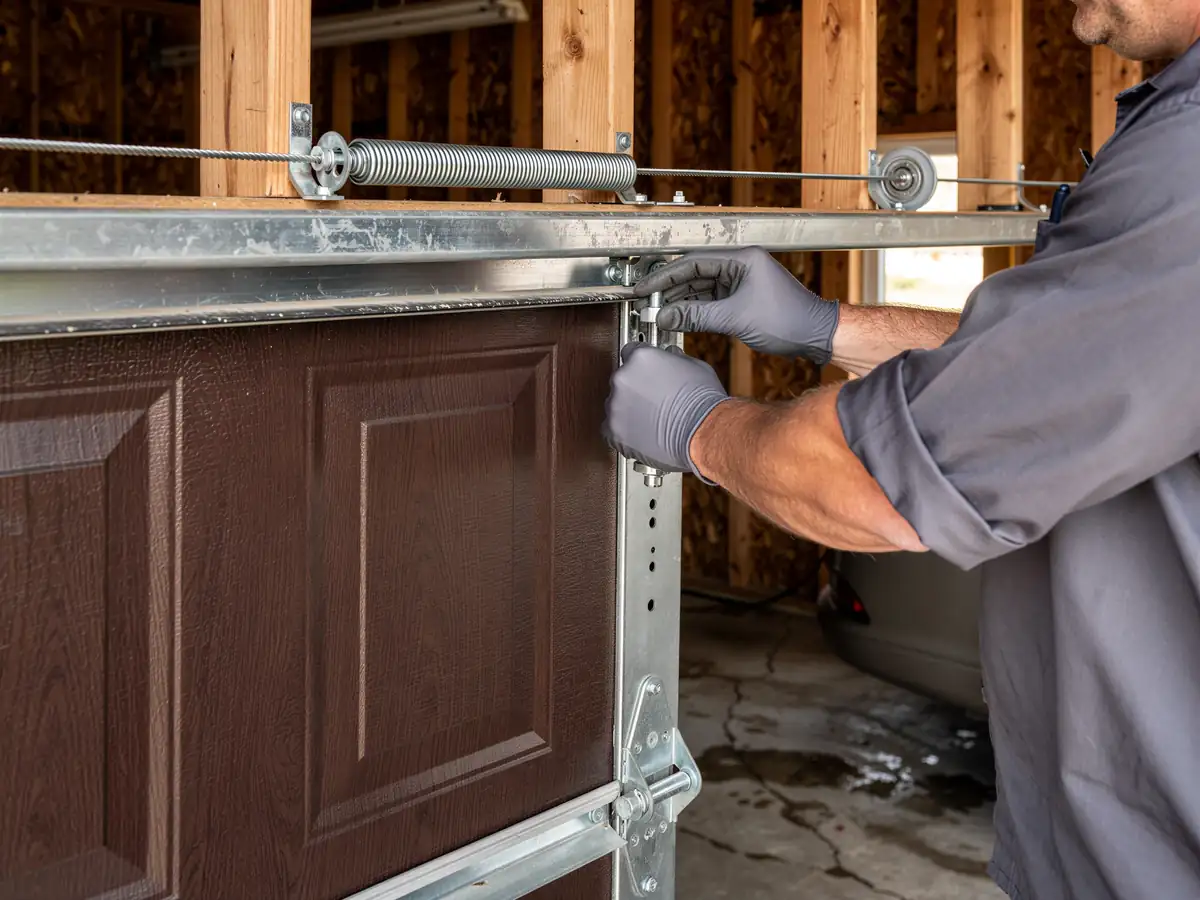
A door built around 1963 usually wasn't torsion-sprung the way doors are today. Most of what we find in this part of the service area runs on extension springs stretched along the horizontal tracks, with the kind of thin steel panel that has no foam layer behind it. That construction shows its age in specific ways: the door sags at the center rail before anything else, hinges elongate their bolt holes from decades of flex, and the galvanized coating on exposed hardware thins out and starts to show surface rust at the roller stems. You'll also notice the door getting louder - not a dramatic bang, just a steady increase in scrape and rattle as lubrication dries out and metal starts running against metal. None of this means the door is done. It means it's at the point in its life where skipped maintenance starts costing you parts instead of grease.
How Long You Are Without the Door
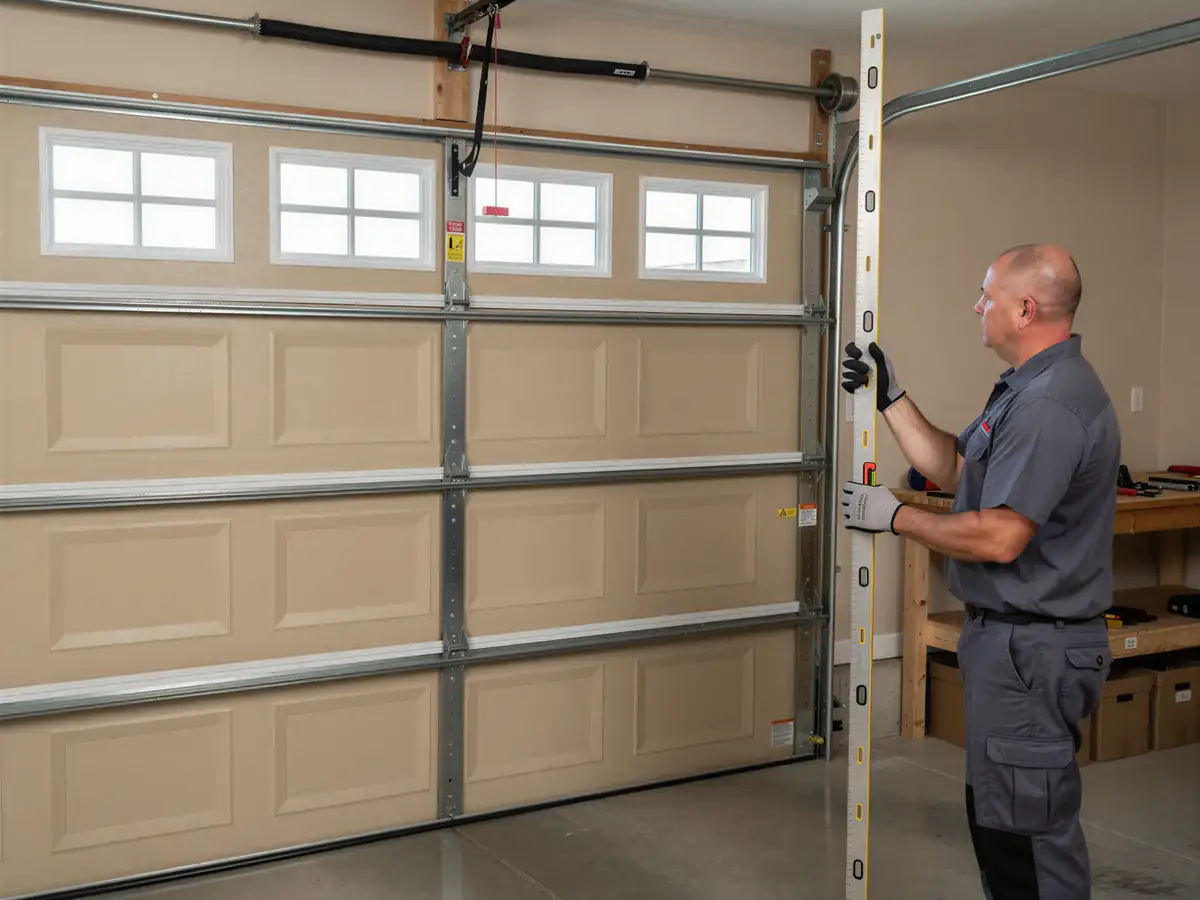
A standard maintenance visit doesn't take the door out of commission. We work section by section while the door stays operational between steps, so you're not stuck leaving the car outside for an afternoon. The one exception is if we find a spring close to failure during inspection - at that point we'll tell you it needs replacing now rather than at the next scheduled visit, and that part of the job does mean the door sits closed for an hour or so while we swap it. We'd rather flag that honestly than let a door that's about to let go sit on a maintenance checklist for another six months.
The Complications
Winters in this part of Georgia land in the cold-moderate band - not harsh, but enough freeze-thaw cycling over a season to gum up old grease on rollers and bearings that haven't been serviced recently, which is a big part of why these 1960s-era doors get noisy and stiff by late winter. The other complication is parts. Hardware sized for doors from this build period isn't always what's sitting on a modern parts truck, so a spring or roller replacement on an original door sometimes means a short lead time we wouldn't see on a newer install. With a median household income of $62,299 across this area, we also get asked a fair amount whether it's worth maintaining a door this old versus replacing it - and honestly, once the panel steel itself is rusting through rather than just the hardware, maintenance stops being the better value.