Can You Do This Yourself
Belvedere Park is 15 miles out from our Stockbridge shop, which changes the math on a DIY attempt more than most homeowners think about. If you order the wrong torsion spring online and it's wrong for your drum size, you're not driving back to a local supply house in ten minutes - the nearest stock for this area runs through Stockbridge, and that's a half-hour round trip before you've even started the second attempt.
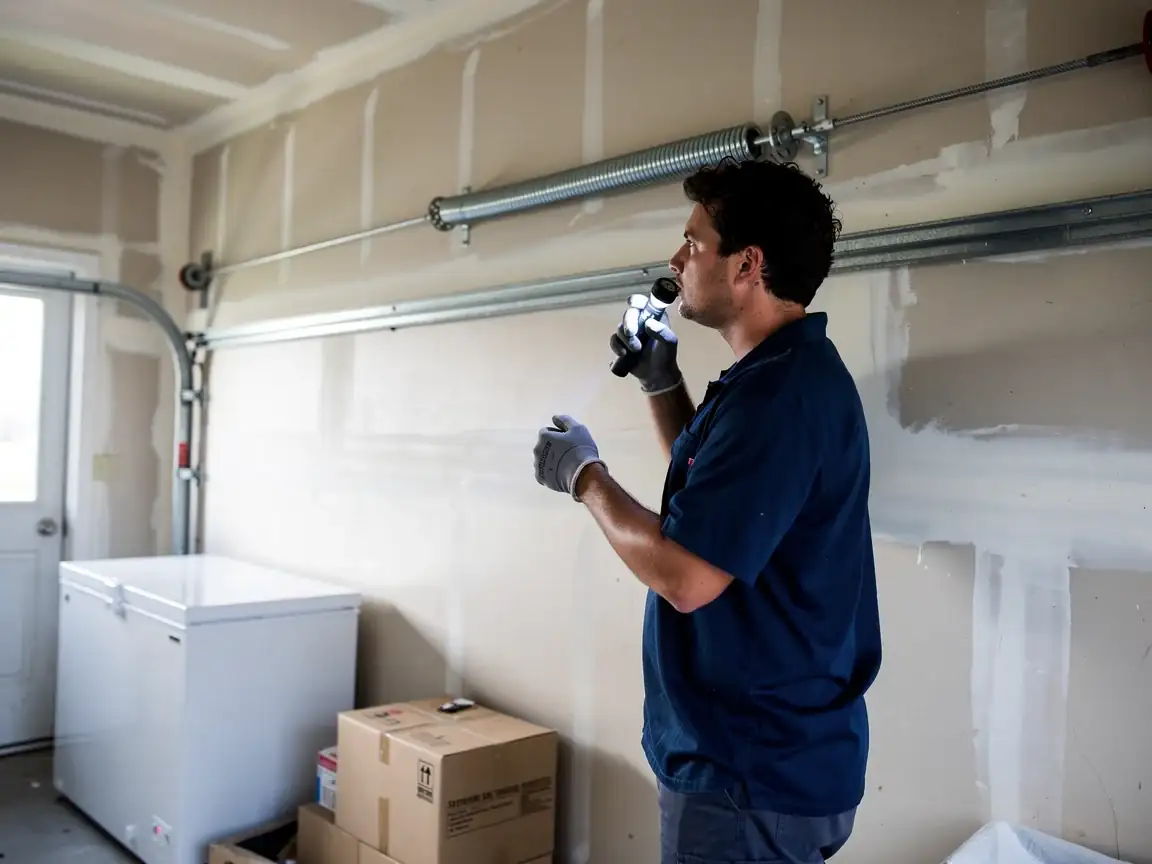
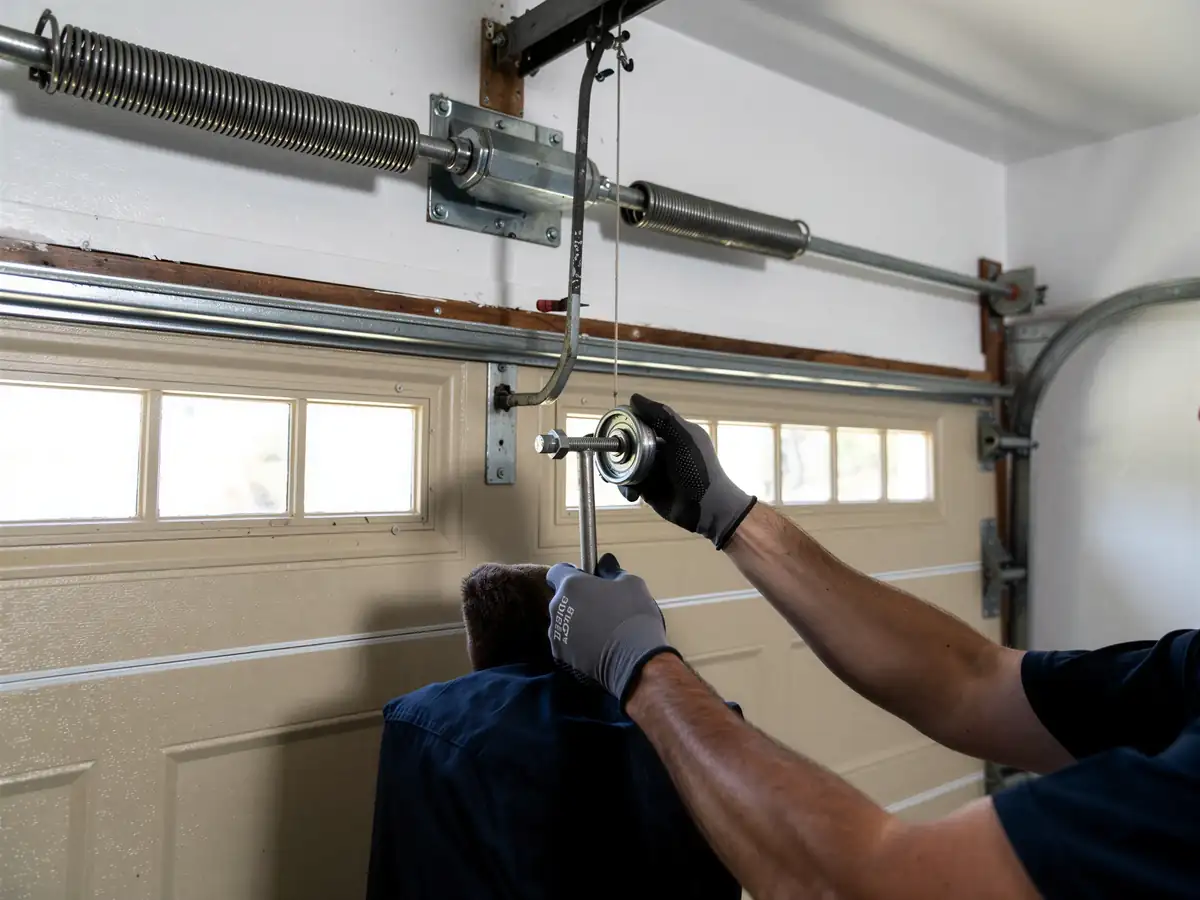
Some things are fine to handle yourself: lubricating hinges, tightening loose bolts on the track, replacing a worn weatherstrip at the bottom panel. A broken torsion spring on a double door is not one of them. Those springs are wound under several hundred pounds of tension, and on the older low-headroom hardware common in houses from this era, the drum and cable setup doesn't match what current online spring kits assume. If you're not sure which kind of spring you have, that uncertainty is itself the answer - call someone who's seen the model before swinging a wrench at it.
We're honest that a straightforward opener logic board swap is within reach for a patient homeowner with the right tools. Springs, cables, and anything involving the torsion tube are not in that category, distance or no distance.
How Long You Are Without the Door
Because we run out of Stockbridge, a call to Belvedere Park means roughly 15 miles of drive time added to any job before work even starts. That's not a response-time promise - we don't quote one for this area - it's just the honest shape of how the day runs: the truck has to make the trip, and if a part isn't already on it, there's a second trip to account for.
What actually determines how long your door sits broken is less about the drive and more about what's wrong with it. A snapped cable or a stuck sensor is usually a same-visit fix once the truck's there. A spring sized for the specific drum width on a 1960s-stock door, or a track bent from a car backing into it, sometimes means the tech has to confirm the part before ordering, which adds a day.
If your door won't open at all and it's blocking a car in the garage, say so when you call - that changes how a job gets sequenced against everything else on the route that day.
What the Fix Involves
Housing in Belvedere Park centers on a median build year of 1961
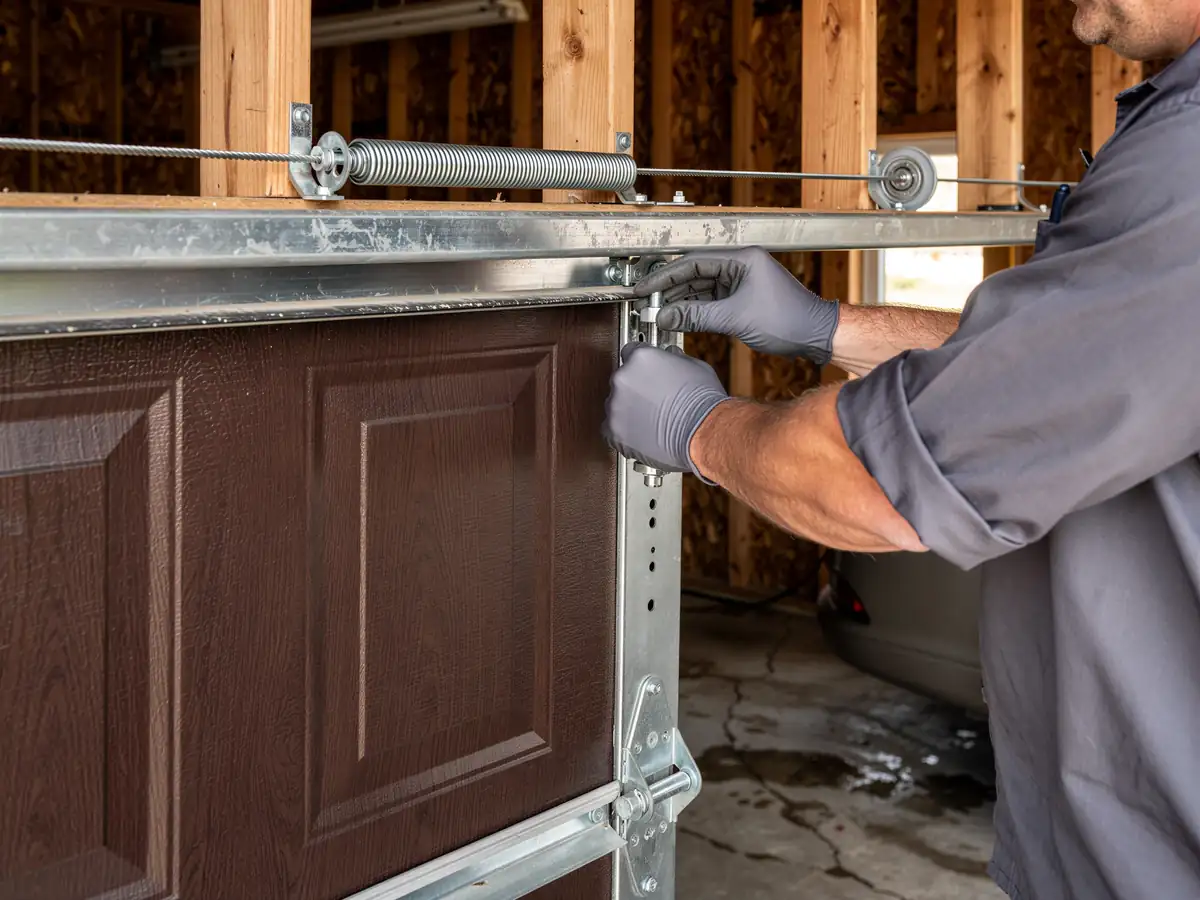
Squarely in the 1960s-70s stock that makes up most of this part of the service area. That era carries specific hardware: extension springs mounted along the horizontal tracks rather than the torsion-and-drum setup you'd find on a newer build, and lighter steel panels that dent and bow more easily than today's doors.
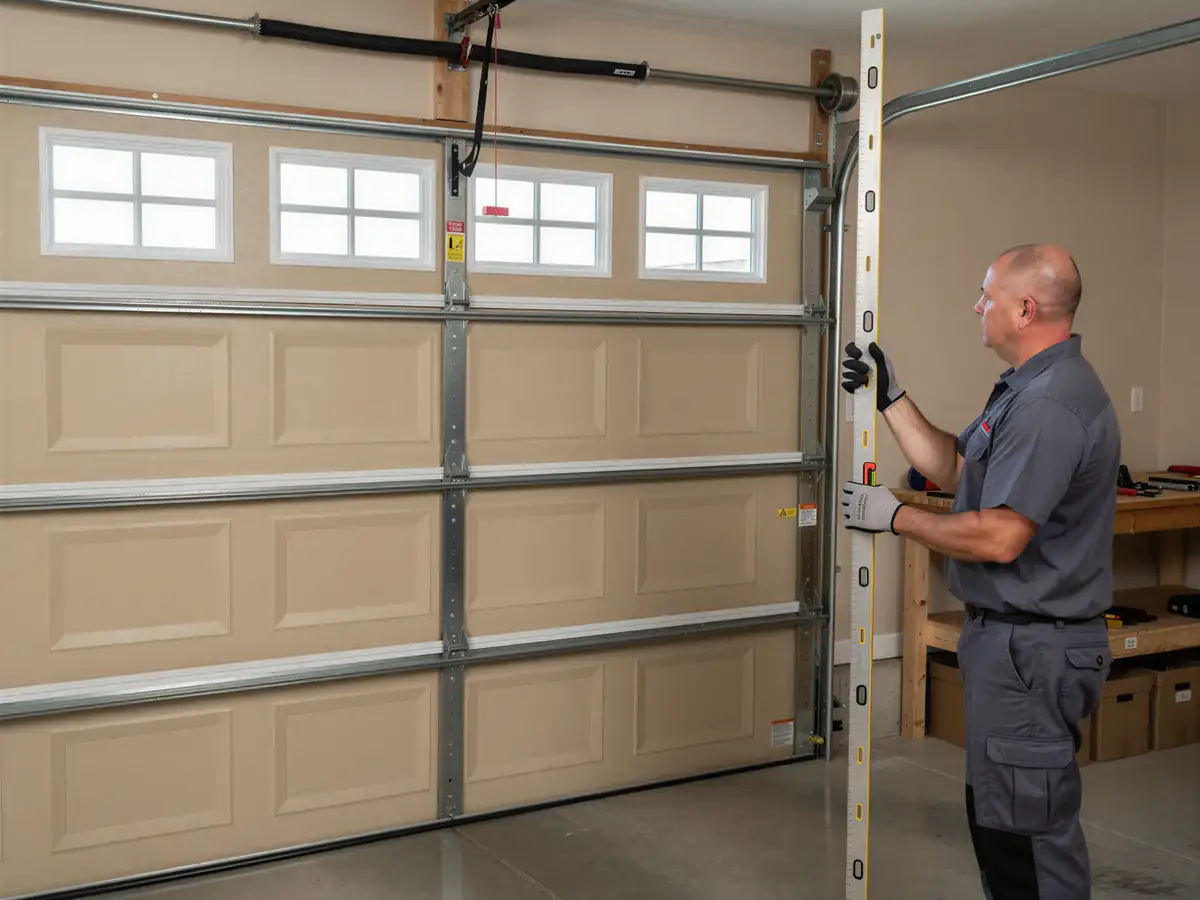
A fix here usually starts with identifying whether the door still has its original extension spring setup or whether a past owner retrofitted a torsion system
The two require different tools, different safety cables, and different replacement parts, and mixing them up is how DIY jobs go wrong. Rollers on these older tracks also tend to be steel rather than nylon, which means more noise and more wear on the track itself over the decades.
We don't carry every obsolete bracket or hinge style for doors this old on the truck
Sometimes a part has to be sourced before the second visit, and we'll tell you that up front rather than pretend otherwise.
What You Pay
We don't publish a flat price for Belvedere Park calls because the honest driver of cost isn't the town, it's what's actually failing - a cable replacement costs a fraction of what a full spring and drum rebuild does on an older extension-spring door. What we can tell you is the context: median household income here runs $68,900, a bit above some of the areas we cover, and that tends to track with homeowners who replace a failing opener or door section before it fails completely rather than running it to total failure.
With 5,515 households in Belvedere Park, most sitting on 1960s-era hardware, the common job isn't a cheap tune-up - it's parts that have to match aging tracks and drums, which costs more in parts and labor than swapping a modern kit. We'll quote the actual job once we've seen what's on the door, not before.
Why This Fails Locally
The region sits in a cold-moderate climate band, which doesn't mean brutal winters, but it does mean enough freeze-thaw cycling through the year to work on steel hardware that's been in place since 1961. Extension springs lose tension gradually under that cycling, and on a door that's original to a house built around then, you're looking at over six decades of expansion and contraction on the same coils.
The other failure pattern tied to this housing stock is track alignment. Panels from this era are heavier per square foot than current steel doors, and over sixty-plus years the wood jambs they're mounted to shift slightly - not enough to notice day to day, but enough that the track binds on one side and the roller wears unevenly. That's a local pattern tied to the building stock, not a universal garage door problem; newer construction in other parts of the service area doesn't show it the same way.