Can You Do This Yourself
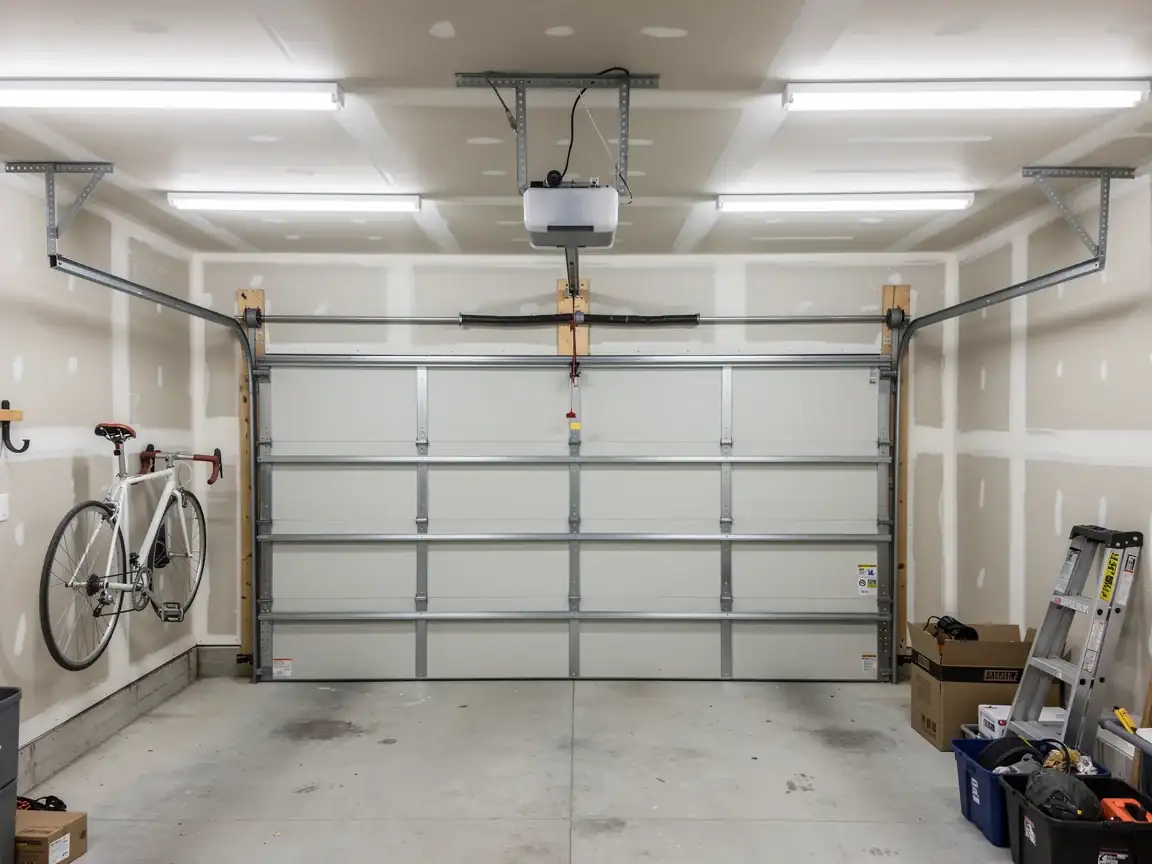
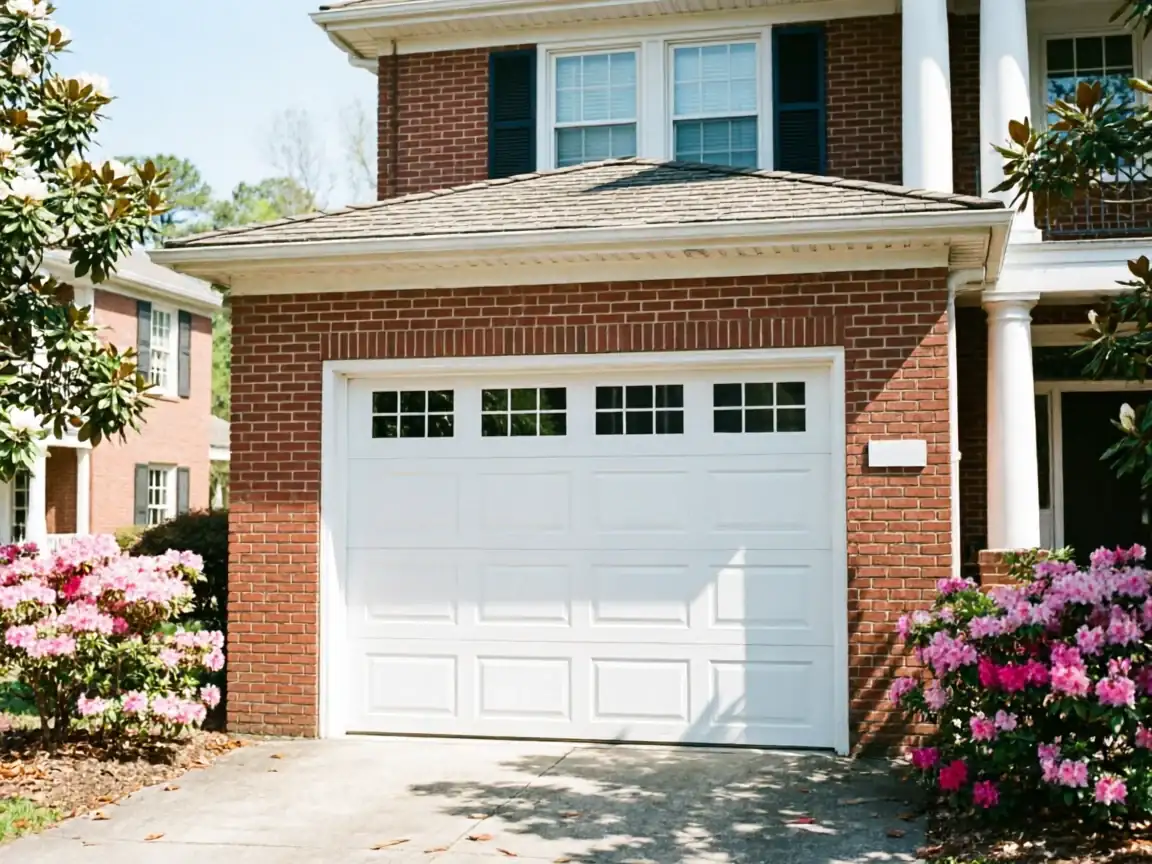
Houses in Belvedere Park mostly went up around 1961, which puts the garage doors here squarely in the single-layer steel era - plain panel faces, no insulation core, hung on a single torsion spring mounted center-shaft above the opening, or on a pair of extension springs running along the horizontal track if the door predates the torsion retrofit that became common later. Those doors are lighter than today's insulated steel doors, but the spring systems holding them are older too, and a lot of the torsion units left on these houses have never been replaced since the house was built.
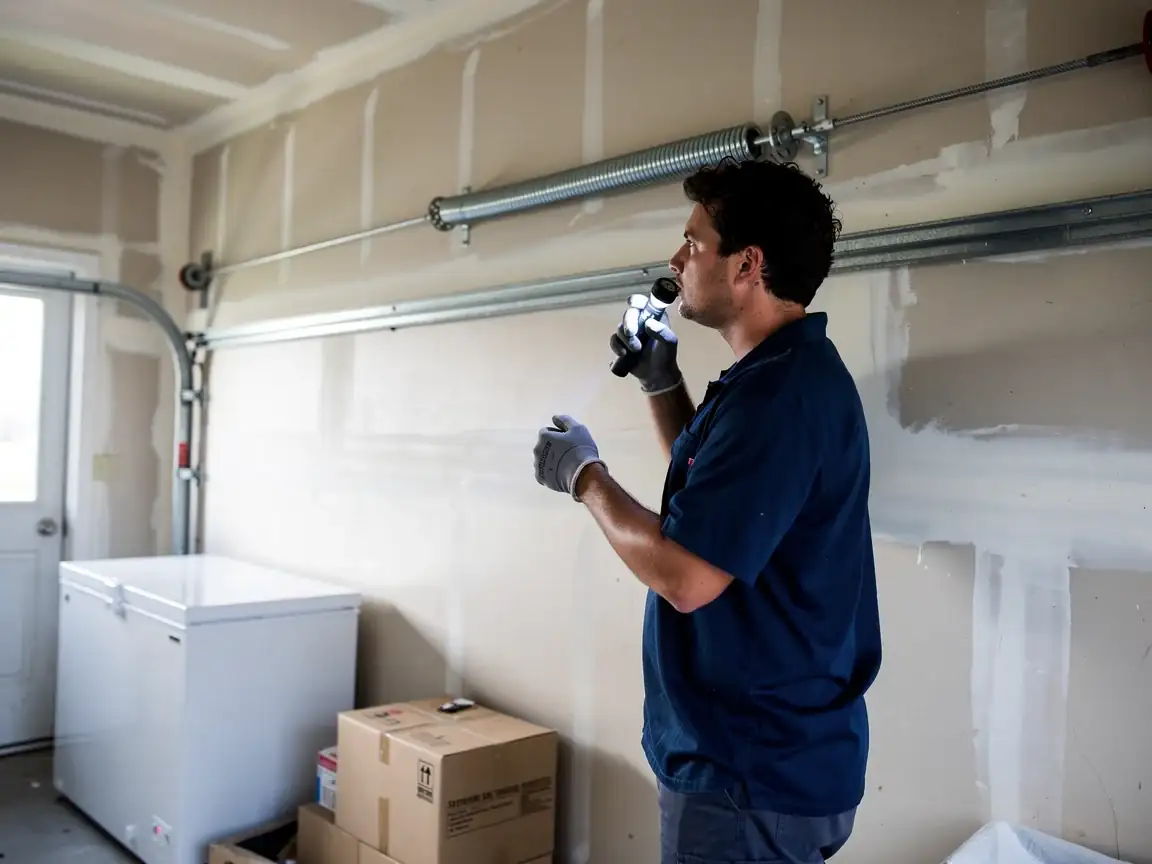
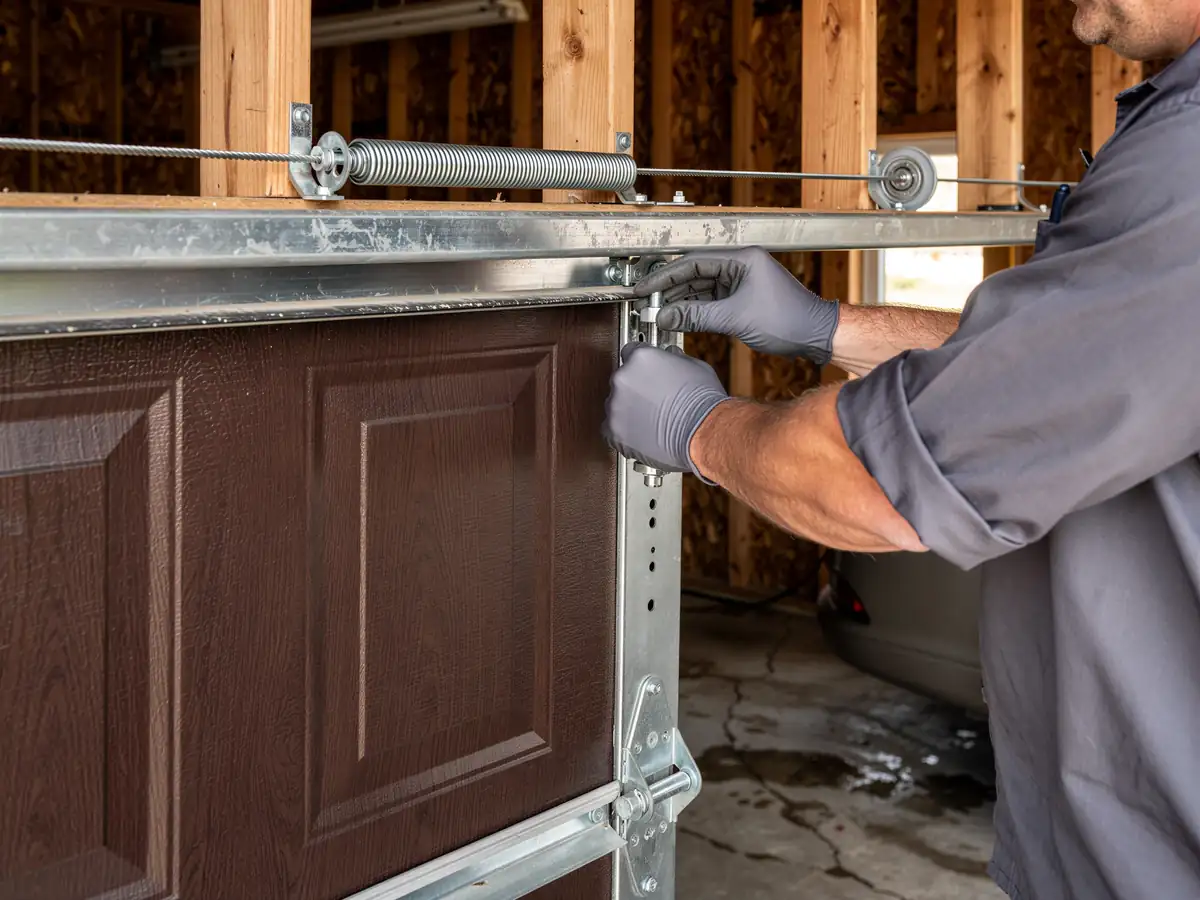
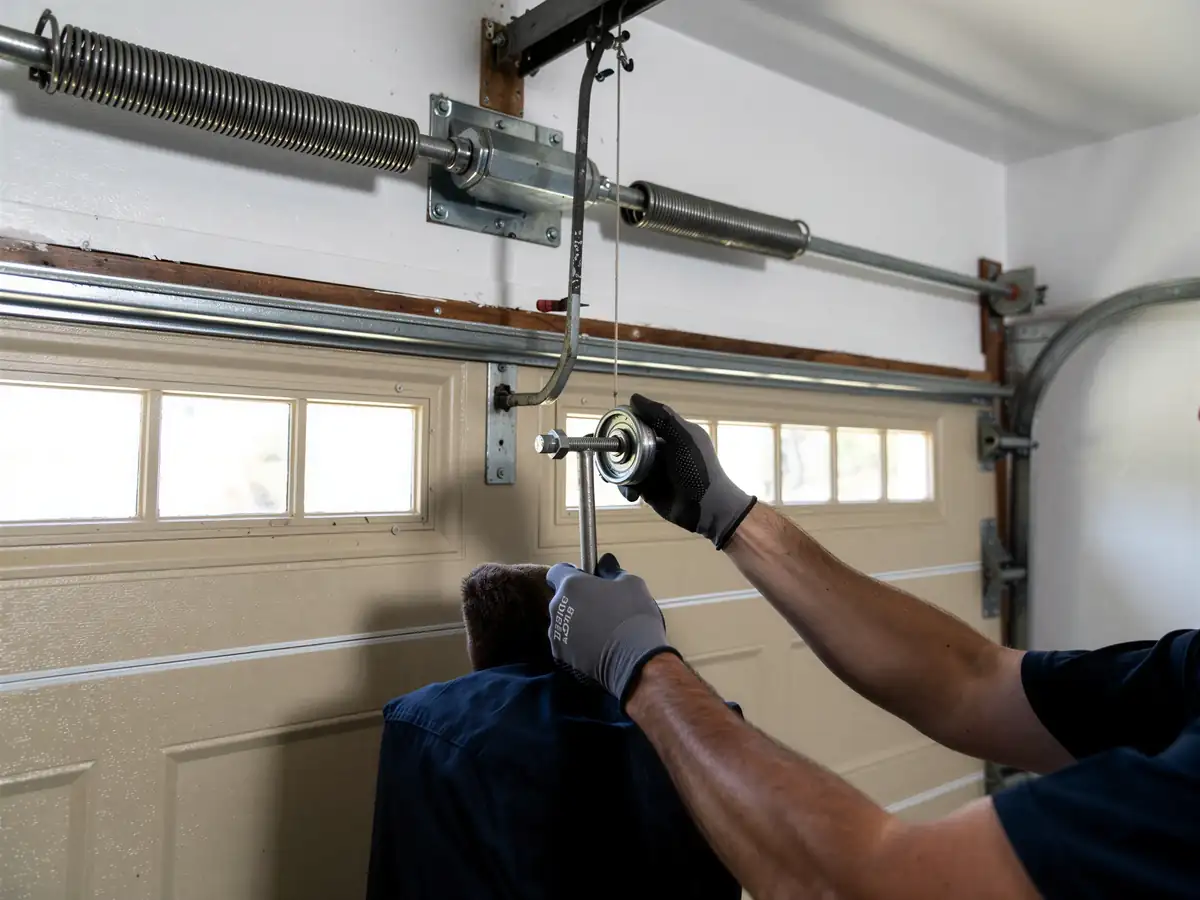
That matters for the "can I do this myself" question. A wound torsion spring stores real force - enough to hurt someone badly if the winding cone slips off a cheap bar or an unseated hook lets go under load. Extension springs carry less stored tension but have their own failure point: a spring that lets go without a safety cable can snap back across the garage.
We'll say this plainly: changing a torsion spring without the right winding bars and a clear idea of what you're doing isn't a project to learn on your own door. Measuring the wire size and inside diameter to get the replacement spring rated correctly takes more than a tape measure guess, and getting it wrong either breaks the new spring fast or leaves the door unbalanced, which wears out the opener gears next.
How Long You Are Without the Door
Belvedere Park sits about 15 miles from the Stockbridge shop, so factor that distance into how fast anyone can get out to you - it isn't a next-block call, and we won't pretend otherwise. Once a tech is actually in your driveway, a single torsion spring swap on a one-piece steel door usually takes under an hour; a double-spring door, or one where the drums or cables need attention too, runs longer.
The door itself doesn't need to sit broken for days. A broken spring is usually a same-visit fix once the part's confirmed - but the correct wire gauge and winding length isn't something we carry in every size on the truck for every job, so an uncommon spring on an older 1961-era door can mean a short wait while the right one gets sourced. That's the honest limitation: we'd rather order the right spring than force a close-enough one onto your door and have it wear out again in a year.
Most of the wait, when there is one, is scheduling the drive out and lining up the right part - not labor time once we're there.
What the Fix Involves
A spring repair starts with measuring, not guessing
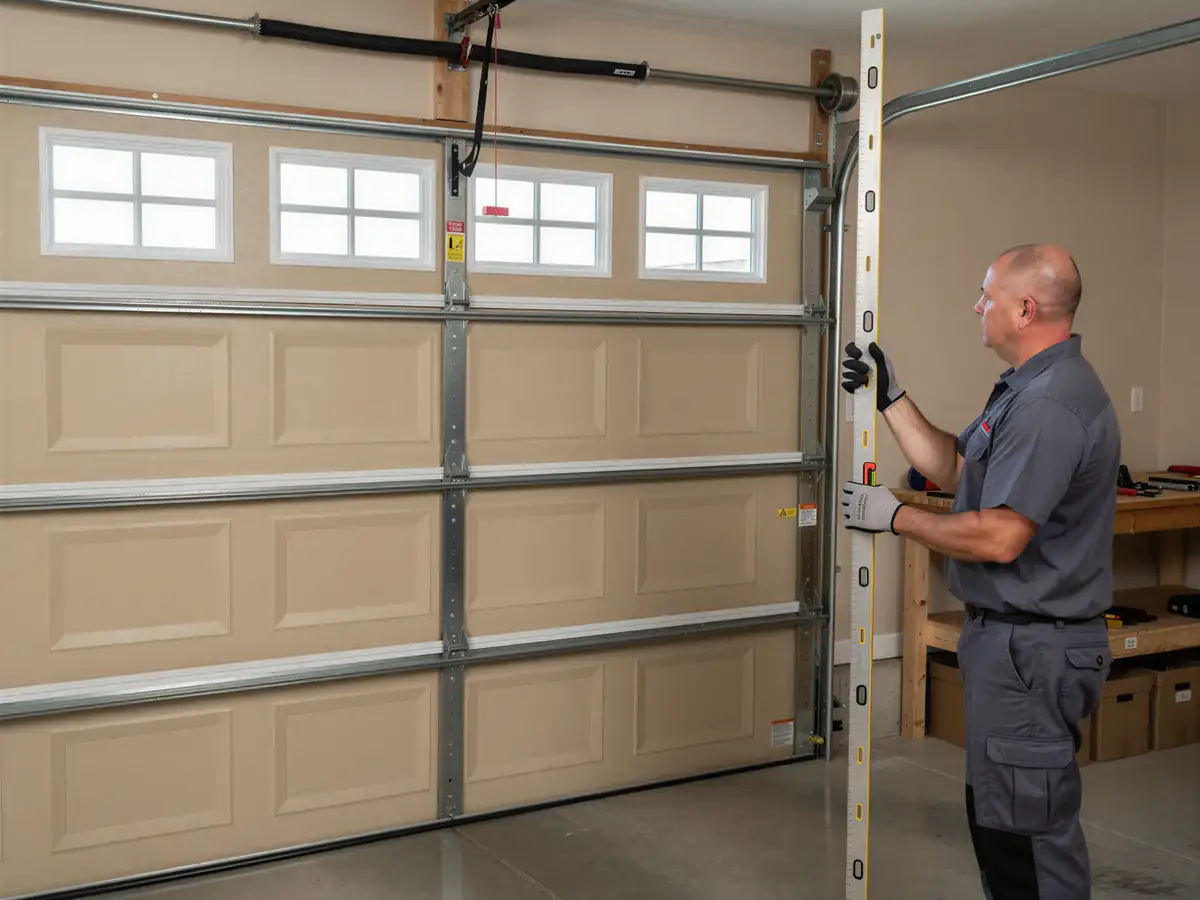
We check the wire diameter, the inside coil diameter, and the wound length of what's currently on the shaft, because torsion springs are rated to a door's weight and cycle count, and an off-spec spring either binds or wears out fast. On a 1961-era single-layer steel door, that often means a heavier spring than what's holding up a newer insulated door of the same size, since the old doors are lighter but the hardware is older and more fatigued.
If one spring on a two-spring door has broken, we replace both
They're matched for wear, and running a fresh spring against one that's near its own cycle limit just means a second call in a few months. Cables, drums, and the center bearing get checked at the same time, since a snapped spring sometimes damages a cable on its way out.
Once the new spring's on, we wind it to the right number of turns for the door's weight and check balance
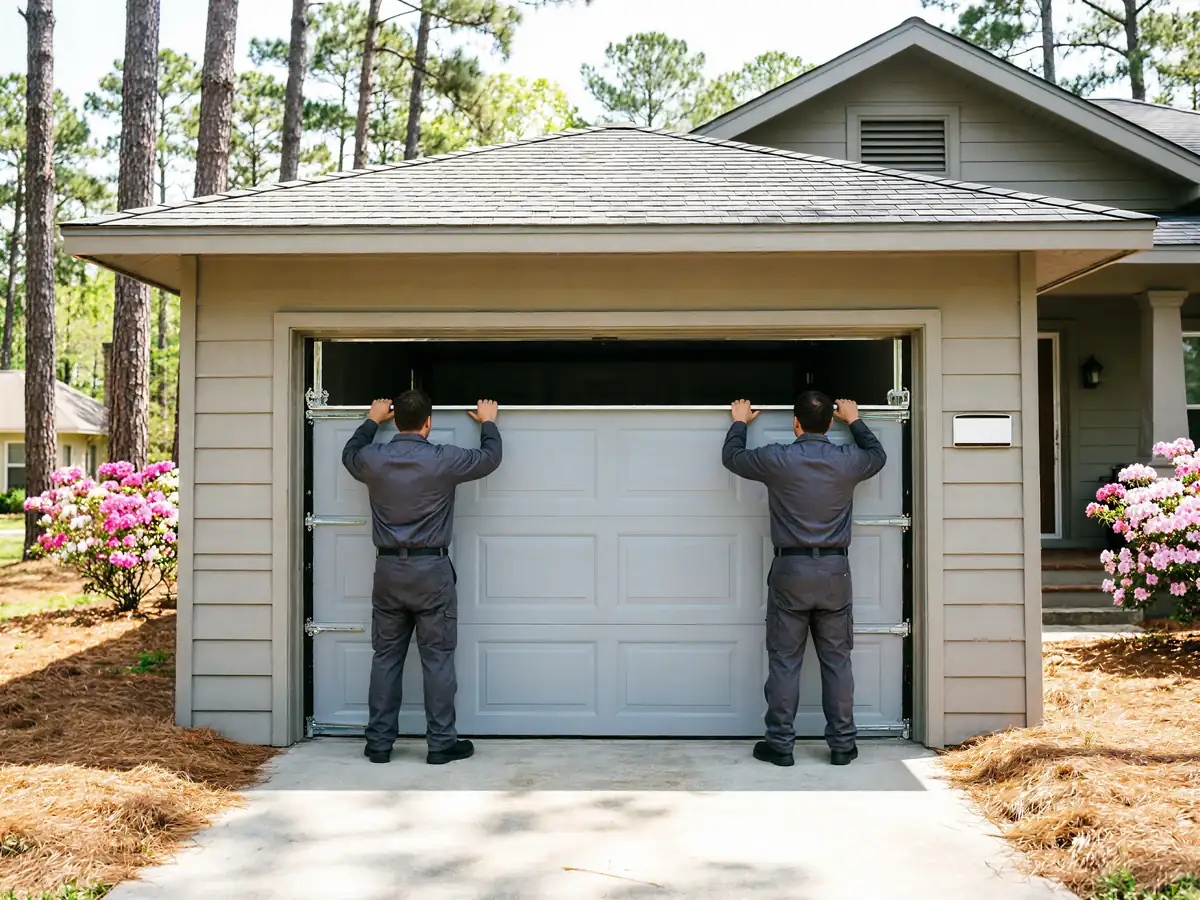
The door should hold at about waist height on its own, not slam shut or fly up. We don't skip that step; an unbalanced door burns out an opener's gears faster than anything else.
What You Pay
We're not going to put a number here that doesn't match your door, because the cost swings on a few things we can't see without looking: whether it's one spring or two, torsion or extension, standard wire gauge or an odd size, and whether cables or rollers need replacing alongside it. Houses from the 1961 wave in Belvedere Park tend to run slightly heavier doors than later builds, which can mean a heavier-rated spring and a different price than a lighter door of the same width.
What we can tell you is that the quote is for the job in front of us, not a phone estimate pulled out of thin air - we confirm the spring size on site before we commit to a number. If the spring turns out to be a less common size, sourcing it correctly costs more than grabbing a close match off the shelf, but a mismatched spring just fails again, and then you're paying twice.
Why This Fails Locally
This area sits in a cold-moderate climate band, which matters more for spring life than most homeowners expect. Steel fatigues faster with repeated temperature swings - the metal contracts in cold snaps and expands back, and a torsion spring already near the end of its rated cycle count loses tension unevenly across those swings rather than wearing out all at once.
Combine that with the age of the housing stock here. A door and spring installed when the house went up around 1961 has had a long run - original torsion springs rated for a typical cycle count have, in a lot of cases, gone well past it by now, especially on doors that get used daily for two cars. Across the wider service area the housing spans 1938 through 2007, but Belvedere Park's own stock sits on the older end of that range, concentrated right around 1961, which means more of these houses are carrying original or near-original hardware than houses built in the newer pockets of the service area.
None of that means every spring on an original door is about to go. It means the odds are higher here than in a neighborhood built decades later, and a spring that's lasted this long is closer to its limit than its start.
How It Shows Up
The most common sign is simple
The door won't stay up on its own, or it drops fast the last foot instead of settling. Lift it by hand with the opener disconnected and a healthy door should feel close to balanced - if it feels like dead weight instead, the spring's lost its tension.
A loud bang from the garage, usually when nobody's touched the door
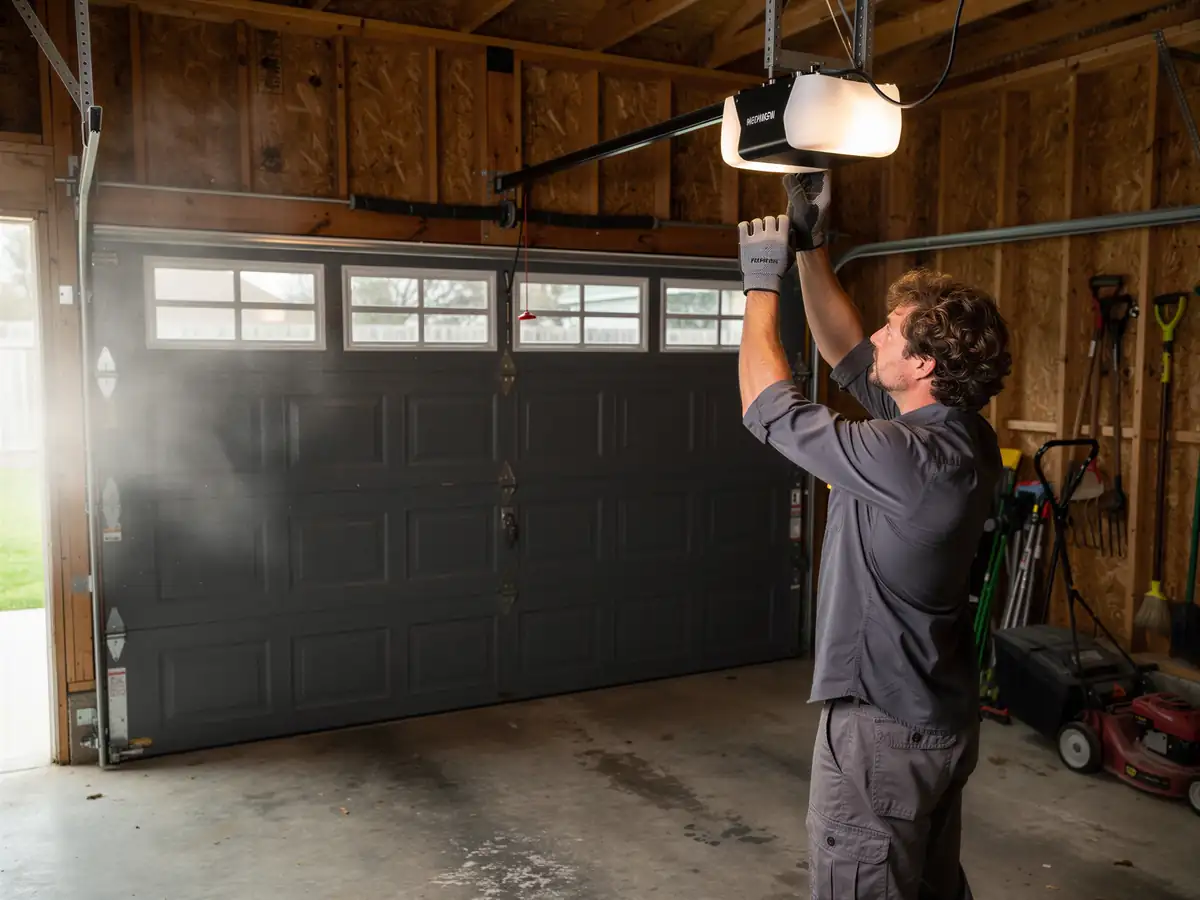
Is the spring itself letting go. After that, the opener will try to lift the door anyway and strain against dead weight, which is hard on the drive gears and the motor. You'll sometimes catch it earlier - a door that's gotten slower to open, or an opener that groans more than it used to - before the spring actually snaps.
On the older 1961-built doors common around here
A visible gap in the coil or a spring that looks stretched compared to its mate on a two-spring door is worth checking before it fails outright, especially heading into a stretch of cold weather when the extra strain on fatigued steel tends to be what finally does it in.